

20% of new construction projects in Amsterdam will be built from wood or biomaterials (primarily hemp)
The implementation of the agreement, called “Green Deal Timber Construction”, will help the Dutch capital achieve “climate neutrality” or achieve “zero” greenhouse gas emissions by 2050.
The municipal authorities in Amsterdam have ruled that from 2025, 20% of all new housing projects in the Dutch capital should be built from wood or other biomaterials.
The agreement, dubbed “Green Deal Timber Construction” (GDTC), was signed in October 2021 by all 32 municipalities in the Amsterdam Metropolitan Area. Increasing the use of plant-based building materials in the city's architectural projects is expected to reduce its reliance on steel and concrete, materials that generate large amounts of carbon dioxide during production.
The implementation of the GDTC is expected to help the Dutch capital achieve “climate neutrality” or achieve “zero” greenhouse gas emissions by 2050.
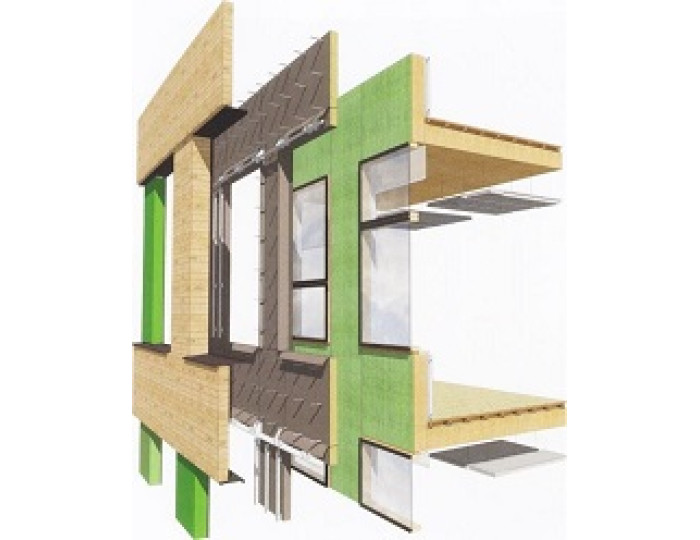
The implementation of the GDTC implies the possibility of building new houses not only from wood, but also from other materials produced on a biological basis. Those. building materials derived from biodegradable natural raw materials such as hemp.
The GDTC requires a detached house to be built with at least 80% wood or bio-based materials in order to meet the criteria for a timber or biomaterial structure. For multi-storey housing with up to 10 floors, this figure drops to 65 percent, and for multi-storey housing with more than 10 floors - at least 50 percent.
According to the Amsterdam Institute for Advanced Urban Solutions (AMS Institute), which supports the implementation of the Green Deal Timber Construction project, such decisions by the authorities of the Dutch capital are expected to reduce the city's carbon dioxide emissions by about 220,000 tons per year, which roughly equivalent to the average emissions of 22,000 homes.
“Although the use of abiotic materials in construction has literally lifted us to great heights, building materials made from fossil raw materials have a serious negative impact on the environment. Modern technologies of mass use of wood products can replace these materials one-to-one without harming the environment. What's more, they actually act as huge carbon sinks, ”explains Pablo van der Lugt, Research Fellow at AMS.
In order to implement the GDTC, the municipal authorities of the Dutch capital will allocate sites for new construction projects on preferential terms. The city will also invest in research and development to use wood or hemp biomaterials for use in construction, as well as companies seeking to help the city achieve its goals.
By helping Amsterdam become carbon neutral, the GDTC will also help create a circular city economy, as the use of materials made from natural raw materials in construction can be easily reused or recycled. Those. creating the conditions for a circular economy - an economic model that minimizes waste consumption and production and prioritizes the repeated reuse of materials.
“Bio-based materials such as wood products or hemp biocomposites are part of the solution to make our city climate neutral and truly comfortable,” explains Arjan van Timmeren, professor at AMS.
Commentary of the specialists of the Association "Ukrainian technical hemp"
Amsterdam is not the only city to have passed legislation encouraging the use of biomaterials in the construction industry. New York City Council approved the use of "solid timber" for buildings up to 25.9 meters high. In 2020, the French government agreed that by 2022, all new public buildings in the country should be built with at least 50 percent wood or other natural materials.
To our deepest regret, the modern construction of our country is so far the least concerned about its ecological component. However, it is necessary to keep in mind the tendency, which is first noted in the above-mentioned economically developed countries, and to create favorable conditions necessary for the implementation of such projects in our country. In addition, it is necessary to understand that in the construction industry, at least in Holland, France, and the United States, in the next few years there will be a need for commercially attractive technologies, which will be based on the possibility of using modern biocomposite materials based primarily on hemp raw materials.