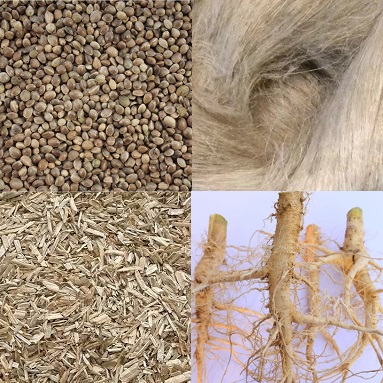
The American market in 2023 already needs not so much therapeutic properties as hemp grains and trusts
While plant-based cannabidiol (CBD) is
getting the most media attention, the market for fiber, bonfires, and grains is
booming at the federal level and potentially poised for exponential growth.
Unfortunately, the timing of the increase in market demand specifically for the
above components of the hemp plant coincides with a downward trend in both
licensed areas and investor sentiment associated with the crisis in the CBD
market.
The advantage of the legal and regulatory activities of
economically developed countries is not a distraction to populism, but a deep
analysis of various aspects of the current market, identifying its shortcomings
and producing changes that will lead to its further development. That is why
the editors of the specialized electronic edition of national cannabis growers
carefully monitor the analytical calculations of individual consulting
companies, which are actually “think tanks” in the field of modern hemp growing
of individual economically developed countries, the conclusions of which form
the basis for amending the current legislation. Given the intentions of the
pharmacological lobby to initiate changes to the current legislation of
Ukraine, according to which it is proposed to introduce additional measures of
control over industrial crops of technical hemp, the conclusions of our
American colleagues on how such nuances of legislation affect the development
of cannabis segments of individual administrative-territorial units of the
United States will be of interest. who specialize in the production of grains
and the fibrous part of the hemp plant.
According to Let's Talk Hemp's 2023 U.S. Cannabis Industry
Opportunity Analyst, legislation restricting the cultivation of hemp plants
intended for the cultivation of cannabinoid raw materials has led to
"automatic" restrictions on the cultivation of companies specializing
in working with industrial crops of technical hemp.
“This worked against other markets because demand for
fiber, as well as firewood, used primarily in construction and grain for human
and animal consumption, rose significantly in 2022,” says Let’s Talk Hemp in an
analytical paper. ". The submission concludes that restrictions on growing
therapeutically active cannabis for cannabinoids have "unforeseen
consequences" for hemp businesses specializing in fiber, bonfire and
grain, causing supply to lag behind demand.
“While plant-based cannabidiol (CBD) is getting the most
media attention, the market for fiber, bonfires, and grains is booming at the
federal level and is potentially poised for exponential growth. Unfortunately,
the timing of the increase in market demand specifically for the above
components of the hemp plant coincides with a downward trend in both licensed
areas and investor sentiment associated with the crisis in the CBD market. The
result is a contraction in supply that limits growth,” the report says.
Lack of supply of national producers predetermines the
uncontrolled development of imports
Although retail demand exists, the potential of industrial
hemp "is not yet fully realized by consumers." Researchers in the
course of in-depth study of this issue have found that the current regulatory
framework in a number of states causes shortages, increasing the price of raw
materials. As a result, market operators are "looking for international
partners in the European Union and Canada for supplies" in order to meet
the rapidly growing demand.
"While this trend is good for foreign suppliers, sales
volumes may not be enough to support operators in the near future," Let's Talk
Hemp says.
It ultimately concludes that industrial hemp is “a great
opportunity for smart and aggressive operators, despite all the short-term
challenges facing the U.S. hemp industry. Changing the regulatory framework,
launching product lines that are not related to the therapeutic properties of
cannabis, may be enough to correct the situation, ”Let's Talk Hemp analysts
say.
Commentary of the specialists of the
Association “Ukrainian Industrial Hemp”
"Let's Talk Hemp Media" is the initiator of the
largest cannabis events in the US - "NoCo Hemp Expo" and
"Southern Hemp Expo". The analytical papers prepared by the company's
specialists deal with an in-depth study of the existing US hemp market,
identifying trends affecting the hemp industry in 2023, as well as
demonstrating problem areas of the current legislation and suggesting
correction mechanisms that will lead to further development of the market.
I would like to emphasize that the analytical materials prepared by our American colleagues clearly indicate that the restrictions associated with the cultivation of therapeutically active hemp for the purpose of obtaining cannabinoids, if applied to industrial crops of industrial hemp, have negative consequences primarily for hemp enterprises specializing in the production of fibers, bonfires and grains. As a result, the end consumer suffers due to the increase in prices for raw materials, as well as the national manufacturer, since its products become uncompetitive compared to similar ones from states where there are no such restrictions. In addition, attention is once again focused on the trend according to which the American hemp market in 2023 no longer needs so much therapeutically active cannabis leaves and inflorescences, as this market is overcrowded, but fiber, bonfire and grain, the consumption markets of which in the United States have huge potential. growth.