

Cannabis Therapeutic Market Potential Analysis (part 1)
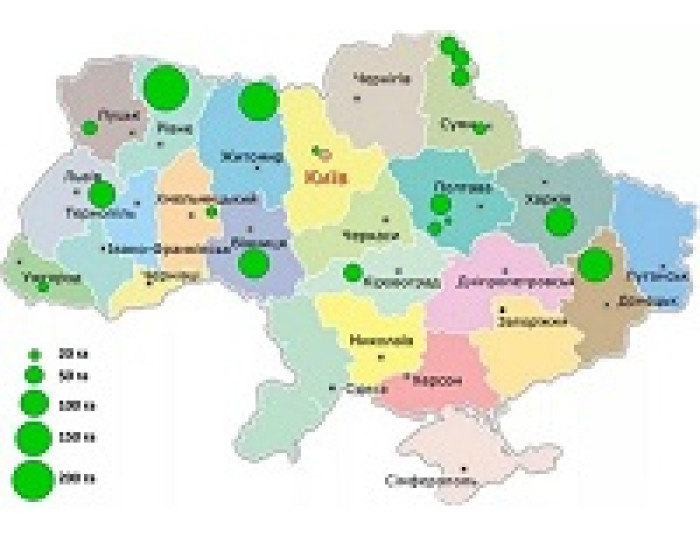
Hemp varieties bred in Ukraine , in which THC is less than 0.05%, and CBD more than 1.5% . The experiments suggest that the use of fresh or dried leaves of industrial hemp therapeutic orientation gives a huge therapeutic effect - significantly reduces pain cures migraines, allergies, various neurodegenerative diseases, and others . In Ukraine , having issued the relevant permits, you can grow the above varieties on a personal plot , heal / heal, or buy juices, smoothies, seasonings, food , cosmetics, dietary supplements, etc. , which already exist and are in great demand in the domestic market . At the same time, the Ukrainian consumer will buy goods for tens of hryvnias, and not for hundreds of dollars, pharmacological preparations based on hemp extracts made abroad.
Recently, a topic has been "gaining momentum" in Ukraine related to the issue of legalizing the possibility of using medical marijuana. On February 1, 2019, the corresponding petition was formed on the Verkhovna Rada website and the collection of signatures began. People’s deputies are urged to change the law by creating appropriate conditions for the full use of marijuana in medical and scientific activities, including with the aim of developing, clinical trials, state registration of effective medicines or treatment protocols involving the use of products with a high content of cannabinoids .
On March 12, the media released information that the petition demanding to legalize the use of cannabis for medical and scientific purposes in Ukraine received 25,000 signatures, the minimum required for further consideration of the document.
Given the relevance of the topic, there is a need to understand the reasons for the urgency of the issue and most importantly the consequences of the adoption or rejection of this regulatory act for Ukrainian realities.
Some terminology
Medical cannabis is a product based on hemp plant (industrial hemp) in the form of its parts (flowers, leaves, inflorescences, seeds and their derivatives - oils , tinctures, capsules, other products). For the use of hemp for medical purposes, both processed and untreated plants are used, as well as extracts of the individual components contained in it. Such products include high cannabidiol (CBD) and low tetrahydrocannabinol (THC), which in a sense puts them on a par with ordinary consumer products .
Pharmaceutical cannabis - refers to drugs that include pure cannabinoids (of plant or synthetic origin) that have undergone complete clinical trials and are licensed as a medicine. Examples of pharmaceuticals of this kind are Sativex, Epidiolex, Cesamet, Marinol and Syndros.
Recreational hemp is a product that is used for non-medical purposes. In the modern market of Ukraine, such a product is distributed illegally. It usually has a higher concentration of THC, which utilizes the psychoactive properties of the plant. This is illegal in many countries of the world . Recreational hemp, as a rule, is smoked (or eaten ), the oils or extracts of such plants are used in the vast majority for relaxation.
International market of hemp products
Canada is currently the largest producer and exporter of plant seed products , including hemp grain , oil, and hemp protein . The share of Canada currently accounts for 60-90% of the total import market of products made from hemp USA . Canadian hemp plant grains are usually of high quality , as farmers are only allowed to use seed varieties that are listed on the Health Canada Approved Variety List. All cannabis seeds from Canada are tested for GMOs, and farmers mostly do not use any pesticides during cultivation. Also, Canadian agricultural producers are certified «Pro-Cert Organic». It should be noted that Canada is today almost the only country in the world where the cultivation, as well as the use of all types of hemp, is legalized. It happened on October 17, 2018.
In Europe, hemp is used for industrial purposes, such as materials for automobiles and construction . Most cannabis in the EU is grown in Eastern Europe , such as Romania , Hungary and Poland . However, many other countries on the continent grow hemp for other tasks. The hemp industry was rebuilt in Europe , as the European Union subsidized its farmers (up to $ 400 / acre) for growing hemp in the 90s of the twentieth century.
Not only in Europe, technical hemp is in great demand. In countries of Asia , South and North America there is a boom in industrial hemp breeding. In particular, in Canada for several consecutive years there has been a positive trend in the development of the food sector of the hemp industry . In 2016, Canada grew 34,000 hectares of hemp, and in 2017 a new record was reached - 56,000 hectares. Starting this year, the cultivation of industrial crops of industrial hemp will begin in the United States , where growth in the next ten years is expected to reach 50,000 hectares.


Industrial hemp crops in Europe for the period 1993 - 2017
During the year, serious changes occurred in the territory of individual countries of the European Union related to changes in the status of hemp. The supreme legislative body of Lithuania has amended the current legislation, according to which it has become possible to use medicines based on the therapeutic properties of hemp in the country . Now hemp in the country, according to the prescription of a medical professional, can be used by patients diagnosed with multiple sclerosis, oncological and autoimmune diseases.
The head of the British Ministry of Internal Affairs gave the go-ahead to research aimed at exploring the possibility of legal sale of products containing hemp extracts in the country. In turn, the Minister of Health examined in detail the issue related to the use of the therapeutic properties of hemp and came to the conclusion that the government should enable citizens of the country to be treated with cannabisa . The introduction of appropriate changes to the current legislation of the country should take place before the end of this year, which will allow patients with insomnia, various neurodegenerative diseases or people who suffer from chronic pain to use the plant for medical purposes.
A government scientific committee has been set up in France , composed of experts in the field of neurology, sociology, the fight against HIV / AIDS and government drug policies, whose main task is to determine the possibility of legalizing the use of hemp's therapeutic properties for medical use . The above government agency should publish conclusions on the advisability of using hemp for medical purposes only at the end of 2019.
With regard to the vision for the use of hemp plants, there have been global changes. The United Nations adopted the Declaration, which obliges countries to support the development of backward agrarian regions, which clearly describes the trend of the need to stimulate effective agricultural policies. A separate paragraph determines the need for a positive attitude of government structures of the international community to such a highly profitable agricultural crop as hemp .
The declaration, in particular, is intended to be used in policymaking in developing countries with a rich history of cannabis cultivation. This refers to countries such as Morocco, South Africa , and India, in which depressed agricultural areas are the main producers of hemp plants and more than others lose from the global ban on its cultivation, as indicated in the UN Development Program.
Germany shows a positive trend in enhancing the use of hemp plants in various fields of production. In the first half of 2018, Germany imported 1.8 tons of psychoactive hemp. About 60% of the raw materials came from Canada and 40% from the Netherlands , and in the summer of 2018, the Dutch government agreed to increase the annual export of medical hemp to Germany from 700 to 1,500 kg. At a time when Germany is on the path to becoming one of the world's largest markets for the use of plants for medical purposes , the lack of publicly available data on the consumption of hemp raw materials makes it difficult for potential investors to assess the real market potential of the industry. Unlike Canada , German authorities do not centrally publish statistics on the number of patients or on the volume of therapeutic cannabis sold . However, the German National Association of Statutory Health Insurance Funds published data on insurance claims for the use of therapeutic hemp in the amount of € 30.8 million. And this is to “pay off” almost 80 thousand prescriptions only in the first half of 2018. These data can already serve as certain indicators of market demand for the legal need to use medical cannabis .
In France , more than 1 thousand employees work in the seed sector , and the financial turnover exceeds the mark of 500 million euros. The leader of the French seed market today is Hauts-de-France, which is the most successful enterprise not only in its homeland, but also has international business experience . The cultivation of any crop begins with the acquisition of high-quality seed material . French producers of seed material , including hemp seed , have merged into an intersectoral group under the auspices of GNIS (national interprofessional group of seed production ), where they jointly conduct research in the direction of creating new plant varieties , marketing and marketing of seed products . Seven companies belonging to the GNIS association (5 of which include Hauts-de-France) in 2017 produced 21% of the seeds of grain crops, 12% - seeds of fodder crops and lawn grass, 91% - flax and hemp seeds , 11% - oilseeds.
Growing seed in France is a strictly controlled process. For the cultivation of seeds, farmers enter into contracts with seed companies , which indicate the scope of supply, timing and quality indicators of the product . The Official Inspection and Certification Service (SOC), which is part of GNIS and has the status of a government body, monitors and certifies produced seed .
The rapid development of the hemp products market is forcing members of the European Parliament to pay a lot of attention to the settlement of the “legislative field” for hemp business . The Committee on Ecology, Social Security and Sanitary Control of Food at the European Parliament was tasked with developing a bill that could take into account the interests of both producers of hemp products and its potential consumers . At the same time, one of the main goals of the future legislative act is to provide equal opportunities for the production of hemp goods and products throughout the European Union , as well as uniform production standards that simplify quality control and create a competitive environment. It should be noted that the adoption of a unified legislative framework for the hemp industry will help to separate the legal conduct of the hemp business from the illicit market, and will also support the development of research programs aimed at studying the therapeutic properties of the plant , which must be introduced to use it more effectively .
So, in the world there is a gradual expansion of hemp sown areas, and liberalization of the attitude towards the aforementioned agricultural crop both at the national (official) level and directly in society. The figure shows the geographical distribution of hemp plants, as a culture that is increasingly grown and used as raw material for processing and manufacturing new products . According to analytical data, countries that grow hemp for commercial purposes (indicated on the map in green): Africa , Egypt , North and South America , Canada , Chile , Asia and the Pacific , Australia , China , India, Nepal, South Korea, Thailand, Europe , Austria , Denmark , Finland , France , Germany , Great Britain , Hungary , Poland , Portugal , Romania , Russia , Slovenia , Spain , Switzerland , Ukraine .
Countries that research hemp and develop a regulatory framework for its full involvement in agricultural production (the map is marked in blue) Japan , the Netherlands , and the United States . The United States has lagged behind other countries in the field of research and processing cannabis for decades , providing an opportunity for neighboring Canada to earn money on the export of hemp products to the United States .

