

How the American experience of selling fiber can be useful to national cannabis growers
It is worth paying attention to the experience of our American colleagues, who are extremely aggressively entering international markets and actively developing the domestic market for hemp fiber, including for the purpose of using it for the production of textiles or knitwear. Taking into account the problems of modern hemp growing in Ukraine, associated with the sale of hemp fiber on the domestic market, discussed at the round tables organized by the Association "Ukrainian technical hemp" (" Hemp fiber - problems and prospects for its use in Ukraine ", " Problems and prospects for the use of therapeutically active elements of hemp as a basis for nutraceuticals, medicinal cosmetics, animal feed or other products with medicinal plant properties ","Prospects for the hemp growing industry in Sumy oblast and Ukraine within the framework of the regional project "Slobozhanskaya hemp ", you need to learn from the experience of our American colleagues and actively use international cooperation in order to maximize the effective use of the fibrous part of the hemp plant.
The bubble of the CBD market is gradually deflating and in economically developed countries the understanding is coming that this segment of modern cannabis production is not endless. The crisis of overproduction of hemp raw materials rich in non-drug cannabinoids (primarily cannabidiol - CBD) in the USA, Canada, the Netherlands, and a number of other countries suggests that in economically developed countries the market segment based on the use of the therapeutically active properties of cannabis leaves and inflorescences reaches its saturation limits ... There are tendencies towards the use of the “green mass” of the plant not so much as a pharmacological preparation, but rather on the use of therapeutically active elements of the hemp plant as nutraceuticals, food for pets, raw materials for the manufacture of cosmetics or hygiene products, as well as various types of additives ( food, feed, dietary, biologically active), etc. In addition, the direction of individual cultivation of therapeutically active plants at home or the use of "social clubs" for these purposes is actively developing. Consumers are already realizing that the use of the therapeutic properties of the hemp plant used in the form of a pharmacological preparation is mainly a patent fee for the company that registered it. Realizing that the medicinal properties are inherent in the plant by nature itself and are not subject to patenting, the consumer is looking for opportunities to use therapeutically active ingredients of the plant without intermediaries and at the lowest price.
Despite the gradual stabilization of the market for the use of therapeutically active substances of the hemp plant embedded in the leaves and inflorescences, certain trends indicate that the fibrous direction of modern cannabis growing is rapidly developing in a number of advanced hemp-growing countries of the world.
It is no longer a secret that China, the leader in the hemp fiber market, intends to gradually replace cotton crops widespread in the country's southern provinces with industrial crops of industrial hemp. It is especially interesting how this issue is resolved by American companies, which in 2021 at once in several administrative-territorial units “launch” production facilities for the primary and deep processing of the hemp part of the plant, and how exactly US companies form their policy in this market.
On the pages of the specialized electronic edition of Ukrainian cannabis growers, the policy of the American company Panda Biotech, which has merged with a denim manufacturer from Pakistan, has already been described . This material suggests that, entering the global hemp fiber market, the above company from the United States is actively working to establish the sale of manufactured products to foreign markets. However, it would be naive to believe that American hemp fiber producers are oblivious to the most liquid, domestic market. That is why the information presented below is interesting from the point of view of understanding how American companies specializing in the processing of the fibrous part of the plant interact with the manufacturers of final hemp fiber products.
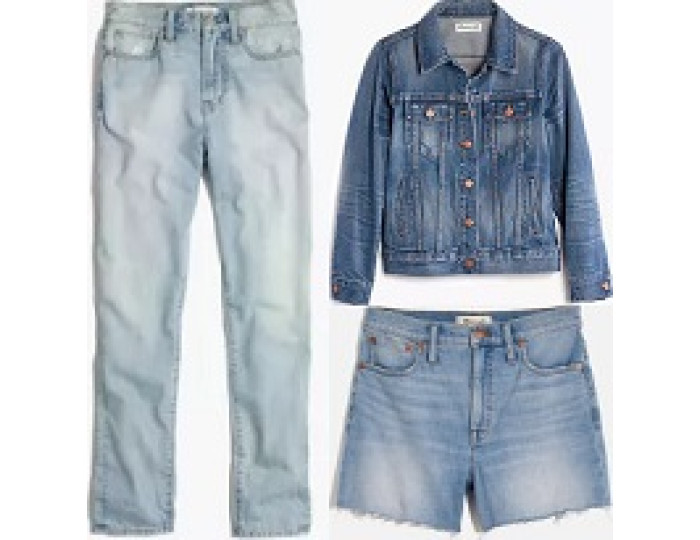
The American brand Madewell has officially announced that blended fabrics containing hemp fiber will be widely used to make products for its brand for the summer 2021 season. In particular, Madewell announced a new line of women's lightweight denim (rough, stiff, dense twill weave) that should compete with linen as the basis for ready-made garments designed to be worn in warm weather.
A significant number of the benefits of hemp fabric (for example, nature's inherent protective function against UV rays and bacteria) brings functional elements to the Madewell Summer Weight Denim collection and allows denim to be positioned as an ultra-modern, airy, breathable material. Along with the durability and breathability of hemp denim, Madewell touts it as a soft yet durable base for the finished garment. It is emphasized that hemp fabric is three times stronger and several times more durable than similar cotton products.
In particular, according to Mary Pearson, Senior Vice President of Denim Design at Madewell, "The brand is committed to continuing to include more hemp in its garments, because it is a very interesting and environmentally friendly raw material that can be efficiently handled."
According to experts of the American market, hemp fiber has been of great interest to a significant number of textile and knitwear manufacturers in the United States in the last few years, and more and more companies specializing in the production of clothing or footwear include hemp fiber in the composition of blended or natural fabrics produced (this primarily concerns jeans). Through various discussions, industry experts continue to argue for the benefits of hemp fiber, including the need for less water use during plant cultivation, and the feasibility of cultivating the plant in infertile land.
Commentary of the specialists of the Association "Ukrainian technical hemp"
Madewell is an American company that has been making jeans since 1937. Madewell's Summer Weight Denim includes five styles, most of which are made from cotton, elastane and hemp-infused fabrics from the Turkish denim factory Orta. Most fabrics brought to the US market contain 6 percent hemp. The Madewell trademark was acquired by the J.Crew Group, Inc. is an American multi-brand, multichannel specialty retailer. In the US market “J.Crew Group, Inc.” offers a wide range of women's, men's and children's clothing and accessories, including swimwear, outerwear, leisurewear, bags, sweaters, denims, dresses, suits, jewelry and footwear. As of August 2016, J.Crew Group, Inc. operates over 450 retail stores throughout the United States.
It has already been noted more than once that national seed and breeding companies that have varieties of technical hemp with a fibrous direction of use should pay attention to the American market, which over the next few years will experience an acute shortage of high-quality seed, intended primarily for growing hemp. raw materials used for the production of textiles / knitwear, footwear or accessories. It is worth paying attention to the experience of our American colleagues, who are extremely aggressively entering international markets and actively developing the domestic market for hemp fiber, including for the purpose of using it for the production of textiles or knitwear. Taking into account the problems of modern hemp growing in Ukraine, associated with the sale of hemp fiber on the domestic market, discussed at round tables organized by the Association "Ukrainian Technical Hemp" (" Hemp fiber - problems and prospects for its use in Ukraine ", " Problems and prospects for the use of therapeutically active elements of hemp as a basis for nutraceuticals, medicinal cosmetics, animal feed or other products with medicinal plant properties "," Prospects for the hemp industry in Sumy region and Ukraine within the framework of the regional project "Slobozhanskaya hemp ", you need to learn from the experience of our American colleagues and use more actively in including international cooperation in order to maximize the efficient use of the fibrous part of the hemp plant.