

The exclusivity of the properties of cannabidiolic acid
A 2013 study by researchers from Guelph, Canada found CBDA had a thousand times more potent effects than CBD. This is due to a specific serotonin receptor that affects the feeling of nausea and has a strong sedative effect.
Among the various cannabinoids found in hemp plants, cannabidiolic acid (CBDA) is not the most well-known substance. Despite this fact, recently it is CBDA that has been causing serious interest in its medicinal properties, which are manifested in relation to the human body, which implies attention to it from both representatives of science and business structures. That is why materials related to cannabidiolic acid attract the attention of cannabis growers all over the world and this article will lay the foundation for the study of the various characteristics of CBDA, which over time will turn into a number of materials describing the features of the use of this substance, which has a significant therapeutic effect in various types of products.
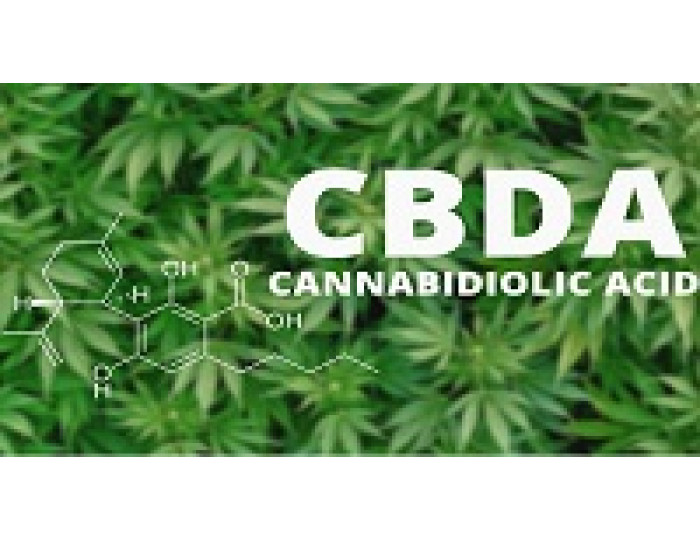
Cannabidiolic acid is a cannabinoid found in hemp plants. It is most abundant in glandular trichomes on female flowers without seeds or in ovaries often called hemp buds. CBDA is the chemical precursor to cannabidiol (CBD). During the decarboxylation process, cannabidol is formed by the loss of carbon and two oxygen atoms from the benzoic acid ring. Cannabidiolic acid is biosynthesized by cannabidiolic acid synthase as a result of the conjugation of olivetholic acid and cannabigerolic acid. Below in more understandable language.
What is the Difference Between CBDA and CBD
The main cannabinoid in the hemp plant is known as CBGA - Cannabigerolic Acid. CBGA can be called the progenitor of the rest of the cannabinoids. Plant enzymes unique to each cannabis strain convert CBGA into various combinations of three main cannabinoid precursor compounds:
• THCA (tetrahydrocannabinolic acid);
• CBCA (cannabichromenic acid);
• CBDA (cannabidiolic acid).
After CBDA is formed, it is converted to CBD by thermal decarboxylation, whereby, when exposed to heat, the molecule loses its acidic carboxyl group. This decarboxylation process can occur instantaneously, for example by heating, or by slow decomposition over time if the plant material is at room temperature.
Thus, while CBDA is found in abundance in untreated cannabis leaves and buds, consumers / patients are often unable to benefit from CBDA's therapeutic properties as it converts from its raw form to CBD even before it is delivered to cannabis. counters of shops or pharmacies. That is why the most effective ways to use CBDA is to use fresh leaves and inflorescences of the plant in various forms (juices, smoothies, green mass), avoiding any processing, primarily thermal.
Known Therapeutic Properties of CBDA
• Powerful anti-inflammatory properties. The researchers noticed that the molecular structure of CBDA closely resembles the structure of the already known and widespread non-steroidal anti-inflammatory drugs. Examining the potential of CBDA as an anti-inflammatory agent, CBDA has been found to exhibit the same effects as a COX-2 inhibitor, allowing cannabidiolic acid to effectively fight various types of inflammatory processes.
• Opportunities to combat nausea and anxiety. A 2013 study by researchers from Guelph, Canada found CBDA had a thousand times more potent effects than CBD. This is due to a specific serotonin receptor, which affects the sensations of nausea and has a strong sedative effect.
Commentary of the specialists of the Association "Ukrainian technical hemp"
The peculiarities of the current regulatory framework in our country at the moment do not make it possible to study the properties of cannabinoids, therefore the information of this kind provided by our colleagues is extremely useful. The data of our foreign partners regarding cannabidiolic acid testifies to what the issue is repeatedly raised on the pages of the specialized electronic publication of national cannabis growers - it is necessary to create conditions under which patients / consumers can get unhindered access to cannabis plants that have not been processed in order to significantly reduce their costs and provide opportunities for the most effective use of the therapeutically active properties of the plant. Mechanisms of this kind are already operating, for example, in Canada, where it is allowed for individuals to grow hemp plants. Based on the absolute social safety of using the leaves and inflorescences of therapeutic hemp, it makes sense in the current legislation to provide mechanisms according to which the right to cultivate hemp plants included in the State Register of varieties suitable for distribution in Ukraine will be provided not only by legal, but also individuals.