

Export potential of the national market for cannabis leaves and inflorescences
In the case of regulating the possibility of exporting "green mass" of technical hemp of therapeutic orientation, as well as creating a regulatory framework that provides opportunities for the manufacture of products with the maximum allowable amount of THC in it, only a huge national market opens up for national producers, but conditions are also created for export of competitive products based on the leaves and inflorescences of therapeutic hemp to at least the markets of developed countries within the EU.
Our colleagues, who specialize in the analysis of the global cannabis market, as well as in the provision of consulting services in the field of modern cannabis farming, gave the editors of the profile electronic resource of national cannabis growers the opportunity to get acquainted with the conclusions that they made based on the research concerning the prospects for the development of certain sectors of the cannabis business in Ukraine. Europe and the world. With the permission of the authors of the study, we provide an opportunity to briefly review the individual findings of our colleagues.
The European continent, for a number of reasons (aging population, financial viability, etc.), in the next few years may become one of the world's largest markets importing therapeutically active elements of hemp for the needs of citizens of the EU countries.

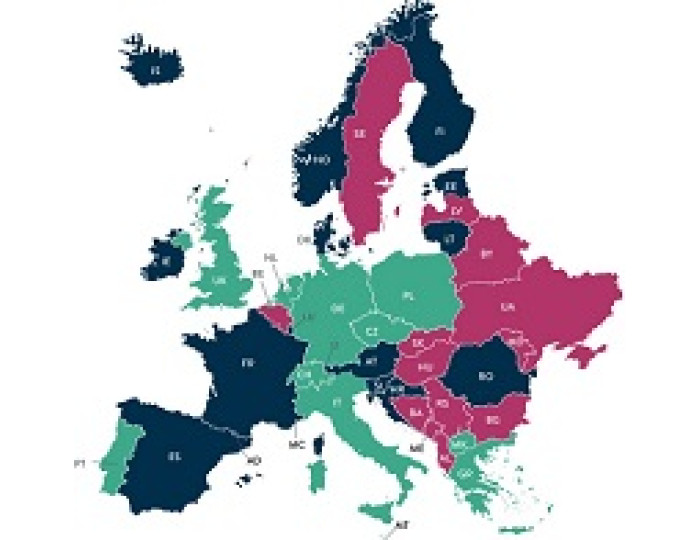
As can be seen from the picture provided, the states of Europe from the point of view of regulating the possibilities for the use of the therapeutic properties of cannabis can be divided into the following main categories:
• states that regulate the use of the therapeutic properties of cannabis - Great Britain (UK), Germany (DE), Greece (GR), Italy (IT), Macedonia (MK), Malta (MT), Netherlands (NL), Poland (PL ), Czech Republic (CZ), Switzerland (CH);
• countries in which the use of the therapeutic properties of the hemp plant is permitted under special conditions (test / trial or pilot programs) - Austria (AT), Andora (AD), Denmark (DK), Ireland (IE), Iceland (IS), Spain (ES), Lithuania (LT), Liechtenstein (LI), Luxembourg (LU), Monaco (MC), Norway (NO), Romania (RO), Slovenia (SI), Finland (FI), France (FR), Croatia (HR), Estonia (EE);
• states in which the use of therapeutically active elements of hemp is prohibited - Albania (AL), Belarus (BY), Belgium (BE), Bulgaria (BG), Bosnia and Herzegovina (BA), Hungary (HU), Latvia (LV), Moldova (MD), Slovakia (SK), Ukraine (UA), Sweden (SE), Montenegro (ME), Yugoslavia (RS).
I would like to draw attention not only to what is the potential of this market, taking into account the emergence of states on it, in which at the moment the use of the therapeutic properties of the plant is not regulated or is still being carried out within the framework of test or pilot programs. We draw the attention of our dear readers and listeners to the fact that there is a certain transitional state, when, prior to the regulation of the possibility of using the therapeutic properties of the hemp plant, in various forms, government structures initiate research, within the framework of which certain experience is gained and algorithms for working with therapeutically active plant elements. And only on the basis of the data obtained over several years, government officials are preparing changes to the regulatory framework regulating the possibilities for using the therapeutic properties of the leaves and inflorescences of the hemp plant.
How promising the markets of therapeutically active elements of technical hemp with a therapeutic orientation are opening up to national producers can be judged by analyzing the largest of them at the moment - German.
So far, in Europe, an objective situation has developed, according to which Germany is the largest hemp market using the therapeutic properties of hemp flowers. We have already carried out a “ Brief Analysis of the German Hemp Market ”, but the systematized data provided by our colleagues on the dynamics of the import of medical hemp flowers to Germany, as well as the maximum allowable amount of controlled tetrahydrocannabinol in the final products made from the leaves and inflorescences of the plant in certain European countries once again prompts certain thoughts.


Dynamics and volumes of imports of hemp flowers to Germany
Consolidated information on the number of medical hemp flowers imported to Germany during 2017-2020 allows us to draw the following conclusions (it should be borne in mind that over the past 4 years, national capacities providing German raw materials to patients in Germany have not been launched in the country):
1) during the first two years, the volume of imported flowers grows exponentially, and then a phase of market saturation begins, implying a stabilization of its volume or a slight increase (this kind of trend is traditional for the development of the market for hemp leaves and inflorescences, which have therapeutic properties in all countries of the world, in which at the moment, the possibility of using the medicinal ingredients of the hemp plant is regulated);
2) in individual EU countries, at the level of regulatory legal acts, the legality of the use of products made using hemp leaves and inflorescences is regulated and the maximum allowable amount of controlled tetrahydrocannabinol is determined
Based on the above two theses, a logical conclusion in itself suggests itself: in the case of regulating the possibility of exporting "green mass" of technical hemp of therapeutic orientation, as well as creating a regulatory framework that provides opportunities for the manufacture of products with the maximum allowable amount of THC in it, in front of national producers opens up to only a huge national market, but conditions are also created for the export of competitive products made on the basis of the leaves and inflorescences of therapeutic hemp, at least to the markets of developed countries that are part of the EU.