

Formation of a new hemp production center in Germany
By 2020, Maricann plans to invest an additional € 25 million in German production. Financial resources will be used to build planting and processing facilities for plants with significant cannabidiol content, as well as to acquire the necessary equipment, including agricultural and loading equipment.
Not far from Dresden are located the production facilities of the largest slaughterhouse in Europe, where, until recently, about 2000 pigs and 400 head of cattle were daily processed. Over the past 14 years, this company has not worked, but since the beginning of 2018, the Canadian Maricann Group has acquired production facilities. Instead of meat in this production complex, they will now dry and process the green mass of hemp to produce cannabidiol extract. Currently, production facilities for drying and processing significant volumes of green hemp have been reequipped and put into operation. For the first time in Germany from August to October 2018, hemp leaves and inflorescences were processed on an industrial scale in order to produce the active ingredient - cannabidiol, which are then widely used as food or feed additives.
48 tons of leaves and inflorescences cannabisa are processed by hectares of production capacity of the enterprise every day. European subsidiary Maricann Mariplant plans to produce gel capsules for food supplements that are sold freely in Germany, for example, to alleviate sleep disorders or to treat various anxiety states (the active ingredient of the cannabidiol plant (CBD) is used in German pharmacology as an anticonvulsant, anti-inflammatory and anxiolytic agent , as well as to combat nausea). Planned construction of facilities for the primary processing of hemp trusts and hemp fiber production, which will be used in the German automotive industry, as well as for the manufacture of fabrics or woven products.
The official representative of Maricann Josef Speth claims that in 2018 his company cultivated industrial crops of technical hemp with a tetrahydrocannabinol level not exceeding 0.2% on an area of 165 hectares. The company has combined its efforts to grow low-drug cannabisa with a local farmer Heinz Schönleber. On the German land were grown in 5 EU plant varieties. Studies have shown that not all varieties are productively grown to produce hemp green mass, which could be used as a raw material for processing Maricann. That is why the company’s management plans to conduct research on other varieties of the plant on the register, as well as to increase the area under crops to 1,000 hectares in 2019
Considering the different technologies required for working with different parts of the plant, Maricann Mariplant and Teichmann developed a prototype combine harvester based on the Fendt corn grinder. “Since hemp is a lubovoloknisty culture, we had to actively engage in the preparation of harvesting equipment in order to maximize the yield. Special equipment was developed to ensure that the flowers of the plant were collected as accurately as possible, with the least possible damage. Given the fact that this kind of technology does not exist in the world, we had to independently develop the necessary equipment for this, which will carefully separate the flower from the stem, ”explains Mr. Speth.
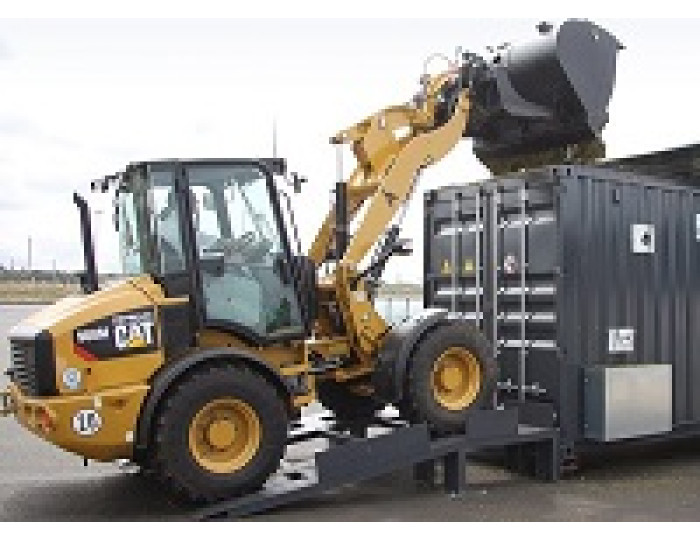
After harvesting, cannabis leaves and inflorescences are transported to the town of Ebersbach in a truck for transporting food. Then, using the Cat 908M wheel loader, green hemp is loaded into the drying system built especially for this by Maricann, which is made not to reduce the therapeutic properties of the raw material during the removal of moisture from the plant. This equipment is capable of drying about 50 tons of moist green mass of cannabisa throughout the day (up to 3 tons / h). As a result of drying, a mass of hemp leaves and inflorescences is obtained, which is further used for distillation into oil.
Despite the fact that Maricann specializes in the cultivation and processing of cannabis in Germany for the manufacture of food additives, the company has plans to manufacture hemp-based medicines. It should be noted that Maricann won the majority of tenders (a total of 13 lots of 200 kg per year for a four-year period) for the cultivation and processing of cannabis, which were arranged by the German Federal Institute of Drugs and Medical Devices.
In the near future, it will be possible in Germany not only to process and harvest hemp, but also to further process and deliver a plant with significant therapeutic properties, with which hemp-based medicines can be sold to patients in pharmacies. Therefore, taking into account the intentions of the company's management to transform production facilities into one of the main German centers of hemp, they were looking for a complex whose criteria were as close as possible to the production premises of the largest slaughterhouse in Europe. This production complex was ideally suited for the requirements, so there were about a hundred rooms on its territory that were used as slaughterhouses, there were many places in which there were previously refrigeration equipment, storage rooms, an office, cellars with wide corridors. The production premises are not only isolated from each other, but their total area is more than 100,000 m². It was these requirements that were “at the head of the corner,” since the growing of mother hemp seedlings in the room, as well as their clones, requires specific places, which should be air-conditioned. Indoors, it is necessary to maintain a light mode in which it will be dark for 12 hours and light for 12 hours - this light mode contributes to the most efficient growth of plants. According to Mr. Speck, the company expects to receive in such conditions from 5 to 6 hemp harvests per year.
However, the availability of production capacity data is not a sufficient condition for the effective cultivation of hemp. Production must be completely sealed, so it was necessary to carry out relevant preparatory work. The production of the principle of "four eyes" - no one is allowed to work alone, despite the fact that everywhere installed video surveillance and a direct line of communication with the relevant law enforcement agencies.
Commentary of the Association "Ukrainian technical hemp"
Maricann is already producing therapeutic cannabis in Canada in the territory of a former tobacco factory south of Toronto. The capacity of this company is designed to process 25 tons of raw materials per day. The company has a license for 108 medical devices.
By 2020, Maricann plans to invest an additional € 25 million in German production. Financial resources will be used to build planting and processing facilities for plants with significant cannabidiol content, as well as to acquire the necessary equipment, including agricultural and loading equipment.