

What conclusions can be reached by analyzing individual trends in the European hemp fiber market
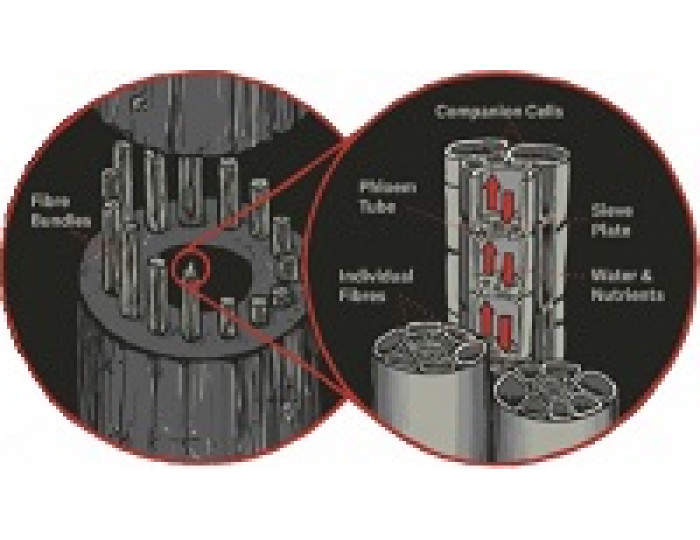
The statistics show an increase in the number of customers using natural fibers in their production processes, so investment in industrial facilities is critical to meet strong market demand in the highly promising European market.
On the pages of the specialized electronic edition of national cannabis growers, the question has been raised more than once that our country is sorely lacking production capacities that produce high-quality end products from hemp fiber, which are in high demand on the international market. In particular, the lack of an effective sales system for the fibrous part of the plant leads to the inappropriateness of the implementation at the moment of projects aimed at creating production chains specializing in the primary processing of hemp fiber. During the training of students of the Hemp University, market specialists focus on several options for solving this problem, so information about the launch of a project for processing hemp fiber by a Canadian company in Hungary is extremely interesting. This kind of information clearly demonizes certain trends in the modern hemp market, understanding which it makes sense to consider the possibilities of creating production chains specializing in the sale of specific products, at least for the EU market that needs them.
Management of the Canadian company specializing in the production and processing of natural fibers "Bast Fiber Technologies Inc." (BFTi) announced the opening of a production site in Europe aimed at researching the characteristics of hemp fiber, creating new technologies for its processing, as well as producing high-quality non-woven hemp products. Briefly, the goal of the project can be formulated as follows - from research and development to final hemp fiber products. In other words, Canadians are planning to commercialize products obtained from hemp fiber processing in order to obtain natural fabrics with new properties, as well as to gradually replace materials made using fossil raw materials.
After attracting $ 7 million of investments, BFTi management plans to create a new production site in Hungary. According to the company's management, statistics show an increase in the number of customers using natural fibers in their production processes, so investments in industrial facilities are critical to meet strong market demand in the extremely promising European market.
Currently, most nonwoven products are made from synthetic or semi-synthetic materials, which significantly contributes to the increase in the amount of non-compostable and non-recyclable waste and environmental pollution with microplastics. On the contrary, nonwovens based on hemp or other natural fibers do not contain environmentally hazardous substances, are composted and produced from renewable crops, which, among other things, provides a significant reduction in greenhouse gas emissions.
Commentary of the specialists of the Association "Ukrainian technical hemp"
"Bast Fiber Technologies Inc." not only specializes in the production of natural products 100% plant-based, but also finances research aimed at creating new processing technologies, including hemp fiber. In particular, the company has already launched the production of compostable hemp cleaning wipes. It is with the aim of entering the promising European hemp market that the BFTi management plans to invest significant financial resources in the creation of a production site for the processing of hemp fibers in Hungary.
Plant fibers, primarily from hemp, support the structure of the plant during growth and for this reason are extremely strong and also have significant absorbent properties. These are the main characteristics that are required for products such as wipes, diapers, makeup remover floppy disks, and a number of other textiles or knitwear. It should be borne in mind that only for the production of disposable products, almost six million tons of plastic fiber are used annually, and the global industry specializing in the production of the above products and currently exceeding $ 50 billion in volume is stimulating the transition from fossil-based materials. raw materials for natural by the beginning of the next decade.
Analyzing the statement of a Canadian company specializing in the production of final products from hemp fiber, as well as other trends that are actively manifesting in the market, we can draw the following conclusions:
- in the world there is a global trend towards the gradual replacement of goods made from fossil raw materials for products with similar properties, created on the basis of renewable plant materials;
- understanding the aforementioned trend, some North American companies consider the EU market as promising in terms of investing investment funds and creating appropriate production chains;
- Canadian investors invest resources in production sites not in the most economically developed countries of the EU, but in the poorer countries of Europe, which are not far from the “final consumer”;
- there is a situation in which it makes sense to attract foreign companies for the implementation of projects for the processing of hemp fiber of national production, which see the EU as a promising market for the sale of relevant products on the one hand and are considering the placement of the created production chains outside the country - the final consumer of the product and in the poorer countries of Europe, in particular on the territory of states bordering on the EU, in which the cost of production of the final product will be as competitive as possible.
Based on the foregoing, we can say that it makes sense to search for foreign investors who would be interested in creating production chains aimed at processing hemp fiber, including on the territory of Ukraine.