

How cannabis can become a raw material that will be massively used in modern automotive industry
The amount of biomass obtained from one hectare of industrial planting of industrial hemp is almost twice as high as any other agricultural crop can produce. The second reason that hemp fiber will be used as a basis for the production of biocomposite materials is the physical and mechanical properties of hemp fiber, laid down by nature. They are much higher than those of any other industrial culture (flax, kenaf, sisal, etc.). Another fundamental advantage that will form the basis for the widespread use of hemp fiber is the ability to grow a hemp plant in extremely harsh climatic conditions, including on lands that are unsuitable for growing other crops.
On the pages of the specialized electronic edition of Ukrainian cannabis growers, the question has already been raised that “ Mass production of hemp cars can begin in 2021 ”. Why the use of hemp raw materials is extremely promising in the automotive industry, but it is quite problematic in the realities of the national market, we will understand, including analyzing the published interview of one of the leaders of a company that specializes in the introduction of hemp biocomposites in the automotive industry in Canada.
It is common knowledge that Henry Ford made the hemp car back in the 40s of the last century. It is widely believed that the hysteria surrounding the psychoactive properties of cannabis was initiated by lobbyists of the owners of pulp and paper, construction and steel industries, who saw the plant as a threat to the development of their own business, led to the adoption of regulations that actually destroyed cannabis growing in North America. and then all over the world. However, the history of the use of hemp raw materials in the automotive industry is not so simple and straightforward.
Scientific and engineering thought “mastered” the possibilities of using hemp raw materials as a basis for creating various kinds of components in the automotive industry throughout virtually the entire twentieth century. Various car companies or design studios at some intervals suggested the use of hemp for interior decoration, the manufacture of various body parts, or replacing plastic with cheaper and environmentally neutral raw materials. We can say that in the last decade, the automotive industry in the economically developed countries of the world has made significant progress in technologies related to the use of the fibrous part of the plant for the production, first of all, of various kinds of biocomposite materials made from hemp raw materials. However, these technologies still have a number of disadvantages that do not allow them to compete on equal terms with other materials that are widely used in modern mechanical engineering (characteristics, price, etc.).
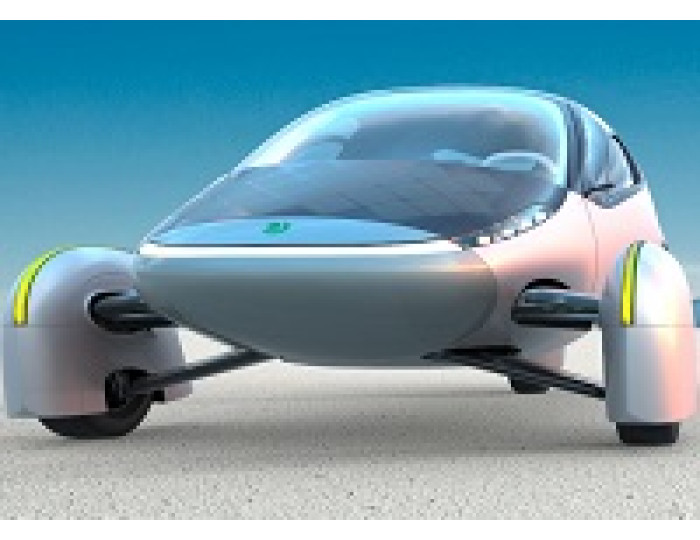
Despite the aforementioned difficulties, Canadian engineer Nathan Armstrong (the developer of the “Kestrel” car concept, made mainly from hemp) argues that the problems associated with the technological difficulties of using hemp raw materials in modern automotive industry will be resolved over the next few years. According to Mr. Armstrong, a technology has been found that will allow the use of hemp raw materials in the modern automotive industry almost everywhere.
Until recently, the manufacture of biocomposite materials based on hemp raw materials traditionally took quite a significant amount of time (modern automotive industry involves the use of technologies that are currently working and is not interested in such know-how that cannot be immediately applied in production). This was due primarily to the small-scale production of this kind of technology.
Technologically, the problem was that the rate of absorption of biocomposite resins in hemp is so high that the plant absorbed almost all binders. In the process of producing biocomposites, it is resins that are the most expensive ingredients (several times more expensive than hemp fiber). The fact that hemp fiber itself is highly absorbent of biocomposite resins made this process interesting, but not applicable in mass production of cars. Another feature of hemp fiber is the regular ingress of the woody part of the plant into the raw material, which led to irregularities that regularly appear on the surfaces of the final product.
It was in the 21st century that the possibility of accelerating the production of a significant amount of biocomposite materials was realized. In the course of additional research, a technology was found for making an extremely dense fabric from hemp fiber, which does not have the problem of excessive absorption of biocomposite resins and already basically got rid of the presence of woody constituents of the hemp plant. In addition, the strength characteristics of using such a hemp fabric for the production of biocomposite materials are significantly better than even with fiberglass.
The use of this technology can significantly reduce the price of hemp biocomposites and make them not only more attractive in terms of strength characteristics (for example, compared to fiberglass), but also much cheaper than traditional materials used in modern automotive industry.
Commentary of the specialists of the Association "Ukrainian technical hemp"
The amount of biomass obtained from one hectare of industrial planting of industrial hemp is almost twice as high as any other agricultural crop can produce. The second reason that hemp fiber will be used as a basis for the production of biocomposite materials is the physical and mechanical properties of hemp fiber, laid down by nature. They are much higher than those of any other industrial culture (flax, kenaf, sisal, etc.). Another fundamental advantage that will form the basis for the widespread use of hemp fiber is the ability to grow a hemp plant in extremely harsh climatic conditions, including on lands that are unsuitable for growing other crops.