

Canada Creates Industry to Exploit Hemp Lyocell Properties

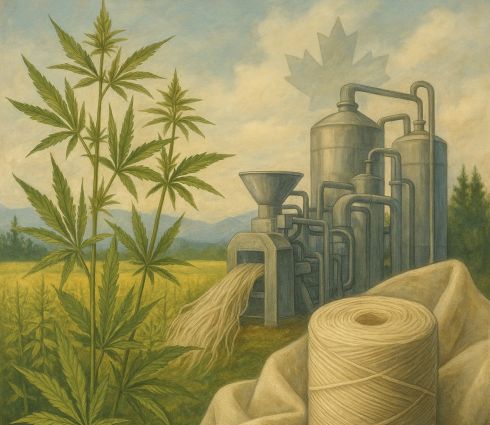
By creating
industrial capacities for processing the fibrous part of the plant, including
into hemp lyocell, the Canadian economy will receive significant volumes of raw
materials of plant origin, which will certainly be commercialized and will
become the basis for the development of at least a number of new sectors of
modern hemp cultivation.
In April 2024, in the conclusions to the prepared material “ Hemp Lyocell ”, the editors of the specialized electronic publication of national hemp growers emphasized that “in the medium term, at least in the markets of two highly developed North American countries, products made from hemp lyocell will most likely appear”. Of course, information about the creation of a specialized company to promote the technology of creating hemp lyocell on the Canadian market attracted our attention and therefore we offer material on this topic for review to our esteemed readers and listeners.
Lelia Lawson, founder and chief technology officer of Zylotex , has set herself the task of creating a new branch of modern hemp farming in Canada using the exclusive properties of hemp fiber. According to her, “We can get a huge amount of biomass from hemp, and the country will have an endless supply of raw material for the production of lyocell.”

In the technological process of lyocell production, the company “ Zylotex ” uses a solvent that turns the hemp raw material into usable thread. “Zylotex” produces hemp lyocell, which can be used in the production of technical fabrics, footwear, clothing, etc. During the production process, the solvent n-methylmorpholine-N-oxide (NMMO) is used, which is much more environmentally friendly than the traditional ones used in the more common viscose process, which contains carbon disulphide.
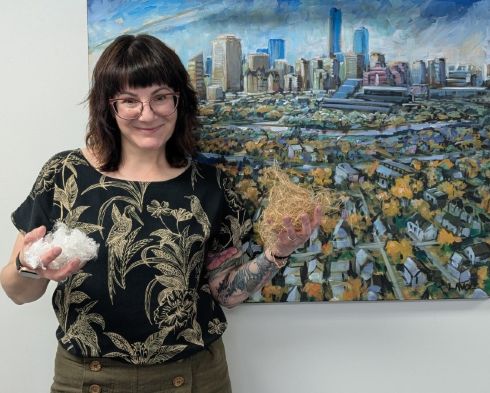
Lelia Lawson poses next to two hemp fiber
products made using the lyocell process
"The problem with carbon disulphide is that it is toxic - the solvent
is known to cause neurological problems in factory workers. It is also
extremely harmful to the environment - it is a carcinogen, it is a water
poison," says Ms Lawson.
The initiative to
industrialize hemp lyocell is being funded by a number of Canadian companies
operating in the technical textile or textile/knitwear niches, such as Davey Textile Solutions ”, “ U of A ”, “ Techfibre Industries " and
" Mark 's " .
Commentary
from experts of the Association “Ukrainian Industrial Hemp”
On the one hand, Canada's climate does not allow for the cultivation of such a fibrous material as cotton. The "country of the maple leaf" produces only 0.2% of the world's fibers, and most of them are nylon. On the other hand, the "country of the maple leaf" has significant agricultural lands on which industrial crops of industrial hemp are grown. By creating industrial capacities for processing the fibrous part of the plant, including into hemp lyocell, the Canadian economy receives significant volumes of raw materials of plant origin, which will certainly be commercialized and become the basis for the development of at least a number of new sectors of modern hemp cultivation.
