

1 in 5 autism caregivers in the US provide their child with CBD products
Initial results showing the effects of CBD on autistic children are encouraging: anxiety-inducing behavior and sleep problems appear to be reduced in those who regularly use CBD products.
The editors of the national cannabis growers e-magazine recently raised the issue of Cannabis and Autism Spectrum Disorders.”. Having experience working with children suffering from neurodegenerative diseases, as well as possessing plant materials that cannot harm young patients, it would be possible to provide leaves and inflorescences of therapeutic hemp of the Mriya variety, which contains up to 2.5% of plant cannabidiol. to conduct experiments with autistic children in our country. Unfortunately, taking into account the peculiarities of the current legislation, national specialists are forced to carry out such events not on the territory of Ukraine, but in neighboring countries, in which this type of activity is regulated. In anticipation of this kind of initiative on the part of national cannabis growers, our dear readers and listeners, we hope the information presented below will be interesting.
Autism Parenting Magazine published materials according to which almost 20% of people caring for children with autism provide them with the opportunity to use cannabidiol, and 31.3% started using it during the COVID-19 pandemic.
In a survey sent out by Autism Parenting Magazine to over 160,000 email subscribers worldwide, 18.6% of respondents confirmed they use cannabidiol for children with autism to help alleviate the various symptoms of the disorder. If you analyze the data obtained by the magazine, in the United States, 22.16% of guardians use CBD.
Data obtained by Autism Parenting Magazine showed that 76.3% of survey participants use cannabidiol extract; 13.7% use a combination of CBD / THC, and the remaining 10% use "other" forms, including the leaves and buds of the therapeutic hemp.

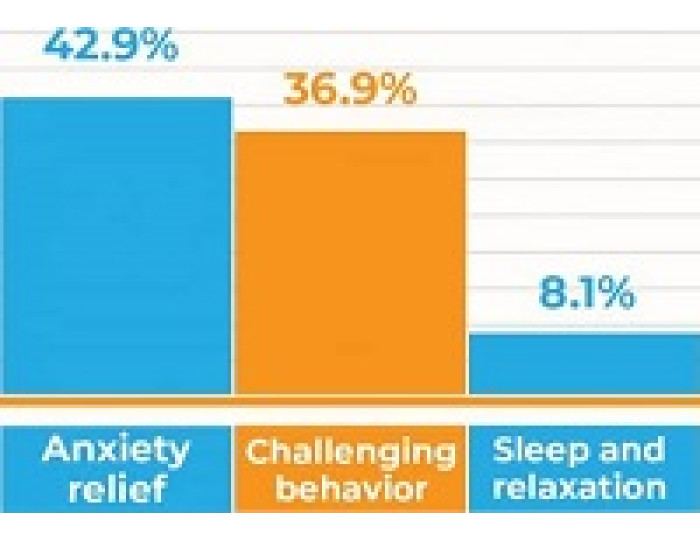
When asked to identify the main reason for using CBD for a child with autism, 42.9% responded that this drug-free cannabinoid relieves anxiety; 36.9% reported a decrease in defiant behavior; 5.1% reported pain relief and inflammation reduction; 8.1% confirmed that cannabidiol has a positive effect on sleep and relaxation; 4.3% focused on reducing seizures, while the rest of the respondents named “other” reasons, such as increased speech and support for potty training.

Oils (oral drops and topical sprays) were the preferred CBD format and 60.8% of respondents preferred to use them. Meanwhile, 21.5% use gummies and topical agents; 7.5% use capsules or tablets; 5.1% use lotions or balms and 1.9% use vapes. The rest of the respondents chose “other” options, including honey sticks and patches.

A large number of respondents use CBD for adolescents with autism, with 21.39% of CBD users confirming their child is 13 to 18 years old.
When asked if they started using CBD during the COVID-19 pandemic, 31.3% answered in the affirmative. Meanwhile, 16.6% have increased the amount of cannabidiol they give their child since the start of the pandemic.
Another interesting detail is that only 20.1% of those surveyed have a doctor's prescription for using CBD. Despite this, 21.7% of respondents reported that their doctor recommended trying cannabidiol. Meanwhile, 27.4% of the recommendations came from friends or family members, and 23.6% came from another parent with autism. The rest of the respondents chose “other”, and many claimed that their use was based on their own research.
When asked if they would recommend CBD products to other parents with autism, the vast majority of 82.9% said they would.
Why More Parents Are Using CBD for Their Autistic Children
Autism Parenting Magazine asked cannabis experts and parents with autistic children to comment on why more caregivers are starting to use cannabidiol for special children.
Bao Le, MD, has an autistic son. When asked by Autism Parenting Magazine staff, he claims to have “seen more and more blogs and articles about parents wanting to research and understand the risks and benefits of CBD products. I have personally given cannabidiol to my autistic son for over seven years and it has helped him cope with night terrors, most seizures and tantrums. CBD has been supportive for my son and me in dealing with his anxiety as well as his brain hyperactivity. The use of cannabidiol helped me to normalize the reactions of my son, who has become more loving and can express his thoughts orally or through facial expressions. I cannot claim that CBD will help all children with autism, but it has definitely helped me and changed the life of my son and my family. "
Autistic mom Heather Keita began using cannabidiol to calm her daughter's non-verbal manifestations and help her sleep. She saw positive results and commented: “I believe that more and more people are using cannabidiol, passing information about its properties by word of mouth. We recommended it to two other parents with autistic children and they started trying it on themselves. We received only praise and gratitude from them. "
Why the COVID-19 pandemic has increased CBD use
Since 31.3% of autistic caregivers first started using CBD during the COVID-19 pandemic, Autism Parenting Magazine tried to figure out why.
Dr. Le commented on this situation as follows: “Parents see an increase in stress and anxiety when their children are 'stuck' at home and cannot walk in the fresh air or go to places they know because of the pandemic, of course, they are more often forced to give the child substances that normalize his condition ... That is why herbal cannabidiol is a natural remedy that copes well with this kind of stress that an autistic child is exposed to during the coronavirus pandemic. "
Differences Between CBD and Marijuana
Since parents give cannabidiol to children at an early age, some readers may be concerned about its relationship to marijuana and the safety of providing this drug-free cannabinoid to children. Autism Parenting Magazine asked two doctors to comment on the issue.
“The effects of CBD are much milder than marijuana or THC. Technical hemp must contain less than 0.3% THC (per US law - editorial note). By this definition and legal regulation, 0.3% THC has little or no euphoric effects on your body, whereas CBD and CBG aim to connect, heal, and reduce anxiety in our brain and body. Hemp has been called a 'medicine' while CBD is known for its medicinal properties, ”explained Dr. Le.
Pharmacist Dr. Musa Mirakhor added: “CBD will not give you a high. CBD is the exact opposite of THC. While THC has the ability to alter consciousness, CBD induces "sobriety" and restores the natural balance in various systems of the human body. It's important to note that some natural CBD products contain THC. This is because the plants from which the CBD is extracted have trace amounts of THC. However, its amount is negligible to the point that no one person can consume enough for a trace amount of tetrahydrocannabinol to have any noticeable effects. "
Advice for parents considering using cannabidiol for their children
The two doctors also shared a few words of caution for any parents currently considering cannabidiol for their children on the autism spectrum and looking at different food formats that can contain plant-based cannabidiol.
Dr. Mirahor states: “There are many different types of CBD oil. It would be a mistake to believe that all CBD oils are the same. There are many options on the market right now and each one has unique characteristics. When making a decision, it is helpful to know the different forms that CBD oil can take. The type of CBD extract is one of the defining traits that distinguish oils. Some of them are "full spectrum", which means they contain all the compounds naturally found in hemp, even a small amount of THC. "
Dr. Le says, “The effects of CBD are cumulative rather than instantaneous. While people have been successful in treating numerous ailments with CBD oil, it is not a miracle cure-all. Cannabidiol may provide quick relief, but it won't cure chronic diseases overnight. CBD takes time to grow and reach its full potential. As parents of autistic children, we have been taught to be patient and resourceful, and we will do our best to help our children. Just having one more opportunity to help with day-to-day problems is a gift. Start with microdosing, write down when you start noticing any changes in attitude, stress, eye contact, verbal changes, and general mood. CBD will slow down your CNS (central nervous system) and that's a good thing. Since children with autism have overactive brains that cause sensitivity to loud noises, bright lights, and crowded places, when CBD enters the brain and slows down hyperactive signals, children begin to be able to focus on motor skills, speech, cognitive and other aspects, including coping with stressful situations ”.
Further CBD Research: Level of Support and Frequency of Use
Interested in the results, Autism Parenting Magazine sent out a follow-up survey asking what level of support the children of respondents on the autism spectrum need (eg, high functioning / low functioning) and how often interviewees use CBD products with their child.
In total, 42.9% of the participants said that their child “needs substantial support”, 39.3% answered that “needs support” and 17.9% answered “requires very substantial support”.
When asked how often they use CBD products, 46.4% answered “daily”; 28.6% answered “only sometimes”; 3.6% responded “weekly,” and the rest of the participants responded “Other,” including mentioning that they no longer use CBD or do it infrequently.
It is clear from the survey data, as well as from a variety of other studies on the use of cannabidiol for children with autism, that more and more parents are looking at CBD products as a treatment for this disorder. Initial results showing the effects of CBD on autistic children are encouraging: anxiety-inducing behavior and sleep problems appear to be reduced in those who regularly use CBD products.
Commentary of the specialists of the Association "Ukrainian technical hemp"
In the course of training the students of several streams of training at Hemp University , specialized round tables “ Use of cannabinoids in the treatment of severe / chronic diseases ”, “ Cannabinoid therapy ” were held, during which the mechanisms of the therapeutic effect of plant cannabinoids on the human body were explained. In addition, the " Possibilities of using the medicinal properties of technical hemp with a therapeutic orientation ", which can be achieved through the use of leaves and inflorescences of a hemp plant, the amount of tetrahydrocannabinol in the dried straw of which is below 0.08% was clearly demonstrated . Considering the relevance of the topic of “non-mainstream” drug-free cannabinoids, during the training of the next course of students of the “ Hemp University ” a specialized round table will be held , within which the students will be brought up-to- date information about the actively emerging global market of drug-free cannabinoids, as well as about already known therapeutic properties. cannabinol, cannabigerol, cannabichromene, cannabidiolic acid, as well as a number of other therapeutically active elements of the hemp plant.