

Marijuana companies are the main lobbyists for the legalization of its use in the US

The main lobbyists for changes in the
current US legislation are companies whose activities are aimed at regulating
the use of the hemp plant for medical and recreational purposes. Those.
companies exploiting various properties of plants lobby primarily their own
interests, completely ignoring the requests of other market participants, as
well as end consumers, including blocking the possibility of regulating the
cultivation of plants in households.
On the pages of the specialized electronic edition of national hemp growers, with a certain regularity, the question is raised that it is necessary to make such changes to the current legislation of our country that will create favorable conditions for the development of national companies exploiting various exclusive characteristics of the hemp plant, as well as end consumers who need to be granted the right for self-cultivation of industrial cannabis of a therapeutic orientation in households, or to use for this purpose the mechanism of social clubs widespread throughout the world. In this regard, it will be interesting to get acquainted with the official information on financing lobbying aimed at amending US legislation and an attempt to draw independent conclusions about why the proposed amendments to the current legislation of our country are in the interests of exclusively foreign pharmaceutical companies to the detriment of the national consumer and commodity producer.
Marijuana companies provided almost all of the money for
medical and recreational cannabis legalization initiatives in the midterm
elections last November in five US jurisdictions, a dramatic reversal in
funding trends from a decade ago. when the main sponsors of hemp reform in
various states were public organizations, as well as individual investors.
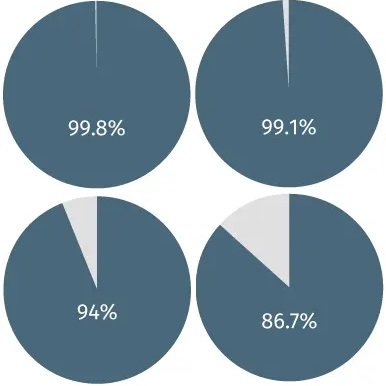
According to funding reports, adult drug legalization
campaigns in Arkansas, Maryland, Missouri, and North and South Dakota have
raised a total of almost $20 million. Financial activity reports for these
types of legalization lobbying campaigns show at least $19.05 million, or 95%
of the total, came from sources identified as businesses associated with the
cultivation, processing, or sale of psychoactive cannabis. At the very least,
data on lobbying spending to promote the legalization of psychoactive cannabis
use reflects the growing financial weight of the approximately $33 billion US
marijuana industry.
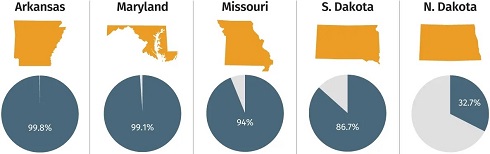
Almost all of the donations to the campaign to legalize
medical and recreational cannabis in the five US states came from marijuana
companies.
This shift in funding trends for legalization lobbying
companies signifies new priorities: established medical cannabis companies are
pushing for restricted license markets, in contrast to past lobbying campaigns
where voters were asked to treat marijuana like alcohol.
In turn, civil society organizations such as the MPP and
the Drug Policy Alliance , which led the movement to legalize recreational
cannabis use in Colorado and Washington a decade ago, are putting their efforts
into regulating new markets, including the legalization of the legal use of
psychedelics . and decriminalization of other drugs.
Attention needs to be paid to the fact that as players in
the marijuana industry move towards restricted license markets, they are losing
support from activists who want criminal justice reform, regulation of home
growing, and social justice provisions coming along with legalization laws . .
“It is no coincidence that we are seeing more industry efforts (marijuana companies) to regulate the medical and recreational use of psychoactive cannabis and ordinary taxpayers in more places reject legalization measures. Voters are concerned about the details of bills on legalization... When the lobbyists include market monopolists, they propose to amend the current legislation “for themselves”. The lesson learned from lobbying is to abandon the idea of bribery or deception of voters, aimed at monopolizing the market by financing an electoral initiative,” says Shalin . Title , a former Massachusetts cannabis regulator who has become a vocal critic of what she sees as the excesses of the psychoactive cannabis industry .
Change of lobbying priorities for
legislative initiatives
Ten years ago in Colorado and Washington, and in 2016, when
voters in four more states on both coasts, including California, legalized
recreational marijuana, the bulk of the funding for the successful change in
the then-current regulatory framework came from established non-profit
organizations such as as "MPP", " Drug Policy Alliance ",
"American Civil Liberties Union", as well as a number of other public
organizations in the United States. It should be noted that the previous
legalization lobbying campaigns were aimed primarily at activists who attracted
financial resources to promote the thesis about the need to amend the
legislation.
Among the prominent sponsors of this kind of lobbying
activities, the chairman of “ Progressive Auto Insurance ” Peter Lewis,
financier George Soros, and Facebook investor Sean Parker, who was the main
sponsor of the 2016 California campaign.
Decade-old lobbying campaigns focused primarily on treating
marijuana like alcohol. They did not focus on social justice components (such
as removing marijuana-related crimes from criminal records), nor did they focus
on more sensitive issues such as license restrictions, taxation, and so on.
Industry leaders, individuals
In four of the five states where legalization initiatives were taken last November, almost all of the money was spent on lobbying campaigns that are directly related to the various segments that exploit the properties of psychoactive cannabis in these US jurisdictions.
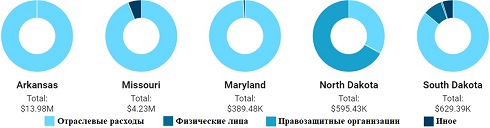
Amount of resources devoted to the legalization of
the use of medical and recreational cannabis in five US states
Specifically, according to published data in Arkansas,
marijuana companies spent $13.95 million out of a total of $13.98 million to
fund state legal changes. In Missouri, the psychoactive cannabis industry
contributed at least $ 3 . 98 million out of a total of $4.2 million. In
Maryland, the marijuana industry accounted for $385,983 out of 389,478. In
North Dakota alone, where advocacy groups “ New Approach PAC” and “MPP”
contributed at least $398,529, and questions were raised about individual
cultivation. However, even there, well-known marijuana companies contributed
financial resources to the lobbying campaign for at least $195,000 out of a
total of nearly $600,000.
On a separate note, in states where the marijuana industry
has taken the lead in changing the law, individual actors who were once
considered essential to successful grassroots campaigns have contributed
extremely little financial resources. For example, in Arkansas, five donors
donated $25,900, of which $25,000 was from one individual and $500 from another
individual. In Maryland, 12 donors wrote checks ranging from $10 to $500,
although the last contributor wrote a check and identified himself as someone
connected to the cannabis industry . Only in South Dakota, where New Approach
and MPP were heavily involved in lobbying activities, was there anything
resembling grassroots fundraising. There, campaign funding reports showed that
39 individual donors contributed $53,697.
“We came to the industry for investment because this
segment is the biggest recipient of economic benefits from investment in
legalization. Now this industry is not so much focused on advocates fighting
for their health or human rights as it is on the fight against prohibition.
Businesses have emerged that are fighting for future revenues or booming
markets,” says Eugene Monroe, chairman of the MD Can 2022 campaign, which
lobbies for legalization in Maryland.
And often this kind of approach in the philosophy of making
changes to the law gives priority to business considerations to the detriment
of the goals of social justice or the interests of consumers. For example, in
2015, Ohio voters rejected a legalization measure that would have enshrined a
limited-market oligopoly in the state constitution. Cannabis activists in
Arkansas have accused lobbying groups of introducing legal changes that would
ban domestic cannabis cultivation, ensuring that a limited number of existing
medical marijuana cultivators get a first chance at selling their products to
the recreational market.
Commentary of the specialists of the
Association “Ukrainian Industrial Hemp”
I would like to especially focus on several theses,
"highlighted" by our American colleagues. At the moment, the main
lobbyists for amending the current US legislation are companies whose
activities are aimed at regulating the use of the hemp plant for medical and
recreational purposes. They specialize in the cultivation, processing or sale
of cannabis with a high content of psychoactive tetrahydrocannabinol. Accordingly,
"the one who pays, he orders the music." Those. companies exploiting
various properties of plants lobby primarily their own interests, completely
ignoring the requests of other market participants, as well as end consumers,
including blocking the possibility of regulating the cultivation of plants in
households.
And now you just need to analyze which state structure is
the initiator of the latest project to amend the current legislation of our
country and, having carefully read the text of the bill lobbied for adoption,
once again make sure that it was developed in the interests of foreign
pharmaceutical companies in the first place and does not with the aim of
meeting the needs of the national patient/consumer, and even more so of the
Ukrainian manufacturer.
< Previous article Next article >