

A brief analysis of China's CBD market
No non-Chinese company is allowed to sell cannabidiol or other products made even in China in the domestic Chinese market. All foreign companies must export all hemp products manufactured in China, since only Chinese companies can sell products containing CBD in the domestic market.
In the article " A brief analysis of the hemp market in China " posted on the pages of the specialized electronic edition of Ukrainian hemp drivers, information about the cannabidiol market in the Middle Kingdom has already been provided. Considering the resources that this country is investing in the development of modern hemp breeding, this material attempts to analyze the market trends inherent in the “second world economy in nominal GDP”.
China is a potentially huge market in which there is growing interest in the production of various drug-free cannabinoids, primarily cannabidiol. Given the role of cannabisa in traditional Chinese medicine, the Chinese consumer's understanding of the therapeutic properties of hemp products and inflorescences, as well as the huge aging population, the country is potentially ready for consumers' unprecedented interest in products that use natural drug-free cannabinoids.
Government officials, as well as representatives of private business in China, understand that obtaining drug-free cannabinoid extracts is one of the most profitable sectors in the economy of hemp business. Hemp has been used in traditional Chinese medicine for several millennia. Among Chinese consumers, there is a significant demand for natural foods and medicines made using the therapeutic properties of cannabisa. The interest in this market of the domestic consumer is superimposed by the need for significant amounts of drug-free cannabinides (primarily cannabidiol), which is growing rapidly in the external market. Given the above factors, as well as a significant population, a growing middle class and an aging society in China, it can be argued that in the medium term, interest in various projects related to the use of drug-free cannabinoids, including cannabidiol in the country of the Rising Sun, will increase.
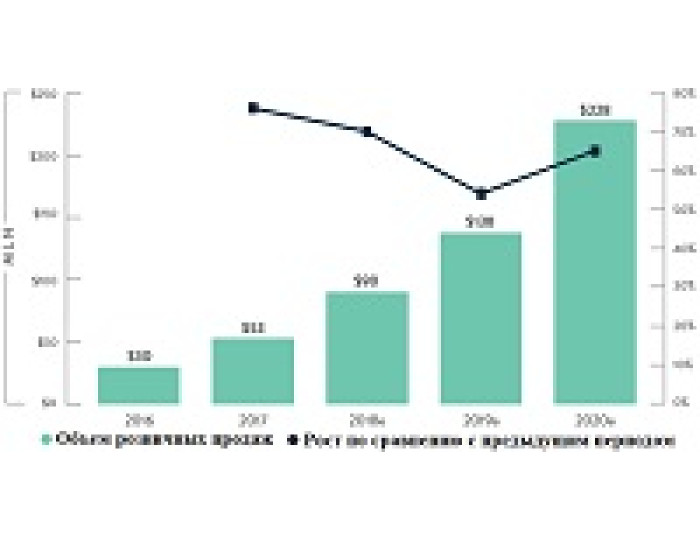
According to the estimates of New Frontier Data, in 2017, the volume of cannabidiol sales in China from hemp was about $ 53 million. Most likely, the growth of the market over time will slow down, as the current “gray market” of China is gradually giving way to the legal market that uses the therapeutic properties of cannabis for medical purposes. According to a number of analysts of China's hemp market, if the government of the country could develop the necessary regulatory framework for this, by 2022 the cannabidiol market of cannabis derived from cannabis reaching a value of $ 750 million would have been formed in the country of the Rising Sun.
The dynamics of the Chinese cannabidiol market


Such a sharp jump in the consumption of CBD is primarily associated with therapeutic advantages, which are clearly demonstrated by the older generation of the country. CBD has traditionally been used in Asian countries for the treatment of neurological and cardiovascular diseases, various types of inflammation, and neuropathic pain, which are mostly prevalent among the elderly.
Kbd cosmetics
Cannabinoid cosmetics are already actively used in the country by certain categories of the population (buyers with medium and high incomes). A number of large Asian cosmetic companies introduce natural cannabidiol into their product lines, and the cost of this kind of activity increases significantly every year. Considering the ancient traditions of the use of cannabis for cosmetic purposes, as well as the latest developments in the use of CBD in the beauty industry, it is not surprising that this sector of the hemp economy of the Celestial Empire is rapidly developing. Marketers skillfully increase consumers' affection for cosmetics made on the basis of natural CBD combining them with the history of using the plant for cosmetic purposes and technologies of modern use of drug-free cannabinoids in preparations for skin and hair care.
The speaker of sales of cosmetics in China


Commentary of the Association "Ukrainian technical hemp"
Until 2015, non-Chinese firms were not allowed to grow industrial hemp crops in China. Hempson BioTech became the first foreign company to obtain permission for this type of activity in the Middle Kingdom. However, no non-Chinese company is allowed to sell cannabidiol or other products made even in China in the domestic Chinese market. All foreign companies must export all hemp products manufactured in China, since only Chinese companies can sell products containing CBD in the domestic market.
Individual analysts estimate that in China, South Korea and Japan there are currently more than 200 million people aged 65 and older, and the demographic figure expected over the next 10 years will increase to more than 275 million. It is noteworthy that by 2028, more than 20% of the population of South Korea and 30% of the Japanese population will be elderly - and these are potential customers of using cannabinoid drugs (pharmacological, cosmetic) based on drug-free cannabinoids.