

Construction methods involving the use of hemp raw materials (video)
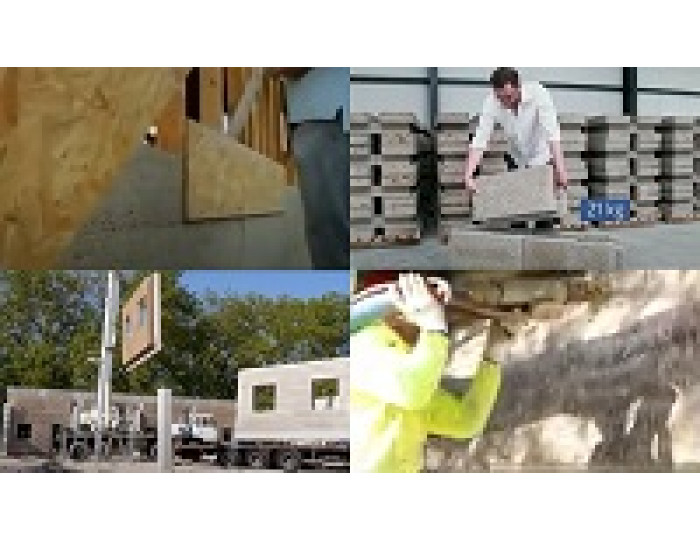
Given the fact that hemp raw materials have been the basic building material for most of human history, and in addition, it has enormous potential for a healthy and sustainable building culture, we can say that the hemp plant will eventually occupy a worthy niche in the construction market of our country. and primary processing facilities will be able to meet the growing demand for ecological building materials, which not only have medicinal properties, but also allow residents of hemp buildings to significantly save on utility bills due to the fact that hemp wood concrete allows creating a “thermos” inside the erected structure, excellent working in terms of keeping warm and adjusting the humidity in the room. We are confident that hemp materials are the future of the construction industry in Ukraine and by developing the technology of their use in the country, more buildings will be created that are friendly to the citizens of our country living or working in them.
During the round table "Hemp raw materials - technologies of its use in construction, production of biocomposite materials and furniture", held within the framework of the "Hemp University", the listeners were also provided with the most detailed information regarding various construction technologies related to the use of hemp raw materials. modern housing construction. Taking into account the rush demand observed in the last two years for the use of hemp raw materials used for the construction or insulation of residential and non-residential buildings and structures, as well as the fact that buyers have to tell the basics of hemp construction, the editors of the specialized electronic edition of national hemp growers were asked to post basic information about what construction methods are used on the territory of our country. We present the prepared material of our colleagues from the electronic trading platform of the profile association of national cannabis growers Hemp Market, systematizing the basic concepts of hemp construction, for acquaintance and possible use of our dear readers and listeners.
Hemp wood concrete (wood concrete) is one of the oldest building materials on earth. In some economically developed countries of the world, brick concrete is referred to as biocomposite materials, which are traditionally used as an ecological alternative to traditional building materials made from fossil raw materials. The traditional recipe of hemp wood concrete has not changed for several millennia (bridges made of fire-reinforced concrete built by the ancient Romans still perform their functions on the territory of the Apennine Peninsula). The recipe for hemp wood concrete includes several key ingredients - fire, lime, water, fillers (sand, slag, etc.).
Kostrobeton
Monolithic walls made of hemp wood concrete are one of the most technologically complex construction processes involving the pouring of walls into a pre-prepared building frame. The advantage of this method is the fact that in the process of competent construction it is possible to achieve the fact that there are almost no “cold bridges”, i.e. the whole structure is actually a single whole.
For construction with the help of fire-reinforced concrete, it is necessary to have certain skills, which it makes sense to “spy” in the videos below.


Video of construction from hemp wood concrete
Traditionally, a structural frame is first built with piping and pipes necessary for plumbing, electrical fittings, etc. Then, using wooden or plastic molds, internal and external wall surfaces are created, which are "built" from the bottom up by pouring fire-reinforced concrete into the voids inside the formwork. It is very important that all voids in the walls are filled, but anything that is missing can be repaired later after the formwork is removed (there are ways when the formwork remains as the outer "skin" of the building.
It must be borne in mind that it is necessary not only to fill the voids inside the formwork with bonded concrete, but it must also be compacted in order to ensure the excellent integrity of the load-bearing walls. On average, it takes about 24 hours for monolithic fire-reinforced concrete to set before removing the formwork and “pulling out” it to fill the next belt / level. It should be borne in mind that hemp wood concrete takes some time to reach an acceptable threshold of strength - from a month to three drying periods (depending on environmental conditions) before it makes sense to do external or internal finishing work.
Despite the fact that the above mentioned method of this kind of construction is one of the most difficult and time-consuming, it is one of the most common at the moment in Ukraine due to the fact that hemp bricks, building blocks are just being introduced to the market in the country, or construction of hemp houses, created according to the principle of "Lego".
Hemp bricks / blocks
In the country, there are primitive methods of making various kinds of bricks or blocks right at the construction site by mixing the materials necessary for this and pouring them into a mold. There are already several factories operating, which use rather complex equipment that requires the involvement of skilled workers, making bricks, as well as blocks according to certain technologies.
To simplify as much as possible, the production process consists of the following stages:
• mixing (the required raw materials are mixed in certain concentrations);
• casting (a solution of hemp wood concrete is poured into a special press, which forms a brick or block);
• curing in the open air
Blocks or bricks made of hemp wood concrete, which have not yet hardened, are placed in a place where they can be stored while drying in the open air. On average, it takes about 6-10 weeks for them to reach the acceptable strength and hardness with which the products can be sold on the market.


Video of masonry of various types of bone blocks
The construction of buildings or structures from hemp bricks or blocks is carried out in the same way as in the construction of traditional wall building materials.
Prefabricated Structural Wall Panels


Video of technologies for creating prefabricated structures from fire-reinforced concrete
Structurally insulated panels created in factories are another way to effectively use hemp wood concrete. These can be both standard and non-standard sections of load-bearing walls or piers, which are formed from reinforced concrete into finished products, which are assembled like a “Lego constructor” on the construction site on top of the already built foundation. It should be noted that in Europe and North America this method is mainly used for the construction of standard commercial or non-residential premises, or for individual orders - in the form of original projects of cottages, tanhouses, etc.
Machine application of bonded concrete

Video of applying wood concrete by machine
It is similar to pouring standard bonded concrete at a construction site. The fundamental difference lies in the fact that this method can be applied using special construction equipment (so far there is no information about this kind of methods in our country). Instead of, as it is done in the traditional way of creating walls of fire-reinforced concrete from the bottom up, hemp wood concrete is, as it were, applied to the inner formwork of the wall. In Europe, this method is used to insulate buildings, roof ceilings or floors. It should be borne in mind that the use of this kind of equipment requires high technical skills and a certain amount of experience with rather expensive equipment.
Alternative methods
There are several construction technologies that are offered only in theory on the market so far, within the framework of which hemp trust is pressed into bales and from them load-bearing walls are created or rammed into a certain volume, limited in two planes by OSB panels, i.e. sandwich panels are actually formed. In addition, a honeycomb technology is being developed on the market, which implies the creation of something like bearing longitudinal and transverse hemp bearing arms, made of hemp fiber (as a reinforcing agent) and boned concrete. Until such technologies are embodied in implemented projects, they can be talked about as rather exotic and requiring appropriate miscalculations and at least one building created using these technologies in order to study how projects will behave over a long period of operation.
Other hemp building materials and technologies
In addition to using hemp raw materials to create load-bearing walls, piers, floors and roofs, recently in Ukraine, technologies have been actively developing, involving the use of hemp ingredients in various other building materials - hemp OSB panels, paints, plaster, putty, etc.


Video use of a hemp fire for inter-rafter insulation or as plaster
Given the fact that hemp raw materials have been the basic building material for most of human history, and in addition, it has enormous potential for a healthy and sustainable building culture, we can say that the hemp plant will eventually occupy a worthy niche in the construction market of our country. and primary processing facilities will be able to meet the growing demand for ecological building materials, which not only have medicinal properties, but also allow residents of hemp buildings to significantly save on utility bills due to the fact that hemp wood concrete allows creating a “thermos” inside the erected structure, excellent working in terms of keeping warm and adjusting the humidity in the room. We are confident that hemp materials are the future of the construction industry in Ukraine and by developing the technology of their use in the country, more buildings will be created that are friendly to the citizens of our country living or working in them.