

How profitable to grow medical cannabis in the open field
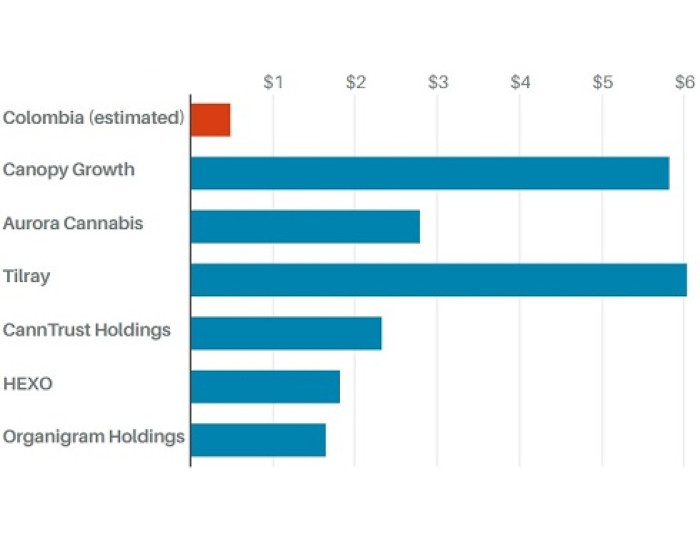
In the competition for the cost of raw materials, it is more cost-effective to grow cannabis in countries with an equatorial climate, which the market may come to in the near future, therefore companies that are building their business with a focus on cultivating greenhouses / growboxes / phytotrons (protected ground) will be soon time may become uncompetitive. The leaders of the hemp market are considering the possibility of growing cannabisa in the open field in countries with hot climates, and this factor provides a window of opportunity for the varieties of technical hemp therapeutic orientation created in Ukraine.
Previously, more than 180 rose growers were located along the highway in Monterey California. Now the flower industry has moved far south to Colombia, a country with lower prices and, accordingly, cheap labor. With the legalization of the psychoactive cannabis market in California, the Monterey greenhouses have moved from growing roses to cultivating cannabis. Market experts do not unreasonably believe that the producers of cannabis in North America will suffer the same fate as the producers of flowers. Separate large hemp companies are already preparing to harvest their first crop in Colombia, despite the fact that they have invested hundreds of millions of dollars to create huge complexes in cold latitudes to cultivate hemp plants in greenhouses in artificially controlled conditions.
The equatorial climate contributes to the rapid growth of hemp, a significant increase in the biomass of leaves and inflorescences, intensive accumulation of cannabinoid compounds, makes it possible to collect several harvests per year. In addition, cheap skilled labor provides Colombia with a clear competitive advantage in production processes associated with the cultivation and processing of plants and the production of finished hemp products.
Most North American cannabis companies build their long-term development plans on the assumption that their production costs will amount to no more than 2 Canadian dollars per gram of cannabis. Colombian manufacturers claim that their prices will be significantly lower - 50 cents per gram with the prospect of further decline. The cost of producing legal psychoactive cannabis is not defined by accounting standards, so it is difficult to compare the production costs of companies, not to mention countries, but the price policy of the cannabis market is very clear - growing cannabis in countries with equatorial climate, in particular Colombia, is more profitable.


“It’s hard to compete with Colombia,” says Kyle Detwieler, whose holding company has almost a million square feet of greenhouses and other facilities on which cannabis are grown, “the difference is that in countries with an equatorial climate, the cost of raw materials can be reduced by 90%” .
Commentary of the Association "Ukrainian technical hemp"
The beginning of the legal cultivation of cannabis in Colombia is connected with the history of the illicit drug trafficking of Colombian cartels, whose activities contributed to the civil war, and its end brought the Nobel Prize to former President Juan Manuel Santos. To provide jobs for demobilized people in rural areas, the administration of Mr. Santos in 2015 joined many governments around the world that legalized the use of cannabis for medical purposes. Colombia can produce cannabinoid oil, as well as plant extracts of a psychoactive form, as well as containing non-narcotic cannabinoids, which is becoming increasingly popular lately.
One of the first companies licensed in Colombia was PharmaCielo, an enterprise from Toronto, Canada, supported by international investors. The company has large open-air greenhouses and a processing plant, which is planned to be certified according to European standards of good manufacturing practice. According to David Gordon, the chief corporate director of the company, about 200 varieties of cannabis are stored in the seed (genetic) bank of PharmaCielo, but they will start their work with the production of products with a high content of cannabidiol, which, according to the company, initially have the best export opportunities.
Colombia is already one of the world's leading exporters of coffee, cut flowers and bananas. The main question is whether the economically developed countries, which have legalized the possibilities of using the therapeutic properties of cannabisa (Canada, Germany), will be allowed to import legally produced cannabis products, including from Colombia. It all depends on the trade wars unfolding today and the global pace of the relevant legislative changes. In the event that Colombian hemp is allowed to compete freely with products from expensive greenhouses in North America and Europe, large companies that have built these greenhouses may face significant losses, which ultimately lead to a loss of business.
The fact that the leaders of the hemp market are considering the possibility of growing crops in open ground in countries with an equatorial climate, provides ample opportunities for Ukrainian varieties of technical therapeutic cannabis. These varieties are characterized by a high content of non-narcotic cannabinoids, the almost complete absence of psychotropic tetrahydrocannabinol, as well as the full adaptive ability to grow in open ground and the formation of significant biomass of inflorescences and leaves.