

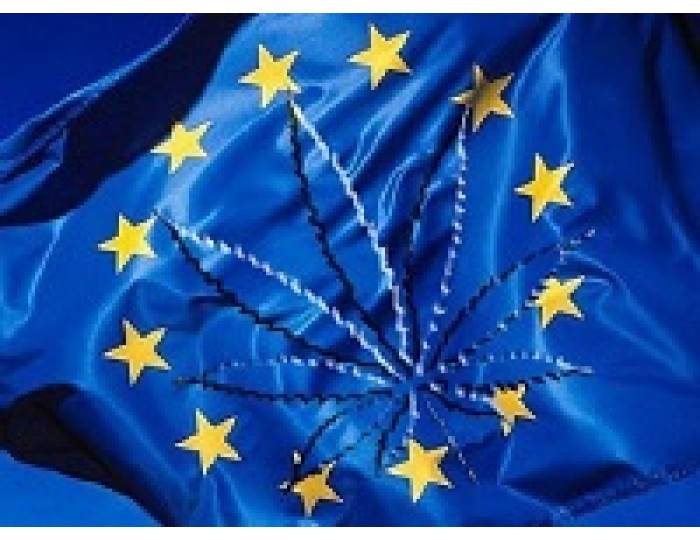
The failure of the regulatory framework of the EU to the regulatory support of the use of cannabis for medical purposes
The process of using a plant can be significantly accelerated and simplified if technical varieties that do not contain psychotropic tetrahydrocannabinol are used as therapeutic cannabis, but only an increased amount of drug-free cannabinoids with an enormous therapeutic effect.Bringing cannabis business related to the use of the therapeutic properties of cannabis from the financial and legal shadow in our country can create an adequate and government-regulated market for cannabis plants that bring tremendous benefits to citizens and substantial revenues to the state treasury.
At first glance, the European market for medical cannabis looks pretty bright. The media circulate information that more than 20 countries of the European Union have legalized medical cannabis in one form or another. If you dig a little deeper, it turns out that in many cases "one form or another" may be very different from what the consumer / patient really needs.
If we exclude Sativex (pharmaceutical product in the form of an oral spray, developed by the British company GW Pharmaceuticals for the treatment of multiple sclerosis, relief of pain and spasms) and synthetic cannabinoids, only in three European countries (Germany, Italy, the Netherlands) legal sales of therapeutic hemp are possible.
Depending on the country, there are various laws governing the consumption of medical cannabis. Some people are lucky that the health system of the countries of which they are citizens provides opportunities for the legal use of the therapeutic properties of cannabis for the treatment of various diseases. Others are forced to break the law and turn to the illegal market in order to meet the standard of living that other people have with the same disease in the neighboring country. For example, in Belgium since 2015 there is the possibility of legal use of medical cannabis, and in the Netherlands bordering it - since 2003. Only there is a huge difference between "legal medical cannabis" and "legal" medical cannabis. In Belgium, you may be prescribed medical cannabis only to treat the symptoms of multiple sclerosis, but even so, the aforementioned Sativex is the only treatment option.
Many Belgians could benefit from the use of cannabis for medical purposes in the treatment of a number of complex, including chronic diseases, including chronic pain, glaucoma, nausea, vomiting (associated with chemotherapy), epilepsy, migraine, etc. As a result, they are either forced to take pharmaceutical preparations containing synthetic cannabinoids, which are much less effective and have huge side effects, or illegally buying cannabis crossing the border and purchasing the necessary products in Dutch coffee shops or growing plants on their own, putting themselves "beyond the law ". Meanwhile, in neighboring Holland, patients can legally, though not as easily as many assume, get a prescription and legally get dried psychoactive cannabis flowers at a local pharmacy.
The industry associated with the use of cannabis for medical purposes in Europe, clearly needs to be harmonized. It is required to “pass” and subsequently adopt the relevant legal acts through the European Parliament without any objection from the member states that have the right to vote in the European Council, and, finally, approval by the European Commission. The difficulty in reaching consensus at so many levels and in a large number of EU countries, institutions, departments and ministries is exacerbated by the current stereotypes that this is hemp. Therefore, first of all, it is necessary to change the stigma of a negative attitude to the plant by widely promoting the beneficial properties of cannabis and providing evidence that the therapeutic properties of cannabis help to get rid of a number of serious diseases.
Commentary of the Association "Ukrainian technical hemp"
The European public is increasingly paying attention to the legalization of medical cannabis. Most likely, within five to ten years, most European countries will adopt their own legal acts aimed at legalizing the possibility of using the therapeutic properties of cannabis for medical purposes. This will facilitate issues such as the cross-border distribution and transportation of cannabis-based patients, giving local companies access to the global highly liquid hemp market, etc.
Indisputable is the fact that the processes associated with the possibility of recreational use of psychoactive cannabis usually do not lag far behind the regulatory provision for the possibility of using the plant for medical purposes. Since the markets for the legal use of cannabis for medical purposes are currently very different in Europe, a large number of patients who cannot get access to drugs from cannabis as part of their country's health program will “move on” to the use of marijuana.
The process of using a plant can be significantly accelerated and simplified if technical varieties that do not contain psychotropic tetrahydrocannabinol are used as therapeutic cannabis, but only an increased amount of drug-free cannabinoids with an enormous therapeutic effect. Bringing cannabis business related to the use of the therapeutic properties of cannabis from the financial and legal shadow in our country can create an adequate and government-regulated market for cannabis plants that bring tremendous benefits to citizens and substantial revenues to the state treasury.