

Assessment of the global market for cannabinoid drinks
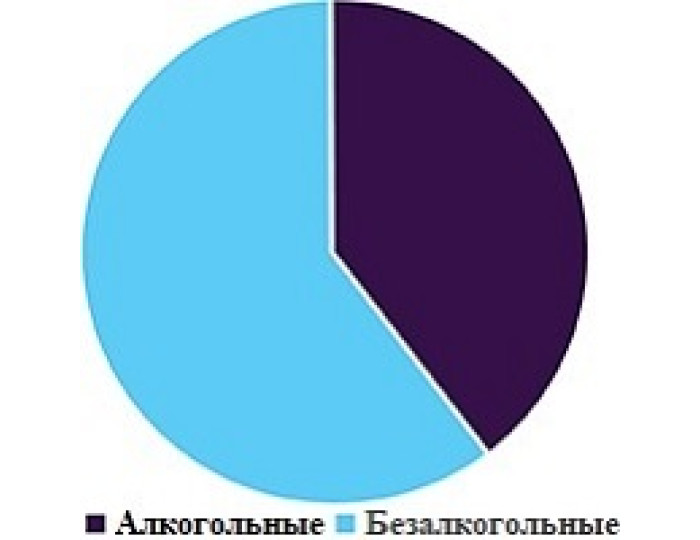
Non-alcoholic cannabinoid drinks, according to analysts in the global hemp market, will be one of the largest and fastest growing segment of the cannabis business over the next few years. Interest in non-alcoholic cannabinoid drinks is rapidly increasing due to the growing demand from consumers for their health / therapeutic properties. The consumer is more inclined to use soft drinks that have added flowers or hemp leaves or derivatives than any synthetic substitute. In particular, buyers in this product segment are most interested in teas, elixirs, water, carbonated drinks, soft drinks, fruit drinks, etc.
According to a number of consulting companies specializing in the analysis of the hemp market, the volume of the global market for beverages, the composition of which includes various therapeutically active elements of hemp, was estimated at $ 901.8 million in 2018, and reached $ 1.15 billion in 2020. that the average annual growth rate of this market will be about 17.8% in the period from 2019 to 2025 and will reach $ 2.84 billion.
Driving this explosive growth in the market for hemp drinks will be their ability to provide a health / therapeutic effect on the consumer's body. In particular, analysts calculated how exactly the market for hemp drinks in Canada will develop over the next decade.

The size of the market for hemp drinks in Canada during 2015-2025
The growth driver of the market for hemp drinks made using therapeutically active elements of the plant or its derivatives will be not only a significant expansion of the sales market (pharmacies, retail outlets, the Internet, hotels, cafes, restaurants, clubs, salons, etc.) but also their potential. use as probiotics. Those. a consumer who buys cannabinoid drinks not only wants to satisfy his thirst, but also prefers that therapeutically active elements enter the body along with the liquid, which will heal his body and also improve his well-being.
It should be noted that cannabinoid drinks, in the formulation of which cannabidiol predominated, showed the fastest growth in sales over the past several years. This trend is due to the fact that the absence of psychoactive effects in this kind of cannabinoid drinks significantly expands the scope of their use, since a significant part of consumers consider them as a preventive or therapeutic agent that helps to cope with chronic pain; anxiety; disorders associated with various diseases of the immune, as well as the central nervous system.
Non-alcoholic cannabinoid drinks, according to analysts of the global hemp market, will be one of the largest and fastest growing segment of the cannabis business over the next few years. Interest in non-alcoholic cannabinoid drinks is rapidly increasing due to the growing demand from consumers for their health / therapeutic properties. The consumer is more inclined to use soft drinks that have added flowers or hemp leaves or their derivatives than any synthetic substitute. In particular, buyers in this product segment are most interested in teas, elixirs, water, carbonated drinks, soft drinks, fruit drinks, etc. The demand for non-alcoholic beverages is mostly driven by young women, so manufacturers are primarily focused on this category of customers.
According to its components, the market at the moment can be divided into 2 main categories:
- drinks with a certain content of tetrahydrocannabinol;
- beverages containing non-drug cannabinoids, primarily cannabidiol.