

Using hemp fiber in road construction
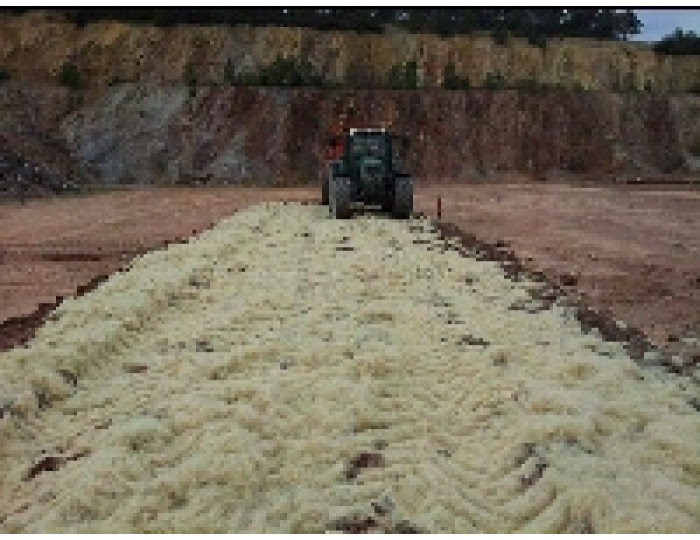
Increases of 20% tensile strength, significantly reduces the fatigue strength of asphalt compared to conventional methods, and also reduces the risk of cracking. Allows you to reduce the overall thickness of the construction of the roadway by 20 centimeters, in addition bituminous asphalt layer is reduced by 4-5 cm. There is a substantial saving of resources and machinery, is not participating in the construction of the road.
The French construction company Charier invented a new way of building roads. The process involves the use of hemp fibers to improve the characteristics of the substrate of the roadway. Application of this technology has been tested in the construction of several pavements in various regions of France and demonstrate the environmental and economic benefits of this technology to those that are currently used by construction companies in Europe.
Know-how is that the hemp fibers are mixed with the soil substrate component pavement to a depth of 35 cm. Later on such a substrate is prepared by putting a major road bitumen layer. According to the developer company provided calculations, this kind of solution allows to increase the tensile strength and reduce fatigue of the totality of the road surface, to reduce the thickness of the bituminous layer of asphalt, as well as reduce the overall cost of construction of the roadway.
Adding hemp fibers into the soil, and mixing them with the hydraulic binder, increases by 20% for the tensile strength, significantly reduces the fatigue strength of asphalt compared to conventional methods, and also reduces the risk of cracking. Thus, the addition of fiber is an adequate way of improving the mechanical properties of the asphalt pavement.
Ecological and economic component of the use of hemp fiber
The use of hemp fiber can reduce the overall thickness of the construction of the roadway by 20 centimeters, in addition bituminous asphalt layer is reduced by 4-5 cm. Accordingly, there is a substantial saving of resources and machinery, is not participating in the construction of the road. Even despite the fact that hemp fiber in France itself is a fairly expensive product, saving resources and bitumen construction machines and mechanisms significantly exceed the additional costs associated with the purchase of hemp fiber.
Research conducted by the students of the Polytechnic School of the University of Nantes confirmed that the use of hemp fibers in the course of creating ways of improving the main indicators of 8 road construction, namely:
- Reducing the amount of water consumption;
- Reducing the amount of energy consumed;
- Reduced impact of the greenhouse effect;
- Reduces the number of negative impact on the ground;
- Decreases the number and kachetsvo chronic toxicity asphalt road surface;
- Reduced level of ecotoxicity;
- Improvement of the eutrophication of the roadway;
- Improves the condition of tropospheric ozone.
Particularly valuable in this technology is that the improvement in the above indicator 8 does not lead to any deterioration of the other characteristics of the mechanical and biological properties of the road surface.
To the conclusions of specialists of the construction company were correct leadership Charier attracted the laboratory staff of the University Paul Sabatier (Toulouse) and the French Institute of Science and Technology of Transport. Initially, tests were carried out with straw cereal variety, but the results were inconclusive. After several unsuccessful attempts, it was recognized that industrial hemp is the most interesting material suitable for use in road construction.
At present the company-developer of the method of conducting experiments mixing hemp fibers with different hydraulic connection to use more biological properties of hemp, to improve the quality of road surface.