

Prospects for the use of hemp in "green building"
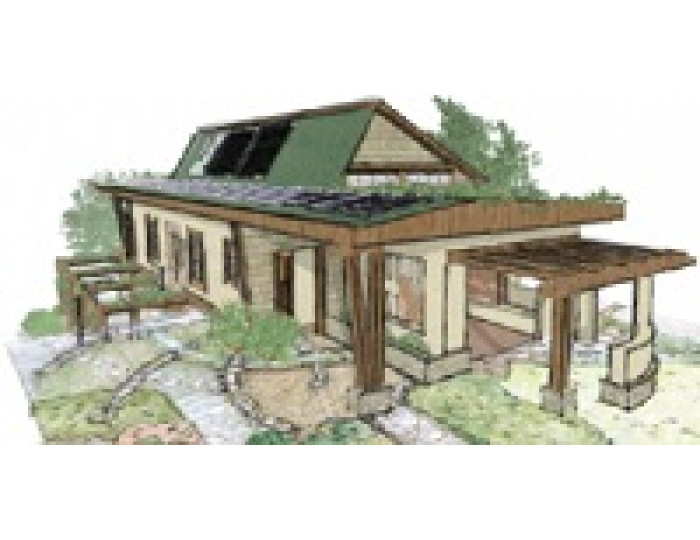
Prolonged exposure to a closed room, where air quality is extremely low due to the presence of chemical, physical and biological agents, improper air circulation and high humidity, causes a number of painful symptoms. Therefore, it is advisable to use building materials from hemp, which do not contain harmful compounds at all, which contributes both to the preservation of human health and to an increase in its level of productivity of mental and physical labor.
The use of technical hemp in "green building" is in the center of world attention. On the one hand, due to the so-called “carbon-negative” characteristic of this material (starting from the cultivation of the plant, the tremendous amount of carbon dioxide is removed from the environment, which contributes to the preservation of nature and its sustainable development), on the other hand, made from non-narcotic hemp and lime blocks, plasters, as well as other building materials, allow you to build buildings with almost zero or extremely low energy consumption. In addition, modern technologies with the use of such building materials allow for the bonding to use specially designed adhesives that do not contain harmful formaldehydes or other substances that adversely affect human health.
Prolonged exposure to a closed room, where air quality is extremely low due to the presence of chemical, physical and biological agents and improper air circulation, causes a number of painful symptoms, such as skin problems, conjunctivitis, bronchitis, asthma, drowsiness, and difficulty concentrating. Therefore, it is advisable to use building materials from hemp, which may include the woody part of the plant (fire), fiber, residues from the processing of stems. The above-mentioned raw materials do not contain harmful compounds at all, which contributes both to the preservation of human health and to an increase in its level and productivity of mental and physical labor. The use of natural environmentally friendly building materials from hemp, which are characterized by air permeability and the ability to adsorb excess moisture, and therefore prevent the formation of mold, as well as the spread of spores of harmful fungi is certainly an excellent alternative to traditional building materials made without complying with the requirements of “friendliness” to the human body . Hemp is a simple material to use, suitable for installation of supporting structures and at the same time is ideal for creating partitions or hanging walls and ceilings. Mixing in the right proportion with lime, allows you to get materials with a variety of excellent technical and operational characteristics: thermal insulation, sound insulation, dehumidification, thermal inertia, fire resistance, transpiration, which in their values significantly exceed traditional building materials.
In connection with the above characteristics of a man-friendly, as well as excellent performance properties, building materials from hemp are surely becoming more widespread and successful in the construction business. The flagships of this industry are France, Belgium, Ireland, Canada and the United States.
After harvesting the seeds, a large number of stems remain on the field, which must be removed before the soil is prepared for the next crop. In areas where small-scale farming is common, the implementation of this process is significantly hampered. Agricultural producers are faced with the need to maximize the use of the above crop residues, which are still considered waste, because there is not always a capacity for primary processing. Effective results in this case are provided by the development of a model that provides for a technological chain of the type “farmers - stalk cleaning company - construction plant”. This model allows you to comply with high quality standards of the desired products, to justify all the technical and economic costs, to organize the implementation, thereby significantly increasing the profitability of the cultivation of the plant.
Commentary of the Association "Ukrainian technical hemp"
Agricultural producers need to understand that it is not enough to grow a good product and even process it at a primary processing plant. It is necessary to create demand and, therefore, train and inform specialists in the construction industry so that they can design and further use new environmental materials from hemp. No less important is the preparation of construction companies to the peculiarities of working with hemp products. It is advisable to start cooperation with several professional customers, attract architects, engineers and surveyors, organize educational seminars and courses for builders, introduce students of architecture or building design departments - future specialists - with innovative, environmentally friendly building materials made on hemp.
The world of new building materials is increasingly focusing its attention on vegetable fibers, a key place among which is hemp. In this direction, Ukraine can claim to be one of the world leaders, as it has a number of registered varieties of technical hemp, which is characterized by a significant height of plants, high yields of stalks and fiber, as well as the availability of competitive manufacturing techniques for blocks / bricks / heat insulators / plasters, etc. ., which serves as the basis for the use of this crop in the construction industry of economically developed countries. This issue is quite relevant and promising for representatives of domestic business, therefore, within the framework of the "Hemp University" a specialized association of Ukrainian cannabis farmers this fall is scheduled to hold a round table on the topic: "Cannabis raw materials: technologies for its use in construction, production of biocomposite materials and furniture."