

Prospects for using the therapeutic properties of Cannabimov
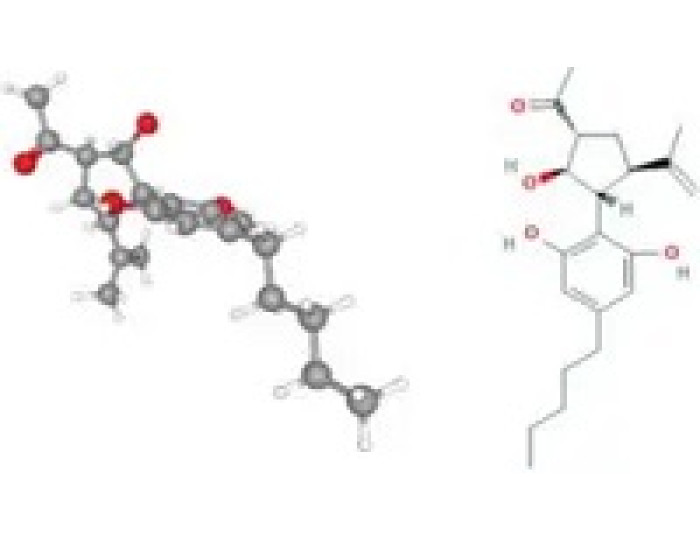
With the help of cannabimovone, it will be possible in the future to treat diseases such as diabetes or other ailments associated with the regulation of metabolism or insulin activity.
Cannabimovone (cannabimovone, CBM) is a poorly understood cannabinoid that can be of great importance for the future of medicine . What is remarkable about this substance and why its study opens up new perspectives in the treatment of a number of diseases , we are trying to understand this material.
Ongoing studies show that the chemical hemp plant , which is called kannabimovon could be the key to the treatment of metabolic disorders, diseases associated with disorders of the gastrointestinal stroke and diabetes .
Cannabimovone has some chemical similarities to cannabidiol (CBD). However, since the first studies published about CBM appeared only in the 2000s, scientists so far only reveal the therapeutic properties of this hemp element . One of the latest publications regarding cannabimovone was a study published in March 2020 in the publication Molecules. In the course of the experiments, two series of tests of this drug-free cannabinoid were conducted. During the first stage of the experiments , 3D modeling was used to understand whether CBM can bind to two types of receptors that control genes and are responsible for creating cells in the main organs of the human body (heart, liver, kidneys, muscles, colon, pancreas and spleen) and whether he is able to activate them. In addition, the above receptors also regulate human metabolism and are involved in the formation of certain types of cancer .


Identification and characterization of cannabimovone as a new PPARγ agonist using combined computer and functional studies
Considering the fact that three-dimensional modeling can predict the chemical interaction of a given cannabinoid with receptors, but it cannot prove whether these processes actually occur, the second part of the studies was aimed at confirming the possibility of cannabimovon interacting with the above receptors during the experiments . During research it found that CBM interacts with PPARγ and PPARα and partially activates two types of receptors.
What do the results of the experiments for patients mean ?
“The results are in favor of CBM as a new biologically active compound that is potentially useful in the treatment of disorders related to insulin resistance. Cannabimovone is able to stimulate insulin signaling, and the experiments paved the way for initiating other studies aimed at assessing the suitability of CBM as an antidiabetic agent, ”the researchers write .
The results of the studies suggest that with the help of cannabimovone it will be possible to further treat diseases such as diabetes or other ailments associated with the regulation of metabolism or insulin activity.
Modern medicine often relies on pharmacological agents to treat the symptoms of the disease or to relieve certain disorders. But if the disease or disorder is caused by defective, mutated, or damaged genes, treating the symptoms is not the ideal approach.
Since PPARs directly control the genes that make up and control many of the most important cells of the human body, researchers believe that experiments with cannabimovone studying the effects on the above receptors can help in the treatment of many metabolic , nutritional , hormonal and oncological diseases .
Commentary experts of the Association "Ukrainian industrial hemp"
Peroxisome proliferator-activated receptors (PPARs) - a group of cell nucleus receptors that function as a transcription factor. They play a significant role in the regulation of cell differentiation, development and metabolism in mammals.
Currently, there are already drugs on the market for PPAR. However, like many pharmaceuticals, these pharmacological agents have undesirable side effects, such as weight gain (which is especially bad for people already struggling with metabolic disorders) and heart complications. Conducted studies suggest the possibility of developing new treatments , with which it will be possible to cope with a number of diseases using certain combinations of cannabinoids that have minimal side effects and maximum therapeutic potential (in particular this applies to "ensemble effect" inherent in the raw "green mass" of technical hemp of a therapeutic orientation ).