

Why the Canadian-American alliance of companies relies on hemp fiber
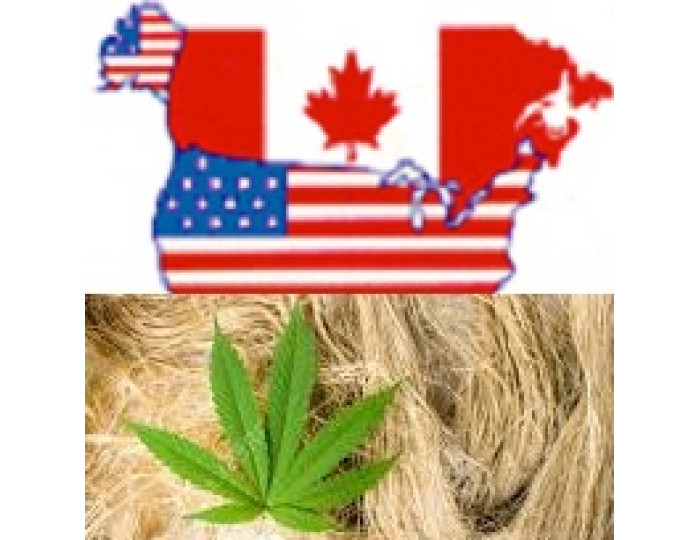
Hemp fiber, along with many positive indicators, has a sufficiently high strength and wear resistance, which is welcomed for the production of high-quality hygienic material, since it automatically increases the service life of the product, as well as its operational characteristics. Among other things, for paper products, such an indicator as an absorbing effect is important, which allows a material with the presence of hemp fibers to absorb (absorb) much better than synthetic analogues.
Georgia-Pacific American pulp and paper company , which is based in Georgia and is considered one of the largest manufacturers of pulp , paper , as well as end products made from the above raw materials (napkins, paper towels, etc.) and a Canadian company specializing in the manufacture of natural non-woven fibers , in February 2020, they entered into an agreement regarding the production of hemp products , as well as their joint implementation in the North American market . Understanding the win-win investment helped companies uniteinto the hemp industry , the relevance of which is growing every year , and the potential waste-free use of all parts of the plant is attracting more and more attention of companies in completely unexpected sectors of modern management .
Hemp raw materials became interesting for Georgia-Pacific in the search for an alternative to the production of paper products , since its specialists already have experience in working with bast fibers , and several patented technologies for manufacturing a number of product lines have been developed .
In turn, in connection with the recent events in the United States due to the coronavirus pandemic and the increased need for personal protective equipment against this background, Canadian manufacturers of natural hemp fibers actively sought the opportunity to realize their production potential through the technologies developed in Georgia-Pacific for the production of pulp and paper products , which includes masks for personal protection, wipes of various shapes and fillings, as well as hygiene products from sponges to cosmetic m asok. This is a huge industry, which can also use the positive properties of hemp natural fibers , abandoning synthetics, which negatively affects both the human body and the environment.
It is not for nothing that manufacturers increasingly prefer hemp fibers for the production of various nonwoven materials. Hemp fiber, along with many positive indicators, has a sufficiently high strength and wear resistance, which is welcomed for the production of high-quality hygienic material, since it automatically increases the service life of the product, as well as its operational characteristics. Among other things, for paper products, such an indicator as an absorbing effect is important, which allows a material with the presence of hemp fibers to absorb (absorb) much better than synthetic analogues.
The global non-woven industry market today is estimated at about $ 60 billion. Conventionally, experts divide this market into permanent and temporary. The temporary market is estimated at $ 35 billion, of which about $ 4.5 billion falls on products based on the use of fibers that perform an absorbent function. Of the above $ 4.5 billion, about 80% are currently filled with synthetic fiber . That is, the market of natural high-quality bast fibers (primarily hemp ) has room to grow, despite the fact that today the remaining 20% of the market is mainly occupied by wood pulp fibers .
By the end of the year, the Canadian - American alliance of manufacturers plans to establish the production of nonwoven products using hemp fibers , which is in demand due to the COVID 19 pandemic - disposable and filter masks, napkins, paper products for medical and household purposes , etc.