

Market Potential for Hemp Biocomposites
As more countries enact plastic bans, the
market for biodegradable composite materials is growing exponentially.
According to a report released by research firm Report Ocean , the
biodegradable plant-based plastic market in Europe alone was valued at $0.8
billion in 2019 and is projected to reach $1.9 billion by 2027.
Environmental pollution caused by the
dominance of plastic or plastic products has become a serious global problem.
Experts believe that biodegradable plant-based composite materials, including
those made from hemp fiber, can be a sustainable and environmentally friendly
alternative to solve the above problem and also an incentive for further
development of companies around the world.
More than 8.3 billion tons of plastic have
been produced since the early 1950s, according to researchers cited by the
United Nations Environment Programme. Of this amount, about 60% ended up either
in landfills or in the environment. At the same time, more than 99% of plastics
are "made from chemicals derived from oil, natural gas and coal - all
non-renewable resources that negatively affect the environment. If current
trends continue, the “plastic industry” could account for about 20% of global
oil consumption by 2050.”
As more countries enact plastic bans, the
market for biodegradable composite materials is growing exponentially.
According to a report released by research firm Report Ocean , the
biodegradable plant-based plastic market in Europe alone was valued at $0.8
billion in 2019 and is projected to reach $1.9 billion by 2027.
What makes hemp fiber unique is its
natural plant characteristics, such as lightness and strength, which make it a
likely potential replacement for fiberglass and other major plastics in
applications ranging from construction to packaging to the transportation
sector. However, hemp-based biocomposite technology is still at an early stage
of use. Most of the "hemp biocomposites " currently on the market are
actually a mixture of hemp fibers with other plastic compounds. At the same
time, the concept of replacing fossil-based plastics with plant-based
biocomposites is seen by a growing number of companies as a cost-effective and
sustainable development option.
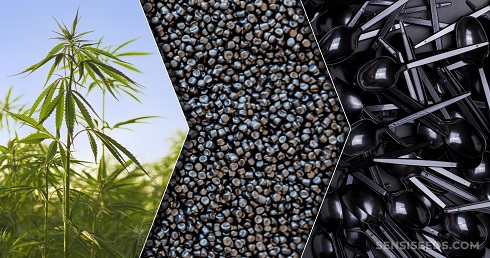
Using hemp fibers to produce biocomposites
is, at least for now, a complex process. After decortication, hemp fibers must
be free of lignin (an organic polymer found in hemp and other plants that makes
them tough and "woody"), as well as pectin protein, wax deposits, and
other biological compounds. The turning point for mass adoption of hemp-based
biocomposite materials will come when a company that is "two or three
levels" from a corporation the size of " General Motors ”, will start
selling large volumes of hemp plastics to large enterprises.
The success of the mass application of
hemp-based biocomposite materials depends on at least three factors: the
development of the necessary technologies, a sufficient number of raw material
suppliers, and the creation of a base of enterprises for the production of hemp
plastics.