

The reasons why the sown area of industrial hemp in the United States increased by 4.5 times
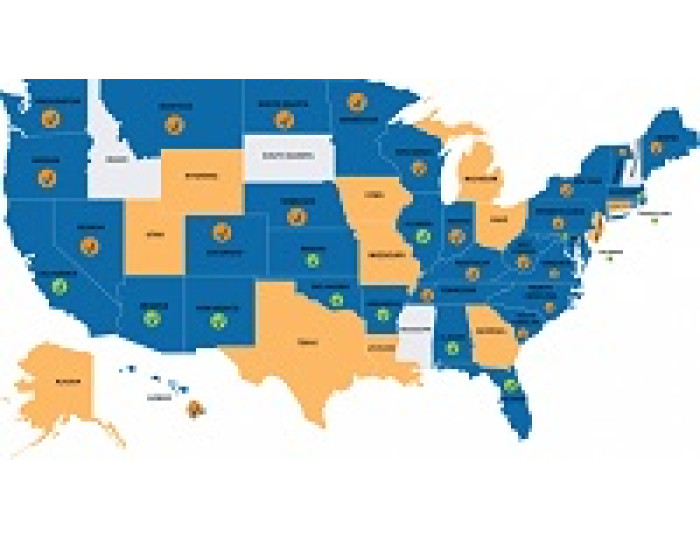
Targeted policies in the United States and the adoption of appropriate balanced regulations governing the cultivation and processing of industrial hemp, both at the local and federal levels, contributed to the significant growth of the industry in 2018, which continues in 2019. According to the annual report of the Department of Agriculture , US farmers received permits for the cultivation of about 207 thousand ha of industrial hemp this year, which is 455% (or 4.5 times) more than in 2018. For comparison: sowing crops in 2018, the hills of this culture were 31637, 2017 - 10406 and 2016 - 3954 ha.


The dynamics of the increase in cultivated hemp in the United States
In accordance with certain provisions of the Agriculture Act, as amended in 2014, farmers in the United States were allowed to grow technical hemp only within the limited framework of research programs. Due to changes to the above regulatory act adopted and entered into force at the end of last year, technical Hemp is officially allowed to grow as a regular crop throughout the United States if farmers comply with state regulations governing this type of activity. Thus, based on the high potential of cannabisa in the market and the economic efficiency of cultivation, the sown area of industrial hemp in the United States has increased dramatically.


US hemp breeding dynamics in 2019
According to the Department of Agriculture's annual report, U.S. farmers received permits to grow about 207 thousand ha of industrial hemp in 2019, which is 455% (or 4.5 times) more than in 2018. For comparison: in 2018, the cultivated area of this crop was 31637, in 2017 - 10406 and in 2016 - 3954 ha. Usually it happens that in fact less hemp is grown than allowed by the issued permits, therefore, at the end of the year, the numbers can be further adjusted to reflect the actual harvests. Nevertheless, according to preliminary estimates, more than 200 thousand hectares of hemp will be planted in 2019. In any case, this is a huge increase compared to 2018. This year, 13 states adopted new regulations aimed at regulating the cultivation of industrial hemp after the exclusion of plants from the federal law "On controlled substances", which generally significantly increased the growth of the hemp industry in the United States. The only states that have not yet joined the intensive development of modern hemp breeding programs are Idaho, Mississippi, New Hampshire and South Dakota.

Following the lifting of the federal ban on hemp cultivation in the USA, an infrastructure is being actively created to process significant volumes of produced raw materials; the market for hemp food, cosmetics, consumer goods, and pet products is expanding throughout the country so that all residents of the country can use the fruits of therapeutic also other properties of the most highly profitable crops.
In order to understand the scale of the emerging market, it is necessary to cite several statistical indicators:
- In 2019 alone, a total of 16,877 state licenses for hemp cultivation were issued to farmers and researchers, which is 476% more than in 2018;
- in 2019, the number of licenses for the processing of hemp raw materials increased by 483%.
The U.S. Department of Agriculture is expected to release in the near future revised rules for cultivating / processing / selling hemp, according to which agricultural producers will be able to significantly increase the volume of their crops already in 2020.
The development of hemp breeding in the United States is also greatly facilitated by the launch of a number of government programs that are aimed at supporting producers of the most highly profitable crops, in particular:
- hemp farmers acquired the right to federal crop insurance;
- credit unions are allowed to issue loans for manufacturers of hemp products;
- The United States Environmental Protection Agency has accepted applications for the use of pesticides in hemp crops;
- The Food and Drug Administration (U.S. Food and Drug Administration) is rapidly exploring ways in which it will be possible to obtain drug-free cannabinoids from hemp plants for further use in food, cosmetics, or dietary / feed additives.
Commentary of the Ukrainian Technical Hemp Association
A targeted policy in the United States and the adoption of appropriate balanced regulatory acts governing the cultivation and processing of industrial hemp, both at the local and federal levels, contributed to the significant growth of the industry in 2018, which continues in 2019.
For example, the United States, domestic hemp breeding is in dire need of changing existing legislation to create favorable conditions for producers of technical hemp, which is not at all a threat as a psychotropic drug, since it does not contain tetrahydrocannabinol at all or contains it in a negligible amount. It should be noted that the scientific selection of technical hemp in Ukraine has existed for about 100 years, the universal and specialized varieties of technical hemp in different areas of economic use, already created by state and commercial breeding companies, have proven extremely well both in Ukraine and around the world. The climate and soil of our country are suitable for obtaining excellent crops, and the low cost of hemp products allows you to export it to many countries of the world. The only thing left is to create a favorable regulatory framework in order to realize the hemp potential of Ukraine at the international level.