

Anticonvulsant properties of cannabinoid acids
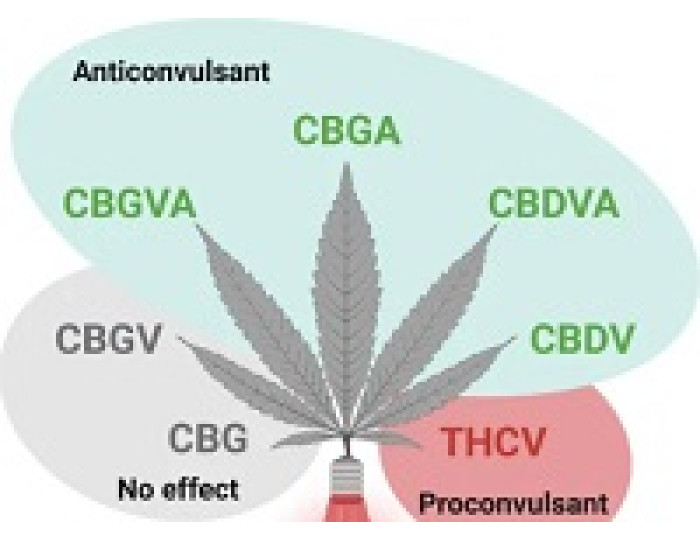
Research results published in the British Journal of Pharmacology indicate that cannabigerolic acid (CBGA), cannadivaric acid (CBDVA) and cannabigerovaric acid (CBGVA) significantly reduce seizures in a mouse model of Dravet syndrome.
Throughout 2021, the editors focused the attention of our dear readers and listeners on the fact that the therapeutic properties of cannabinoid acids are often many times more effective in the treatment of a number of severe, including chronic diseases than other elements of the plant, including non-narcotic cannabinoids. Especially important is the fact that cannabinoid acids are found in maximum quantities either in growing hemp plants, or in leaves and inflorescences that have not undergone any processing. Considering the “ensemble effect” demonstrated by the simultaneous influence of a number of therapeutically active elements of cannabis embedded in the plant by nature, there has been a trend in the last few years according to which patients / consumers “prefer to use the therapeutic properties of cannabis without intermediaries . " In connection with the above, information on the anticonvulsant properties of cannabinoid acids identified by scientists from the University of Sydney, the School of Psychology, and the Sydney School of Pharmacy in collaboration with the laboratory of Dr. Jennifer Kearney at Northwestern University (USA) will be of interest.
The Lambert Initiative for Cannabinoid Therapeutics team at the University of Sydney is actively working on the development of algorithms and treatment mechanisms based on the therapeutic properties of the hemp plant for diseases such as intractable forms of childhood epilepsy, including Dravet syndrome. Research results published in the British Journal of Pharmacology indicate that cannabigerolic acid (CBGA), cannadivaric acid (CBDVA) and cannabigerovaric acid (CBGVA) significantly reduce seizures in a mouse model of Dravet syndrome.
One study participant states that “Our research program systematically tests whether various constituents of cannabis reduce seizures in a mouse model of Dravet syndrome. We started by testing the compounds separately and found several components of the plant with significant anticonvulsant effects. In a published article, we describe the anticonvulsant effects of fairly rare cannabinoids, all of which are cannabinoid acids. Cannabinoid acids are cannabinoids that are biosynthesized in the plant and are found in the fresh leaves and buds of hemp. Despite the fact that cannabinoid acids are found in large quantities in the “green mass” of the plant, they have received much less scientific attention than other therapeutically active elements of the plant. At this point, we are just beginning to understand their therapeutic potential. ”
Study lead author Dr. Lindsay Anderson says that "Experiments have shown that cannabigerolic acid is more effective than other non-drug cannabinoids for reducing seizures."
Commentary of the specialists of the Association "Ukrainian technical hemp"
In 2015, Barry and Joy Lambert made a donation to the University of Sydney to conduct scientific research on the therapeutic properties of cannabis as well as the effectiveness of cannabinoid therapy. Barry and Joy's granddaughter, Caitlin, suffers from Dravet syndrome, which is characterized by frequent seizures and delayed cognitive and motor development. According to the Lambert family, they witnessed a dramatic improvement in Caitlin's health during the course of cannabinoid therapy and after that became ardent supporters of using the plant for this kind of treatment. In 2015, the Lamberts established the Preclinical Epilepsy Research Program to help understand the mechanism of how various elements in the cannabis plant aid in anticonvulsant action.
During the specialized round table " Exponential growth of the market for non-traditional therapeutically active elements of hemp " held as part of the training of the next course for students of the " Hemp University ", the speakers will focus on the national experience of the legal use of the medicinal properties of the leaves and inflorescences of technical hemp of therapeutic orientation, which is already actively used by citizens our country. In addition, information regarding the therapeutic properties of cannabinoid acids contained in therapeutic varieties of technical hemp will be provided in as much detail as possible.