

The Difference Between the Main Types of CBD Oils
All of the therapeutically active compounds found in the hemp
plant (or its derivatives, such as full- or broad-spectrum CBD oil) interact
with each other to enhance and modulate the effects of plant cannabidiol.
Back in 2021, on the pages of the specialized electronic publication of national hemp growers, “ The differences between CBD oil, distillate and isolate made from hemp ” were explained. From the second mid-August 2024, several types of cannabinoid oil will appear on the territory of Ukraine, and therefore it makes sense to explain what their similarities are and how they are fundamentally different. This material does not cover “cannabinoid oils,” which are manufactured using synthetic cannabinoids.
The key difference between cannabinoid oil and hemp oil is that
CBD oils are made from the therapeutically active leaves and inflorescences of
the hemp plant, while hemp oil is made from the seeds. In economically
developed countries, it is customary to distinguish the following types of
cannabinoid oils:
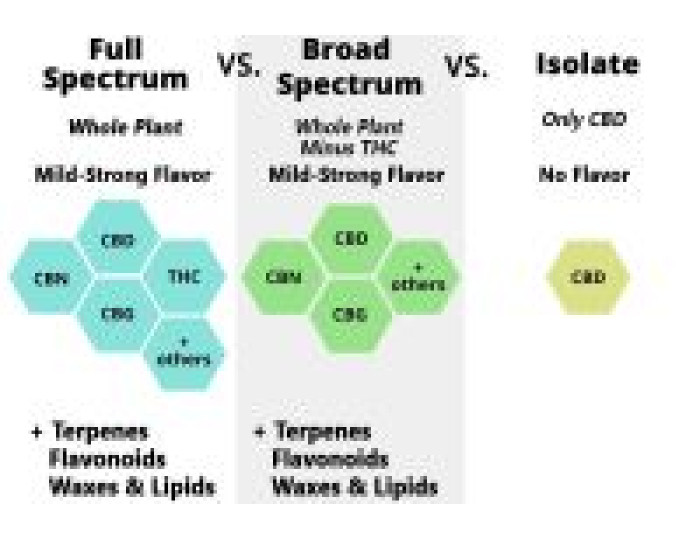
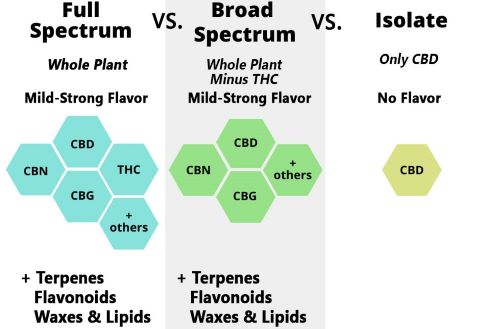
• Full spectrum CBD
oil;
• Broad-spectrum
CBD oil;
• isolated CBD oil
(cannabidiol isolate).
How the Different Types of CBD Oils Are
Similar
The above types of CBD oil are similar in that they are all derived from the leaves and buds of the therapeutically active cannabis plant. This means that the raw material for their production can be medical or industrial hemp of a therapeutic nature. Another similarity is that plant-derived cannabidiol is one of the main components of each of the above types of oils. In addition, different types of cannabinoid oil can be dissolved in the same carriers (alcohol, hemp oil, mustard oil, coconut oil).
Full Spectrum CBD Oil
Contains a wide range of therapeutically active compounds found in
the hemp plant, including:
• cannabinoids -
chemicals that activate the endocannabinoid system in the body;
• terpenes -
aromatic organic hydrocarbons contained in the essential oils of the hemp
plant;
• flavonoids -
antioxidant chemicals that give aroma and flavor to hemp products;
• other
therapeutically active compounds, for example, terpenoids.
It is important to understand that terpenes and flavonoids, as
well as other therapeutically active compounds in hemp, naturally enhance the
effects of cannabinoids, which is manifested in the “ensemble effect”. Those.
All of the therapeutically active compounds found in the hemp plant (or its
derivatives, such as full- or broad-spectrum CBD oil) interact with each other
to enhance and modulate the effects of plant cannabidiol.
Full spectrum CBD oil has much greater healing potential than
cannabidiol isolate. In particular, ongoing research consistently indicates
that extracts rich in plant cannabidiol have a much more potent therapeutic
profile than CBD isolate.”
Disadvantages : Trace amounts of THC in full spectrum CBD oil, without causing any side effects, may cause a positive drug test result.
Broad Spectrum CBD Oil
Broad-spectrum CBD oil contains most of the compounds found in the
inflorescences of the hemp plant, with the exception of tetrahydrocannabinol.
Cannabidiol isolate
CBD isolate contains only cannabidiol without the inclusion of other cannabinoids, terpenes, flavonoids or other therapeutically active compounds of the hemp plant. Cannabidiol isolate has medicinal properties, but they are much less effective than those found in full-spectrum or broad-spectrum CBD oil.

< Previous article
Next article >