

Therapeutic properties of hemp root
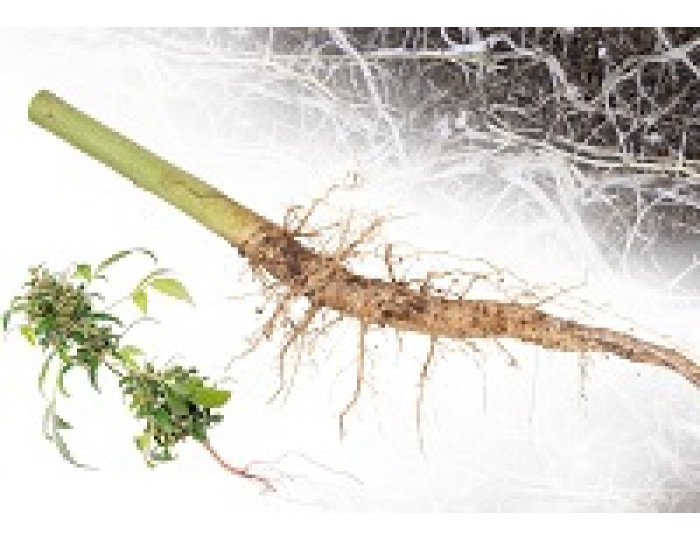
Despite the fact that hemp roots have been used for thousands of years in ancient medicine and cosmetology, in our time their therapeutic use in the manufacture of cosmetics is largely ignored. The use of the roots of certain varieties of technical hemp of a therapeutic orientation will be advisable for the preparation of cosmetic preparations, at least aimed at improving / treating human skin.
On the pages of the specialized electronic edition of Ukrainian cannabis growers, the question of the " Potential of the hemp root " has already been raised , the attention of our dear readers and listeners has been focused on the fact that " Hemp root is an effective raw material for cosmetic products ." Taking into account the preparation of representatives of the information and analytical platform Hemp Consulting (HC) to participate in the round table " Problems and prospects of using therapeutically active elements of hemp as a basis for nutraceuticals, medicinal cosmetics, animal feed or other products with medicinal plant properties " the listeners of the Hemp University will be informed about the separate theses of the previously conducted research "Hemp beauty industry in the world and in Ukraine (from the use of derivatives of grain, young shoots and roots in the formulations of cosmetic preparations, to the “green mass ” of the hemp plant ", during which the therapeutic properties and the possibility of using the root of the hemp plant, including as a raw material for the preparation of cosmetic preparations, the editors turned to HC specialists with a proposal to describe what diseases can be treated with the use of hemp root and how its properties would be appropriate to use for the preparation of cosmetic preparations. Information provided by our colleagues from Hemp Consulting is published without any changes.
Since ancient times, hemp roots have been a source of medicinal properties and a "storehouse" of therapeutically active elements, actively used for prevention, treatment or skin and hair care. It is these exclusive properties that were used earlier and are used in some cases now for the preparation of various kinds of cosmetic preparations, which are based on the therapeutic capabilities of the hemp root or its derivatives.
The centuries-old history of using the therapeutic properties of hemp root
The first recorded use of hemp root as a medicine dates back to around 200 BC and is found in Shennong Ben Cao Jing. This ancient Chinese book on agriculture, considered a Classics of Herbal Medicine, mentions that hemp root was a pain reliever. The dried and crushed parts of the root were ground to form a paste used in the treatment of bone fractures.
In 79 AD, the Roman historian Pliny the Elder wrote in Naturalis Historia that hemp root is boiled in water and used for joint spasms, gout, and acute pain relief.
In the early 18th century, English physician William Salmon confirmed the potential for the therapeutic properties of hemp roots by proposing a mixture of plant root and barley for the treatment of sciatica and pelvic pain.
Protection and treatment of liver diseases, opportunities for the formation of thick foam
Research carried out in 1971 corrected the ethanol extract from hemp roots to contain Fridelin. Fridelin is believed to be an antioxidant that has conservative and protective properties for the liver.
In addition to Friedelin, other complex nitrogen-free organic compounds from glycosides of plant origin with surface-active properties, including saponins, have been found in hemp roots. Saponin solutions, when shaken, form a thick, persistent foam. The name comes from the Latin sapo (genus case saponis) - soap. Naturally, this kind of properties of hemp root is advisable to use for the manufacture of cosmetic preparations that involve the presence of a large amount of foam.
Reducing inflammation
Until the early 20th century, doctors in the United States recommended decoctions of hemp roots for the treatment of various kinds of inflammation. Hemp roots contain several pentacyclic triterpene ketones. These compounds are valued for their antimicrobial and anti-inflammatory effects. The aforementioned therapeutic properties of cannabis root were actively used until the middle of the last century for the treatment of a number of diseases associated with inflammatory processes. In addition, a number of researchers suggest that pentacyclic triterpene ketones, which are found in large quantities in cannabis roots, cause apaptosis - programmed death of cancer cells. And despite the fact that research on this topic is currently in its infancy, according to a number of experts in the hemp market, hemp roots may have effective anti-cancer properties. The above properties of triterpene pentacyclic ketones can be extremely effectively used for the manufacture of a number of cosmetic preparations aimed at reducing inflammation of the skin, and possibly for the prevention of a number of diseases, including skin cancer.
Strengthening cell membranes
Cannabis roots contain small amounts of choline. Water-soluble choline, an essential food precursor to the neurotransmitter acetylcholine. It is vital for the development and maintenance of healthy cell membranes, and these properties of cannabis roots can be effectively used to make a number of cosmetic products intended primarily for the manufacture of skin care products.
The presence of cannabinoids
Hemp roots contain trace amounts of cannabinoids. The concentration can reach 1.5 - 3% and is considered minimal in comparison with similar indicators in flowers or leaves of a plant. However, a number of therapeutically active drug-free cannabinoids, including cannabidiol, are found in hemp roots.
Use to stop bleeding
In ancient times, hemp roots were regularly used to stop postpartum hemorrhage. After grinding, drying and boiling, hemp roots can be effectively used as an anti-hemorrhagic agent that stops bleeding. Those. the use of this feature of the hemp root is most effective in cosmetic preparations that involve the effect on the skin after the possible application of mechanical damage to the surface of the human body - wounds, small cuts, microcracks, etc. It can be argued that hemp root is advisable to use in products that are used, for example, after shaving or depilation.
Soothes Inflamed, Burned, or Irritated Skin
Greek writer and physician Oribasius, physician to the Roman emperor Julian, wrote that dry cannabis root could heal a rash. Modern researchers have proven that raw, crushed hemp roots are effective in treating various skin conditions. In other words, dried hemp root has been effectively used since ancient times in cases of skin irritation, and this feature is advisable to use during the preparation, as well as the use of cosmetic preparations of the corresponding orientation - lip balms, soothing or healing cosmetics, various kinds of cosmetic preparations used primarily for topical use.
Anti-inflammatory effects of cannabissativin
In their experiments, the researchers found that the compound cannabissativin, found in an aqueous extract of cannabis roots, reduced inflammation without negative side effects. According to a study published in the Journal of Ethnopharmacology, an aqueous extract derived from hemp roots, the main component of which is cannabissativine, exhibits anti-inflammatory activity in mice without any negative side effects or noticeable toxicity. Cannabissativine has been found to be associated with a decrease in vascular extravasation — the leakage of blood or other fluids from a blood vessel or tube — and the migration of inflammatory cells, which help reduce inflammation in the affected area. No effect on the central nervous system was observed, and no antispasmodic effects - soft tissue contraction - were found in the airways.
The results suggest that the anti-inflammatory effect of cannabissativin is associated with a decrease in vascular extravasation and migration of inflammatory cells without affecting the central nervous system. In addition, there was no antispasmodic effect on the smooth muscles of the respiratory tract and no toxicity.
Conclusion : Despite the fact that hemp roots have been used for thousands of years in ancient medicine and cosmetology, in our time, their therapeutic use in the manufacture of cosmetics is largely ignored. The use of the roots of certain varieties of technical hemp of a therapeutic orientation will be advisable for the preparation of cosmetic preparations, at least aimed at improving / treating human skin.
Commentary of the specialists of the Association "Ukrainian technical hemp"
All over the world, the practice of using various varieties of hemp roots as raw materials for the manufacture of pharmaceutical or cosmetic preparations is currently at the initial stage of study, and even more so, use. There is no doubt the huge potential of cannabis roots in the field of modern cosmetology. Based on the directions of use of hemp roots indicated by our colleagues from Hemp Consulting, in 2020, within the framework of the study “Hemp beauty industry in the world and in Ukraine (from the use of derivatives of grain, young shoots and roots in the formulations of cosmetic preparations, to the“ green mass ”of the hemp plant" 2 cosmetic preparations were made based on the therapeutic properties of the hemp roots of the therapeutic orientation of the variety “Mriya.” According to the results of the test tests carried out on a group of volunteers, we can say that these cosmetics showed themselves from the best side and at the moment the question of their removal on market.