

The therapeutic properties of hemp root cosmetic preparations enhanced by the organomineral complex of humic acids
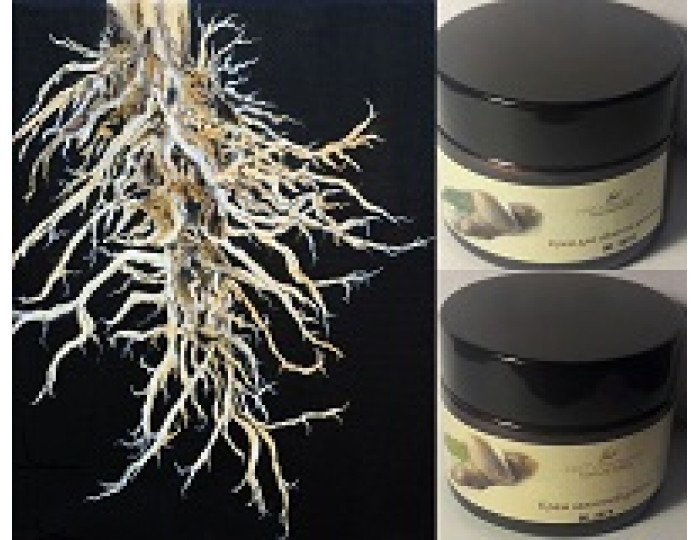
Using the experience of cosmetologists from Canada and the USA, Ukraine launched a line of professional cosmetics based on the therapeutic properties of hemp root. The preparations of this cosmetic line should be used not only as a cosmetic product, but also for the treatment of various diseases of the surface integument of the human body.
The range of biologically active substances with cosmetic and therapeutic properties is an exclusive advantage of hemp root, which has long been used as the basis for natural cosmetics. On the basis of various hemp ingredients, which are in the root ratio ideal for the human body and have antifungal, antioxidant and other therapeutic properties, a new line of cosmetic products has been created that will be marketed in Ukraine, Europe, and North America.
Two years of experience working with various cannabis-based preparations clearly demonstrates a significant increase in the therapeutic properties of hemp root when organomineral compounds and multicomponent substances based on humic acids are added to the formulation.
Hemp roots contain a huge number of different active compounds, including alkaloids (atropine), terpenes, monoterpenes, terpenoids (hopanoids, carvone), triterpenoids (Friedelin, epipriedelanol), phytosterols (sitosterol, campesterol, stigmasterol), cannazenetericenterone, triterone, triterpentreter, triterone anhydrocannabisativine, various other biologically active compounds, including choline.
The dominant substances in hemp roots are:
• alkaloids (endowed with healing properties, are the ingredients of a huge list of drugs), including atropine;
• monoterpenes (possess antiseptic, analgesic and skin warming effect);
• hopanoids (they kill the cancer cells of the body, relieve inflammation, eliminate pain and fight infections. They are used as an immunomodulating agent);
• Friedelin (acts as a hepatoprotective substance and antioxidant);
• epifriedelanol (removes tumors);
• triterpene pentacyclic ketone - a substance used as a component with antioxidant effect and hepatoprotective properties (used in the treatment of cancer, as well as inflammatory processes);
• kannazativin - anti-inflammatory and deeply penetrating pain medication.
The conducted test studies of a test batch of manufactured cosmetic preparations in Austria indicate the effectiveness of their use both in general preventive measures (the traditional use of hemp cosmetics) and for the treatment of a number of serious, including chronic skin diseases. Hemp cosmetic preparations based on hemp root, enhanced with organomineral compounds using multicomponent substances based on humic acids, have extremely effectively demonstrated their therapeutic properties for the treatment of:
- eczema;
- psoriasis;
- furunculosis;
- hydradenitis;
- vitiligo;
- herpes;
- other problems of acne, oily, aging, damaged or problematic skin.
Using the experience of cosmetologists from Canada and the USA, Ukraine launched a line of professional cosmetics based on the therapeutic properties of hemp root. The preparations of this cosmetic line should be used not only as a cosmetic product, but also for the treatment of various diseases of the surface integument of the human body.
The composition of professional cosmetic preparations for hands and face includes:
- The root of technical hemp of a therapeutic orientation (relieves pain, reduces swelling, relieves various disorders);
- original natural ingredients of the basic cosmetic formulation;
- organomineral compounds and multicomponent substances based on humic acids.
Based on organomineral compounds based on humic acids, several EU countries produce a range of professional cosmetic products. In order to understand where the therapeutic properties of these substances come from, it is necessary to at least partially understand the principle of action of peat extract in modern cosmetic preparations.
The effect of peat extract in cosmetics
Natural peat is very rich in valuable biologically active substances, especially it is characterized by a high content of humic and fulvic acids. Peat also contains biominerals, trace elements, vitamins, amino acids and fatty acids, which are beneficial for human skin and, most importantly, are highly bioavailable. The fact is that the microorganisms that live in the peat bog essentially turn the vegetation there into organic biologically active components.
Peat also contains lipids useful for skin health: their list consists of plant alkanes, fatty acids, ketones, sterols, cyclic terpenes and phenolic compounds. The combination of peat lipids is very complex, because they come from different types of plants and have gone through a chain of chemical transformations. All of these lipids exhibit a number of biological effects that affect skin health, including antimicrobial, antifungal, antiviral, and anti-inflammatory effects. Also, some of them are able to reduce swelling. Fatty acids make up the largest group of compounds belonging to peat lipids, but sterols have the longest list of clinical manifestations, which include antibacterial, anticarcinogenic, anti-inflammatory, antioxidant, antiviral and lipid-lowering properties.
Due to the high content of humic substances, peat is characterized by excellent bioavailability: these compounds help penetrate all components of the cosmetic product as deep as possible into the skin. As a rule, the concentration of humic substances in therapeutic peat is at least 30%, although in our case it exceeds 50%. Some experts believe that the most significant components of peat are precisely humic substances, which are identified with extremely important therapeutic properties:
• Estrogenic activity (supports endogenous estrogen production);
• Antiviral properties;
• Bacteriostatic properties;
• Regulation of the level of inflammation;
• Immunomodulatory effect;
• Detoxification - peat acts as a chelating ingredient and relieves the human body of toxic heavy metals.
Derivatives isolated from peat are used in anti-aging cosmetics - in anti-age complexes specially designed to stimulate cellular metabolism in the dermis. Such peat derivatives, as a rule, are combined with other active components: of plant origin, in order to maximize the restoration ability of the extracellular matrix of the dermis and improve the appearance of the skin, as well as stimulate the activity of fibroblasts; colloidal gold - to facilitate the electrolytic transfer between trace elements and natural metallic skin electrolytes, etc. Clinical studies have confirmed the effectiveness of such combinations - they reduce the severity of wrinkles, lighten the skin and make it softer and more pleasant both visually and tactilely.
Peat derivatives such as peloids deserve special attention. This term is derived from the Greek word "pelos", which means "dirt": it was proposed by Dr. S. Judd Lewis back in 1949 and was soon adopted by the International Society of Medical Hydrology. These are 100% natural components, which are colloidal organomineral peat formations containing valuable biological active substances (salts, gases, vitamins, enzymes, hormones, as well as living microorganisms). Some experts attribute any peat to a class of therapeutic agents called peloids.
Peloids have high ductility, heat capacity and slow heat transfer, therefore they are used not only as part of cosmetic preparations, but also independently during SPA procedures. They act as highly active ingredients in cosmetics designed to tone and energize the skin.
Exclusive characteristics of peat are its estrogenic effects, which support the toned skin and even can restore its youth. Although the components responsible for the estrogenic activity of peat remain the subject of debate, test results show that humic acid, which provides the penetration of other components through the skin, can also significantly affect the estrogenic effect of peat. In general, modern studies do not deny the estrogenic effects of peat and, in particular, humic acids in its composition.
Who is shown peat extract
This component is suitable for gentle therapeutic care of the skin of the face and body, which needs rejuvenation, toning and softening. Peat extract perfectly moisturizes, soothes and restores damaged skin; acts as an anti-photo and chronological aging agent and prevents wrinkles. In some compositions, peat extract acts as a cleaning agent or exhibits conditioning properties.
Peloid therapy is one of the branches of balneotherapy, described as "the medical use of natural mineral waters, gases and peloids, as well as equivalent agents and herbal baths containing the appropriate amount of substances effective for the prevention or treatment of diseases, as well as for rehabilitation."
To whom peat extract is contraindicated
Both peat and its derivatives are safe, non-toxic, non-carcinogenic and non-comedogenic components. Strict contraindication is a reaction of individual hypersensitivity.
Peat extract cosmetics
Peat has deservedly found application in the development of a wide range of skin care products. This component is mainly used in cosmetics for anti-aging care of the external surfaces of the human body after insolation. Peat or its elements may be present in various formulations, for example, in oil-in-water or water-in-oil emulsions, as well as in other types of cosmetic formulas. Peloids are added to face and body masks, creams, and also used separately for mud therapy, usually in a heated state. Heat capacity is one striking thermal property of peloids, which makes it possible to use balneotherapy at lower temperatures than in the case of conventional hydrotherapy. According to the European Union Regulation, the maximum permissible concentration of this component in the finished cosmetic products is 100%.
Sources of Peat Extract
Despite the fact that peat seems to us to be an unlimited cheap resource, peat extract is not so easy and quick to obtain as it seems at first glance. In fact, the process of forming high-quality, rich in valuable elements, peat takes thousands of years. Naturally, the therapeutic properties of peat are determined by its active components, for example, the most valuable of them are found in a very ancient peat, which was formed more than 20,000 years ago. Peat bogs that are used for therapeutic purposes are usually classified as Sphagnum peat or Carex peat. Sphagnum bog plants are mostly mosses, and Carex plots reflect the richer topography of organisms, which include traditional medicinal plants and non-medical weeds and herbs. Therefore, peat can be called a living pharmacy, obtained from hundreds of plants, many of which are recognized medicinal plants accumulated in the soil for thousands of years.
Peloids are slowly formed by the accumulation and decomposition of plant debris at the bottom of peat bogs. Selo sediments of water bodies, peat deposits of swamps, clayey rocks of mud hills serve as sources of peloids. Peloids are obtained and dug from a complex ecosystem of wetlands, in which sour and stagnant water, scarce soil, capable of forming a habitat for very different plants predominate. Peat formation occurs in semi-anaerobic conditions, with a steady level of groundwater and an abundance of vegetation (both higher plants and algae). In this process, the important role is played by the microorganisms necessary for the proper degradation of plant material - peloids cannot form without the activity of some microorganisms. It is these soil microorganisms that contribute to the synthesis of various valuable compounds through a series of different biogeochemical cycles. It happens that on one hectare there are up to 7 tons of such living microbial cells.
The above cosmetic raw materials are manually extracted from millennial deposits and procured on site without the addition of extraneous chemicals. Some of the peloid deposits used for the manufacture of cosmetic products are located at an altitude of 1,000 meters above sea level in Austria (Reichenau). Peloids obtained in Austria perfectly brighten the skin and exfoliate the stratum corneum of the epidermis: used in cleansing products, they are immersed in pores and literally displace greasy “plugs” from them, which risk turning into blackheads and comedones.
The use of humates in cosmetology
For cosmetic purposes, humic acid is used as part of sprays, masks, therapeutic muds, scrubs, creams and lotions. Especially effective in this area are salts of humic acids.
Humic acids effectively act on free radicals, which in turn destroy collagen and aggressively oxidize surrounding molecules. Humate-containing products actively inhibit oxidation, restore collagen levels, help increase skin elasticity and firmness, improve hair structure, their growth and renewal.
In addition, humates have a strong regenerative effect on inflamed skin and are effective for skin diseases, such as various types of rashes, fever (herpes), eczema, scaly lichen, as well as peeling of the skin. Balneol improves oxidative processes in cells, acts as an antioxidant, eliminating free radicals that destroy cells and accelerate the aging process.