

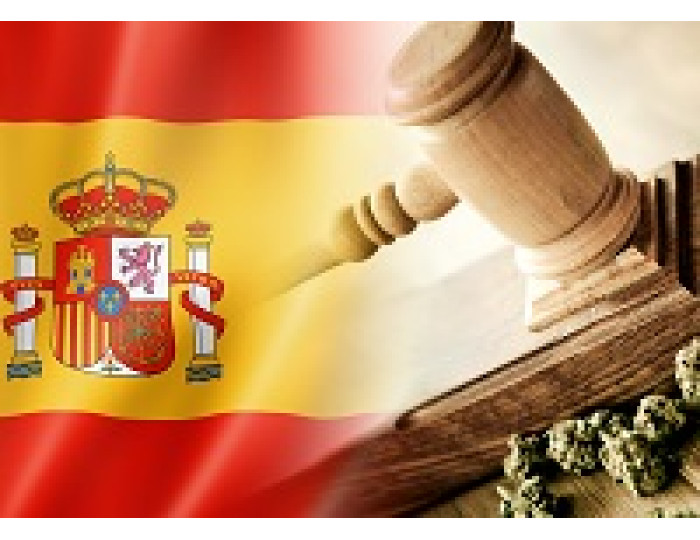
In Spain, a subcommittee is being created in the country's Congress, whose representatives should comprehensively study the already existing experience of using cannabis for medical purposes.
We have demonstrated more than once an algorithm for adopting a regulatory framework that regulates the possibilities for using the therapeutic properties of cannabis in economically developed countries of the world. Everywhere he assumed not only a comprehensive study of this issue by specialized specialists, but also a substantiation of the economic component of the adoption of such a regulatory and legal framework. Attention was focused on the fact that in civilized countries ( France , Sweden , Ireland ) the adoption of such decisions was based solely on the data obtained as a result of the relevant pilot programs, and in some cases ( Denmark ) the period of their activity is significantly extended.
When gypsies try to deceive gullible citizens, they turn not to logic, figures and facts, but to the emotions of those whom, after an extremely short period of time, they are "going to throw." Life experience clearly shows that when, instead of the logic or the economic component of any normative legal act, legislators turn to emotions, somewhere in the text of the document there are “mines that must explode” immediately after its adoption. In addition, during the preparation of the regulatory framework for the modern hemp business, predictive data should be provided on how the adoption of a particular regulation will affect the national producer, and what exactly their adoption gives the Ukrainian consumer / patient.
Unfortunately, lobbyists to amend the current legislation at the moment, apart from emotions, are not ready to provide substantiated data on how exactly the adoption of the rules of law imposed by them will affect the branch of modern national cannabis growing, which already exists and for some reason “forget” to tell the citizens of the country on how exactly the adoption of this legislation will affect the "pocket" of every citizen of Ukraine. That is why the editors of the specialized electronic edition of national cannabis growers constantly focus on the algorithm for adopting this kind of regulatory legal acts in civilized countries. And it consists in the fact that at the initial stage a group of specialists is formed, which is studying the experience of using the hemp plant for medical purposes in other countries. After experts recognize that the developments in this area will be useful to consumers / patients, pilot programs are funded, within which the theory is verified in practice, and only after that point changes are made to the regulatory framework that regulates the possibilities of using the therapeutic properties of cannabis not so much for medical purposes, but for the production of food, cosmetic products, various kinds of food or feed additives. In addition, the possibilities for individual or collective cultivation of a hemp plant with therapeutic properties are regulated. In connection with the above, we are confident that information about how Spain treats amendments to the current legislation of the country regarding the possibility of using the therapeutic properties of cannabis for medical purposes will be of interest to our dear readers and listeners.
Despite the fact that Spain has extremely liberal legislation regulating the possibilities for the use of the recreational properties of the hemp plant, there is no regulatory framework within which the possibility of the legal use of the therapeutic properties of the plant for medical purposes would be regulated. Government officials are extremely closely watching the experience of using cannabis for medical purposes in other economically developed countries and do not respond to accusations that this process is being artificially delayed.
At the end of June 2021, the proposal of a special commission was considered in the lower house of the Spanish parliament, according to which it was proposed to create an appropriate subcommittee to analyze the experience of regulating the use of cannabis for medical purposes. In early July, the corresponding subcommittee of the Spanish Congress was formed. The main purpose of the approved subcommittee of the country's legislature is to “review the experience of regulating cannabis for medicinal purposes”. In particular, this task will be to study the experience of other countries that have already created a legal framework regulating the possibility of using the therapeutic properties of a plant for medical purposes. Among other things, it is the responsibility of the committee members to review the reliability of scientific evidence confirming or refuting the therapeutic potential of the hemp plant.
Commentary of the specialists of the Association "Ukrainian technical hemp"
In Spain, the commercial cultivation of medical cannabis is allowed, but the entire crop is destined for export to other countries. All licenses issued by the state (except one) predetermine exclusively the export of the grown raw materials. The remaining license is for medical cannabis used exclusively for research purposes.
We have demonstrated more than once an algorithm for adopting a regulatory framework that regulates the possibilities of using the therapeutic properties of cannabis in economically developed countries of the world. Everywhere he assumed not only a comprehensive study of this issue by specialized specialists, but also the substantiation of the economic component of the adoption of such a regulatory and legal framework. Attention was focused on the fact that in civilized countries ( France , Sweden , Ireland ) the adoption of such decisions was based solely on the data obtained as a result of the relevant pilot programs, and in some cases ( Denmark ) the period of their activity is significantly extended. That is why amendments to the current legislation of our country, lobbied primarily by foreign pharmaceutical companies, as well as Canadian exporters of legal psychoactive marijuana or its derivatives and appealing not to logic and economics, but to the emotional component, should at least raise doubts about the need for this kind changes in the form that is currently being lobbied in the draft law imposed on the Ukrainian market.