

A market for cannabis leaves is emerging in the US as one of the ingredients in salads
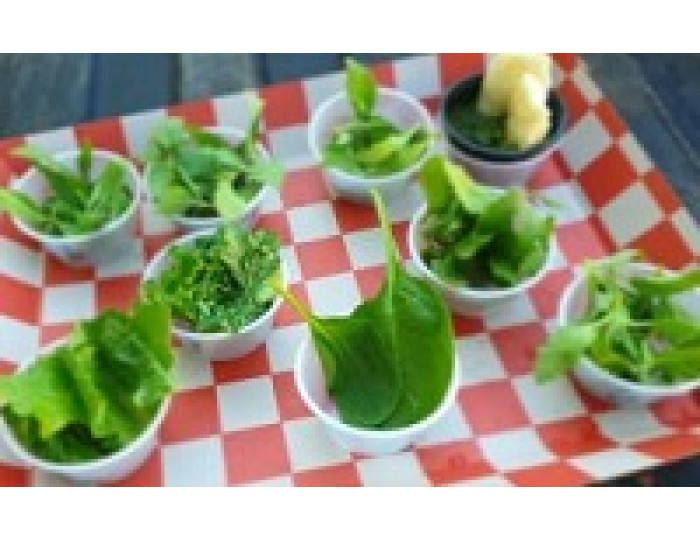
Consumers loved the young hemp greens with mint and fruity flavors, as well as floral notes. The crispness of hemp leaves was rated on par with kale, with most consumers finding that hemp leaves have a more delicate, fluffy texture than other greens.
On the pages of the specialized electronic edition of Ukrainian cannabis growers, the question has already been raised about whether hemp leaves will become a mass ingredient in the salad market . Cornell University's research into the use of young industrial hemp leaves as a product in the niche market for salad ingredients was briefly described. How quickly and effectively the Americans use the results obtained in the course of the above studies can be seen from how the materials obtained by scientists in 2020 will already be introduced at the industrial level in 2021.
Immediately it is necessary to draw the attention of our dear readers and listeners to the fact that a huge amount of research is being conducted in the United States aimed at studying the potential sources of income for cannabis growers associated with the most efficient use of grain, fire, fiber, root, and plant flowers. In addition to the aforementioned components of the hemp plant, several groups of specialists are simultaneously studying the possibilities of another potential source of income for producers - the leaves and young shoots of the hemp plant. In particular, throughout 2020, technical hemp leaves are being actively tested as a potential new product that can be effectively used as leafy greens used for preparing salads.
In the American "winter salad" growing regions (Arizona and California grow about 90% of the country's leafy greenery), wholesalers and potential consumers are interested in using the leaves and young shoots of the plant to market them as leafy greens. In particular, understanding the needs of the market, one of the companies specializing in growing leafy greens in 2020 planted 17 different varieties of grain and fiber hemp in its test plots. On the 18th day after planting (the plants had time to grow to the 3-leaf stage), the crop was harvested and tested by specially selected groups of volunteers. According to the results of taste tests carried out by 89 volunteers, it was determined that 5 of the 17 varieties of young shoots and leaves of technical hemp have a taste suitable for use in the leafy green market.
For the purity of the experiments, the representatives of the test groups were offered for comparison not only 5 varieties of selected industrial hemp leaves, but also ordinary leafy greens (romaine lettuce, cabbage, spinach, etc.). According to the organizers of the tests, consumers liked the young hemp greens with mint and fruity flavors, as well as floral notes. The crispness of hemp leaves was rated on par with kale, with most consumers finding that hemp leaves have a more delicate, fluffy texture than other greens.
Greens such as romaine lettuce and spinach are rated higher in overall attractiveness than industrial hemp leaves, but on a scale of 1 to 5, the plant is rated at 3.3. the average man in the street likes the taste of hemp leaves more than cabbage. Among other things, young cannabis leaves have excellent shelf life.
According to a number of US market experts, agricultural producers in the region are delighted with a new harvest of leafy greens. It is in this region that farmers avoid growing cannabis to obtain leaves and buds for extraction, viewing this market as clearly in recession. Specifically, according to the leafy greens company that initiated the above study, “Most farmers in Arizona are extremely conservative and therefore neutral about cannabis crops designed to produce young leaves. Despite this, there are several large agricultural producers and processing centers that are extremely interested in doing this kind of activity. ”