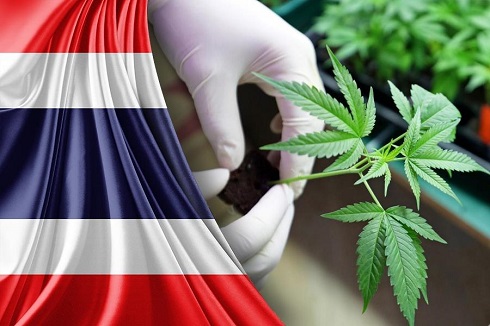
Thailand regulates the cultivation of cannabis at home
Thai beverage and cosmetics companies,
after regulating the work with hemp raw materials at the level of the
regulatory framework, immediately rushed to launch products with various hemp
ingredients, including drug-free cannabinoids, into mass production.
Interest in the development of cannabis cultivation in
Thailand by the editors of the specialized electronic publication of national
cannabis growers manifested itself in 2018 after the possibility of using the
therapeutic properties of hemp for medical and scientific purposes was
regulated in this country. Almost three years ago, the attention of our
esteemed readers and listeners was focused on the fact that, in response to the
global hemp market, representatives of the state pharmaceutical company
turned to the legislature of Thailand with a proposal to liberalize rather
stringent local legislation, which does not always guarantee the legality of
scientific research with hemp raw material . At the beginning of last year, it was
explained “ Why in Thailand cannabis leaves and flowers are used
in the recipes of restaurant dishes ”, and a little over a month ago it was
emphasized “ Why is the interview of the Minister of Health of
Thailand interesting for national hemp growers ”. I would like to separately note the
logic of the ongoing processes in the field of using the therapeutic properties
of the hemp plant, which is demonstrated by Thai officials. Already after the
local market was opened to international pharmaceutical companies by regulating
the use of pharmacological preparations manufactured on the basis of the
therapeutic properties of the hemp plant and, on the one hand, understanding
the exorbitant cost of these drugs, and on the other hand, the poverty of the
local population and not wanting to spend budget money on compensation, in the
state regulates the possibility of using the plant in households.
The executive officer of the Thai Drug Enforcement
Administration said its structure would remove hemp from the list of controlled
substances, allowing households to legally grow the plant. Under the new rules,
residents of the country can grow cannabis plants in their households after
notifying local government officials. In the case of growing cannabis in
households without notifying local officials, there is a fine of up to 20,000
baht (just over $600). In the case of the sale of hemp raw materials without
obtaining the necessary permits for this, a fine of up to 300,000 baht or three
years in prison is provided.
In turn, the Minister of Health of the country Anutin
Charnvirakul focuses on the fact that hemp plants obtained in households cannot
be used for commercial purposes without obtaining the necessary permits.
Home-grown cannabis can be used for medical purposes (traditional medicine), as
food, or as a raw material for the production of textiles or knitwear.
The new rules, drafted by government officials, will be
published in the official Royal Gazette, and 120 days must pass before home
cannabis plants receive legal status in the country.
Commentary of the specialists of the
Association “Ukrainian Industrial Hemp”
It should be noted separately that Thai beverage and
cosmetics companies, after regulating the work with hemp raw materials at the
level of the regulatory framework, immediately rushed to launch products with
various hemp ingredients, including drug-free cannabinoids, into mass
production.
I would like to separately focus on the fact that Thai
officials did not go along with international pharmaceutical companies to
compensate for the cost of hemp-based pharmaceuticals from public funds, as is
the case in the Czech Republic, Germany, and a number of other EU countries. By
regulating the possibility of using the therapeutic properties of the plant in
households, Thailand has provided an opportunity, like, for example, Israel or
Canada, at the lowest price, to the citizens of the country to receive the
maximum benefit from the healing / healing properties of the plant.
Knowing that several varieties of technical cannabis of a therapeutic nature have already been registered in our country, an extremely simple question arises, why should we change the relevant legislation not in the interests of the citizens of Ukraine, but in the interests of large pharmacological companies that impose on us the need to purchase medicines with dubious therapeutic properties according to huge price. Once again, we focus on the fact that immediately after the adoption of the regulatory framework in the interests of international pharmaceutical companies, the issue of compensating the cost of "hemp drugs" from the country's budget will be raised.