

Opportunities of Ukrainian manufacturers of cannabis seeds in the US market
Despite the legalization of the use of cannabis for medical purposes in several states of the United States, American farmers in the beginning of the 2019 season faced the problem of lack of seeds or clones (seedlings) of feminized hemp plants. US growers are afraid not to get the first legal promising crop, and highly profitable business may not meet expectations. The current situation with the shortage of seeds should be used as much as possible in order to promote varieties of Ukrainian selection on the American market.
Despite the fact that cultivation of cannabis in the USA is a permitted type of activity, most of the products from technical (industrial) cannabis are imported into the country. Over the past four years, hemp food and fiber products have been imported from international markets. At the same time, non-narcotic cannabinoid production facilities, primarily cannabidiol (CBD), are mainly based in the United States. Since the adoption of relevant regulatory acts in December 2018, a significant number of American enterprises have grown seeds or clones of feminized cannabis plants with a high CBD content, but farmers feel a shortage of seed, which is aggravated against the background of a sharply increasing demand for products containing drug-free cannabinoids.
Leading American experts on the hemp market, besides the lack of seed, also point out other problems in this market segment.
First, there are difficulties in finding hybrid seeds at a “reasonable price” and with germplasm of a certain chemical type that has sufficient genetic homogeneity to produce crops with a high content of CBD. At the same time, the manufacturer must be fully confident that all plants contain less than 0.3% of psychotropic tetrahydrocannabinol (according to the country's legislation in force since December 2018).
Secondly, there are no varieties combining the high productivity of therapeutic cannabinoids with a whole complex of other traits - the presence of valuable terpenoids (essential oils), good content and quality of fiber, seed and oil yields, sufficient biomass of roots, the demand for which has recently increased rapidly. Hemp with such properties should be grown as a culture of integrated use, when all parts of the plant are collected and go for processing.
Thirdly, there are known facts about the implementation of low-quality seeds. Many companies claim that 100% of feminized cannabis will grow from them, but in reality you can get 95–98, and sometimes 70–80% of such plants. Relatively often, seed is supplied not through direct sales, but through intermediaries. The problem is that the quality of the seed can be checked only at the beginning of flowering and the producer has no idea what variations he will get when growing the seed lot he has purchased.
The use of clones (seedlings) is an option for feminized varieties, because it provides an absolute 100% manifestation of female plants, but more expensive and more cumbersome to transport. Most farmers prefer to grow cannabis exclusively from seed.
Commentary of the Association "Ukrainian technical hemp"
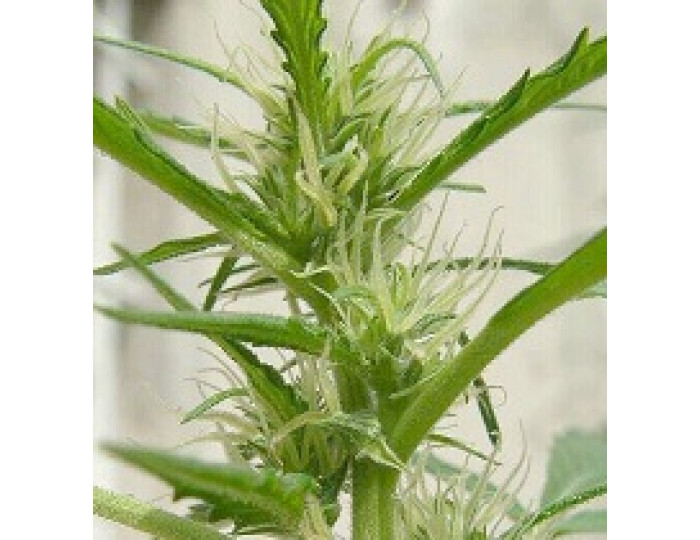
Under natural conditions and often produced, dioecious form of hemp is common, which includes 50% of feminized female plants (have compact dense inflorescence and only female flowers) and 50% of masculinized male plants (have loose inflorescence and only male flowers). For use as a source of therapeutic cannabinoids, feminized female plants are more valuable because they have numerous female flowers densely dotted with glandular hairs - containers of cannabinoids and other valuable metabolites. To get about 100% of feminized plants, it is enough to pollinate female plants of dioecious hemp, after removing male plants, using monoecious pollen from cannabis (has both female and male flowers on the same plant), and sow the resulting seeds next year. It should be noted that the quality of the obtained seed can depend on both the genetic characteristics of a particular variety and the human factor (for example, on the purity of the hybridization). You can also clone female plants, but this process is more complicated, and not all varieties (genotypes) are amenable to it.
An alternative to the use of feminized plants in order to obtain CBD and other drug-free cannabinoids can actually be created in Ukraine technical hemp varieties of therapeutic orientation. They belong to the monoecious form, i.e., both female and male flowers are placed on the same plant. At the same time in the inflorescence the prevailing majority of female flowers, which are the main source of cannabinoids, and male flowers are just enough to ensure the pollination process leading to the formation of seeds and the possibility of further reproduction of the variety (only feminized plants do not set seeds, they are cultivated only for 1 growing season) . However, Ukrainian varieties combine a high content of therapeutic cannabinoids with the complete absence of tetrahydrocannabinol or its content of less than 0.08%, high productivity of stems, fiber, seeds and oil. Thus, the current situation with the shortage of seeds in the United States is advisable to maximize to promote the varieties of Ukrainian breeding in the US market.