

US universities everywhere add cannabis to the general education or special subjects of their studies
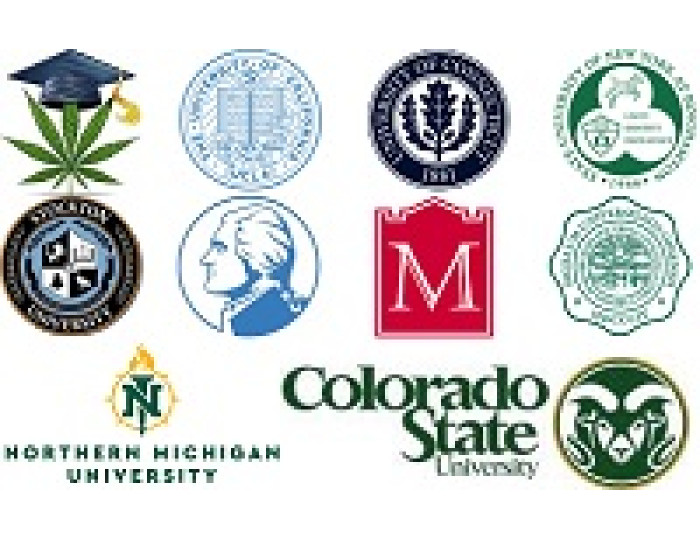
The expected boom in new jobs in the modern US hemp industry is encouraging the country's colleges to respond adequately to the emerging market.
In the United States, hemp growing, processing and selling companies are divided according to the specialization of medical, recreational, food, cosmetic, textile, construction, specializing in the use of plants in the field of zoobusiness, etc. Analysts specializing in analyzing trends in the hemp industry predict that by 2022, from 300 to 500 thousand jobs will be created in the industry. Therefore, there are already several recruitment agencies in the country, as well as employment companies that specialize in recruiting personnel for the actively developing US hemp market. According to the head of one of these agencies, “More jobs are created in this business than in any other sector of the North American economy, and wages are sometimes more competitive than in other industries.”
Until recently, US higher education institutions provided little information to their students about cannabis, due to various kinds of restrictions that existed until recently at the federal level. However, after making appropriate changes to the regulatory framework at the end of last year, the situation gradually changes. The expected boom in new jobs in the modern US hemp industry is encouraging the country's colleges to respond adequately to the emerging market.
Understanding the interest of school graduates in cannabisu, an increasing number of US higher education institutions add cannabis to their curricula in order to train specialists in the field of research, analysis, cultivation, processing, sales, and commercialization of the most profitable crop. Even in those states where the cultivation of cannabis is currently illegal, some colleges have initiated educational programs related to modern cannabis in anticipation of the legalization of this activity in their state or for training specialists to work in other administrative-territorial units of the United States.
 For example, Northern Michigan University launches a four-year program to train specialists in the field of hemp chemistry. “We offer the most optimal way to work in hemp business,” says Professor Brandon Canfield (Brandon Canfield). In 2017, it was he who proposed a new specialty in the field of the chemistry of medicinal plants after attending a conference at which representatives of the hemp business spoke about the urgent need for training in the specialty chemical analyst. The market requires specialists who would be trained to evaluate and provide the necessary quality of hemp products. According to Mr. Canfield, about 300 students from 48 states of the country enrolled in this accredited specialty. “All graduates will be properly qualified and will be able to work as analytical chemists in relevant laboratories. The average salary of specialists of this kind will be about $ 70 thousand. However, those who wish to start their own cannabis business can also use the diploma obtained, but to expand their knowledge, it will be necessary to take additional courses in the field of accounting, law and marketing.
 Colorado State University (Colorado State University) offers its students a course of lectures, with an emphasis on the social, legal, polytypic and medical aspects associated with the cultivation, processing or sales of cannabis.
 The University of California at Los Angeles (University of California, Los Angeles) was one of the first educational institutions in the USA to initiate a research program related to the study of the profitability of using cannabis for medical purposes.
 The University of Connecticut (University of Connecticut) in the spring of 2019 begins a program aimed at teaching students all aspects related to the cultivation of cannabis.
 The faculty of Binghamton University (Binghamton University) in the framework of the gardening program "launches" a new course of lectures aimed at studying the characteristics of the cultivation of hemp. According to one of the employees of this university, students work with cannabis and other plants, and not with marijuana, but they can do practical work in institutions that specialize in legal work with psychoactive cannabis.

 An interdisciplinary cannabis program was initiated at Stockton University last fall. In addition, the university management has signed an agreement on academic partnership with Thomas Jefferson University (Thomas Jefferson University), which provides students with internship opportunities and research activities aimed at studying the various properties of hemp, including therapeutic.

 Minot State University launched a similar program to train in the walls of certain subjects related to the study of cannabis. In addition, the University of Ohio (Ohio University), Harvard Medical School (Harvard Medical School) offers from the new school year to its students courses, special courses related to the study of hemp plants.
Commentary of the Association "Ukrainian technical hemp"
 From April 9 to 10, on the basis of the Educational and Scientific Institute of Postgraduate Education (UNIPO) of the National University of Bioresources and Environmental Management (NUBiP) of Ukraine (Kiev) in the framework of the project " Hemp University " will be held training for managers and specialists on the topic "Technical hemp - the most profitable agricultural crop of the XXI century ". According to the results of training, students will be issued a state- approved document that meets the qualification requirements stipulated by the current legislation for business entities specializing in working with cannabis .