

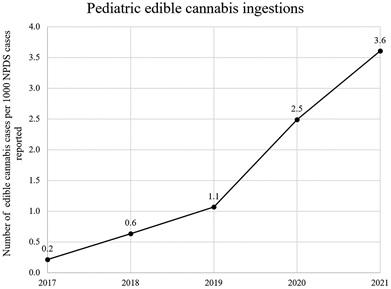
Over the past five years, the number of officially reported THC poisonings in the United States by young children has increased 14 times.
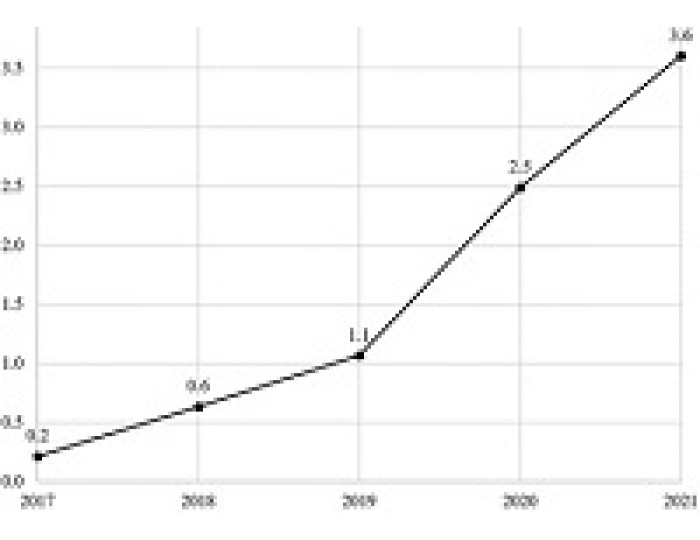
According to the results of the study in
the period 2017-2021. in the United States, the increase in unintended negative
exposure to foods with a high content of THC on children under 5 years of age
increased almost 14 times (1375.0%). Most cases of THC food poisoning in
children (97.1%) occurred in residential areas, of which 90.7% of food
poisoning occurred in their own home. In seventy percent of cases, the negative
impact concerned the central nervous system.
On the pages of the specialized electronic edition of
national hemp growers, it is repeatedly emphasized that marijuana, as well as
its derivatives, negatively affect the human body. The editors have already
published studies by our American colleagues, indicating that
tetrahydrocannabinol is especially dangerous for children under the age of 16,
so the published study in the journal “ Pediatrics ” (of course, after careful
rechecking of the data) should become the cornerstone of government officials
in the field of policy-making in the country, concerning modern hemp growing in
Ukraine.
General characteristics of the
obtained research results
During the study period, the US National Poison Data System
reported 7,043 adverse effects of foods high in THC in children under 5 years
of age. The number of such facts increased from 207 in 2017 to 3054 in 2021, an
increase of 1375.0%. The largest number of cases of negative effects of foods
with a high content of THC was registered among two-year-old children - 27.7%,
as well as three-year-old patients - 24.6%. The average age of young patients
for all 5 years of the study was 3 years.
The most common place of food poisoning with a high content
of THC was living quarters - 97.1%, of which 90.7% of poisonings occurred in
one's own home.
The following negative effects of foods with a high content
of THC on the health of young patients have been diagnosed:
• neurological
- depression of the central nervous system 70% (severe forms of CNS damage,
including coma, developed in 1.9% of cases), ataxia 7.4%, excitation 7.1%,
confusion 6.1%, tremor 2% , convulsions 1.6%;
• on the
cardiovascular system - tachycardia 11.4%, bradycardia 1.4%, hypotension 2.5%,
hypertension 0.9%;
• on the
gastrointestinal tract - vomiting 9.5%, nausea 1.6%, abdominal pain 1.0%;
• organ of
vision - mydriasis 5.9%, miosis 0.5%, conjunctivitis 2.3%, nystagmus 1.1%;
• respiratory
effects - respiratory depression 3.1%, hyperventilation/ tachypnea 0.6%.
Conclusions - the study demonstrates the continued
rapid growth of the negative impact of marijuana, as well as its derivatives on
children, which leads to a significant increase in the number of poisonings and
causes an increase in the number of hospitalizations. This increase occurred in
a setting where the total number of visits from patients aged 0 to 5 years to US
poison control centers decreased from 956,871 to 846,296 over the 5-year study
period under consideration. There has been a significant increase in the
severity of THC food poisoning, as indicated by an increase in intensive care
admissions, more patients admitted to non-critical beds, and a decrease in the
number of patients being treated and discharged from the emergency department.
It must be understood that the reported data in the study underestimate the
actual number of cases of consumption of foods with a high content of THC in
this age group.
According to the results of the study in the period
2017-2021. in the United States, the increase in unintended negative exposure
to foods with a high content of THC on children under 5 years of age increased
almost 14 times (1375.0%). Most cases of THC food poisoning in children (97.1%)
occurred in residential areas, of which 90.7% of food poisoning occurred in
their own home. In seventy percent of cases, the negative impact concerned the
central nervous system.
Commentary of the specialists of the
Association “Ukrainian Industrial Hemp”
It should be emphasized that this retrospective study analyzes aggregated data from the US National Poison Data System portal, which is a structured data management and reporting mechanism owned by the American Association of Poison Control Centers that is used to track potential adverse effects, reported to 55 regional poison control centers serving the United States and its territories.
< Previous article C nextarticle >