

Analysis of the investment attractiveness of various sectors of the EU hemp market
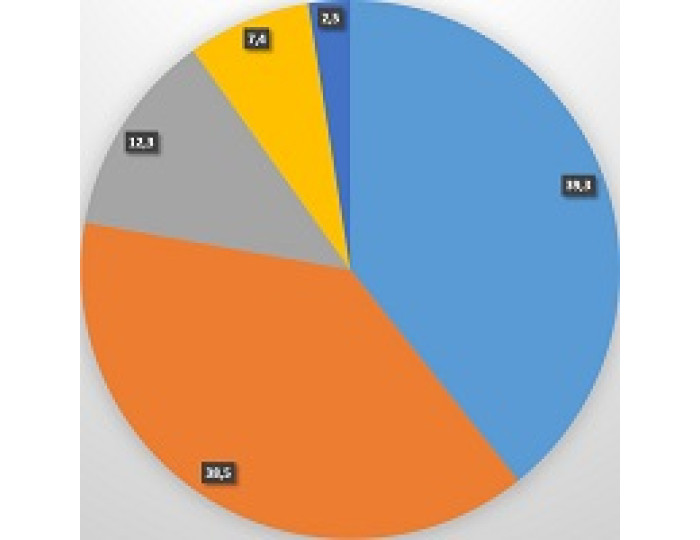
The analysis of investment activity in the EU suggests that the consumer is primarily interested in the use of the therapeutically active properties of the hemp plant for industrial purposes. National enterprises that have been present on the market for a long time will attract investment capital to strengthen their competitive advantages and increase the occupied market segment.
Our foreign colleagues analyzed the investment attractiveness of various segments of the EU hemp market, having processed various data sources that systematize investments in the field of modern cannabis production in Europe. The conclusions of market specialists that they use in their consulting activities will not be uninteresting to both national investors and companies operating in the modern cannabis market, who, based on the proposed data, can draw certain conclusions for themselves.
Wellness - 39.3%
The wellness industry market using the therapeutic potential of the hemp plant (primarily cannabidiol) is attracting more investor attention in Europe than in North America. One of the key features of this market segment is the fact that investments in the Wellness industry related to hemp in the EU are one of the few places where companies can create brands and directly reach consumers without significant financial investments. Some time ago, this segment of the market attracted minimal interest from investors when companies were small, very locally oriented and often did not meet the minimum investment requirements. Many regulatory considerations and the status of cannabidiol in most EU countries as an unapproved new food product have, until recently, have hampered the flow of significant investment.
At the moment, it is already possible to observe processes indicating that companies working in this particular segment of modern cannabis growing make real profits, therefore, the interest in financial investments in this particular sector of the EU cannabis business has significantly increased.
Analysis of the available information suggests that brands using therapeutically active elements of the hemp plant (primarily cannabidiol) operating in the Wellness industry are currently attracting much larger amounts of investment than before. For example, TRIP completed the largest fundraiser in Europe to fund its US expansion plans, and Cellular Goods became the first consumer cannabinoid company to list on the London Stock Exchange.
Investors in the hemp Wellness industry are willing to take risks by supporting CBD brands early in their development due to significant market fragmentation, which still has huge unfilled niches. Brands create value and generate interest from most investors, with little investment in innovative products and bioavailable formulations at this stage in the Wellness industry.
Medicine - 38.5%
Over the past 5-10 years, the EU has adopted various forms of regulatory legal acts regulating the possibilities of using the therapeutic properties of cannabis for medical purposes. A significant proportion of investors view the medical cannabis market in the EU from the same angle from which they have invested in similar markets in North America - as a prospect of rapid development, a potentially highly liquid investment market. However, it should be borne in mind that the opportunities to gain trailblazing benefits by investing in European medical cannabis companies in the EU have been dwindling in recent years. On the one hand, this modern cannabis sector is extremely competitive in terms of investment attractiveness for entering a new business. On the other hand, the possibilities of investing in the medical segment are currently limited by the state of the emerging market, the low number of patients per capita, and long-term profitability horizons. The market is in a position where the level of demand is too low compared to the number of operators seeking to meet it, and over time, significant consolidation of assets is predetermined among those with reasonable long-term strategies.
As global operators increasingly strive to enter the European market, vertically integrated European medical structures specializing in the therapeutic properties of cannabis are attractive acquisition targets for those investors who are pursuing a strategy to enter the EU market by acquiring existing core businesses - “ Full construction". An example is the deal between Curaleaf Holdings, the largest US medical cannabis grower and sales company involved in the takeover of London-based medical cannabis company Emmac Life Sciences.
It is necessary to note one more feature of the investment market in various sectors of the use of the therapeutic properties of the hemp plant in medicine. Companies operating in this segment of the EU hemp market require significant capital due to the high regulatory and technical barriers required to enter the market. Significant capital expenditures are required primarily for the construction and equipping of facilities in accordance with the EU-GMP standard.
The key obstacles to the exponential development of this segment of modern cannabis growing are the lack of regular supplies of raw materials (leaves and inflorescences) or finished products from abroad, the lack of local production facilities, the low level of use of medical cannabis by patients, primarily due to the low level of knowledge on these issues of staff. medical institutions.
Pharmacology - 12.3%
The development of licensed pharmaceuticals based on the therapeutic properties of cannabis (products that are undergoing clinical trials for regulatory approval as a licensed drug) is generating sustained interest even from very cautious investors.
This sector represents a long term opportunity compared to the intermediate unlicensed medical sector. As more clinical research-backed pharmaceutical products become licensed, more regulatory recognition, government approval from health care and insurance coverage of pharmaceuticals based on the therapeutic properties of the plant is expected.
For example, the acquisition of the UK GW Pharmaceuticals by the Irish pharmaceutical company Jazz Pharmaceuticals has shown a strong interest from pharmaceutical operators in the acquisition of specialized companies with intellectual property rights, as well as cooperation aimed at joint development of drugs with companies that produce medical cannabis.
This kind of large-scale transaction demonstrated the potential for large-scale entry into this market and the enormous financial capacity required to obtain full registration certificates. A similar deal may take place in the near future with the participation of Oxford Cannabinoid Technologies, which focuses on pain relieving pharmacological preparations based on the therapeutic properties of cannabis.
It should be noted that the development of pharmacological preparations based on the therapeutic properties of cannabis on the market of medical hemp operators has significantly fewer competitors than the development of unlicensed medical products.
Industrial hemp - 7.4%
While fewer investments have been made in the industrial hemp industry to date, this opens up the opportunity for cautious private equity firms and institutions to enter the highly profitable modern cannabis market using small investment resources. There is growing interest from investors seeking financial investments in fossil-substitution projects and a number of companies seeking to minimize their carbon footprint.
Investment in industrial hemp in the past few years has been boosted by the rise in popularity of CBD in Europe, with international medical hemp companies seeking to acquire European manufacturing facilities as well as seed. In particular, in 2018, Aurora acquired the Lithuanian hemp producer Agropro UAB and the distributor Borela UAB, and Canopy Rivers acquired a stake in the Italian Canapar, and in 2020 sold it to RAMM Pharma.
Regulatory market changes in the EU by government agencies regulating the use of the plant since 2018 have led to increased investor interest in the final stages of the cannabis supply chain, rather than large-scale cultivation. Local growers of the green mass of the hemp plant now have to compete with rather cheap imports of raw materials with significant therapeutic potential, primarily from North America.
Successful European companies in the field of modern industrial cannabis growing, as a rule, specialize in some specific know-how (composite materials) or patented technologies for collecting and processing, or innovations related to the manufacture / use of the fibrous part of the plant. Since almost all of the above companies are trying to create or scale up processing infrastructure to convert hemp raw materials into products with high added value, it can be assumed that these structures will attract investment capital to strengthen their competitive advantages in the market and increase the occupied market segment.
Recreational use - 2.5%
Many European medical cannabis companies are ready to switch from medical or recreational use of the plant to its recreational use if this type of activity is regulated at the legislative level. A feature of this market segment in Europe is its strong localization, which presupposes a closed system (from production to sales in the territory of one country). This is due to the international ban on the export of recreational products in accordance with United Nations treaties.
Regulated markets for recreational marijuana in selected EU countries have significant investment potential due to the sheer magnitude of latent consumer demand. For example, according to a number of EU cannabis market analysts, the size of the European recreational marijuana market could easily grow tenfold. Those. for the use of medical cannabis, at least formal indications are needed to improve health, and for the recreational market, almost every adult living in the EU can be considered a potential client.
In particular, in order to legally operate in the pharmacological segment of modern cannabis production, companies are forced to invest disproportionately large capital (for development, research, patenting, etc.) in a market that is currently in its infancy. The ability to use recreational marijuana is potentially different from any other segment of the modern cannabis market in that there is the potential to invest where proven, established markets and demand already exist. For example, a Dutch pilot program to relocate participating CoffeeShops to licensed commercial suppliers of recreational marijuana has generated strong investment interest.
Commentary of the specialists of the Association "Ukrainian technical hemp"
The data provided by our colleagues, who specialize in the analysis of the investment component of the modern cannabis market, once again clearly confirm certain trends characteristic not only for the national, but also for the international market of modern cannabis breeding, namely:
- not only the requests of potential consumers, but also the investment activity suggests that the consumer is primarily interested in the use of the therapeutically active properties of the hemp plant for industrial purposes, in this case in the Wellness industry;
- since EU companies specializing in the industrial hemp sector are trying to create or scale up processing infrastructure to convert hemp raw materials into high added value products, it can be assumed that national enterprises that have been present on the market for a long time will attract investment capital to strengthen their competitive advantages and an increase in the occupied market segment;
- Opportunities for investing in the medical segment are currently limited by the state of the emerging market, a low number of patients per capita and significant time horizons of profitability. In order for the use of the therapeutic properties of cannabis in the medical field to bring investors an acceptable return, it is necessary to significantly increase the low level of use of medical cannabis by patients;
- to increase the use by patients of pharmacological preparations based on the therapeutic properties of hemp, approval is required from the government agencies responsible for insurance coverage of treatment options with pharmacological preparations based on the therapeutic properties of hemp.