

Why is the Chinese model "one region - one industry" interesting for the national hemp market?
The idea of concentrating research and production potential in a separate region of the country is interesting, however, given the peculiarities of the business climate in economically developed countries of the world, this kind of experience is interesting not from the point of view of "blind copying", but with the aim of isolating individual elements of the model being created, allowing to increase profitability national production.
In the global hemp market in the past few years, one can notice a number of signs that significant resources in the economically developed countries of the world are being invested not only in the direction involving the use of the therapeutic properties of the leaves and inflorescences of the hemp plant. It is necessary to pay attention to the shaft of information concerning various kinds of manifestations, indicating the investment of significant resources in other areas of development of modern hemp breeding, including those related to processing, as well as the use of the fibrous part of industrial hemp. This kind of information regarding the cultivation and processing of hemp fiber in China is especially interesting due to the fact that in the past two years, specialists of the profile association of national hemp growers have participated in the launch of several projects at once aimed at creating capacities for the primary processing of hemp straw / trusts and at the moment, on the territory of Ukraine, there is an acute issue of creating a production facility intended for deep processing of the fibrous part of hemp plants.
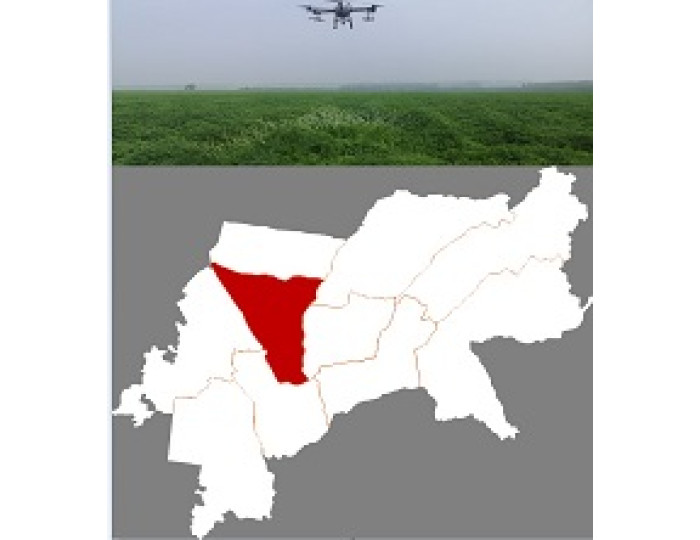
Catching government support for the development of high-tech solutions related to the production and use of hemp textiles, officials in Qinggang County, Heilongjiang Province (China) have done everything possible to ensure that the interest in hemp fiber from government officials does not bypass their region. Including in connection with the comprehensive support of initiatives related to the development of new processing methods, as well as the use of hemp fiber, industrial crops of industrial hemp in the region have grown at a rapid pace over the past few years (if in 2016 a little more than 600 hectares were cultivated on the territory of the Okrug) , then in 2021 in Qingan it is planned to harvest from about 16,200 hectares).
According to a number of analysts on the Chinese hemp market, government officials intend to turn this administrative-territorial unit of China into a prototype of a district-industry model, which, in their opinion, will accelerate the development of a number of sectors related to the cultivation and processing of high-quality industrial hemp fiber. Specifically, the National Hemp Industry Technology System (NHITS) and Qinggang Agricultural Center are working together on a number of initiatives to grow, process, and manufacture hemp textiles and expand their range of applications. In particular, the Harbin Cannabis Cannabis Test Station, NHITS, in cooperation with the Qinggang Agricultural Center, initiated the work of unmanned aerial vehicles with binocular vision technology based on artificial intelligence to spray fertilizer on industrial crops of industrial hemp. The technology, according to Chinese experts, can increase the growth of plant fibers and increase disease resistance with what the Chinese call "the world's leading" fog sprayer, which saves 15% of fertilizer compared to traditional methods. Chinese scientists in the region have also conducted a comparative study of fine fiber varieties and demonstrated the latest methods of growing high yields in Qinggang County.
Local officials have made every effort to ensure that in their territory:
- to expand the fleet of large-sized precision seeders, unmanned vehicles capable of participating in activities aimed at protecting plants, as well as purchasing special self-propelled harvesters - up to 120 sets;
- promoting the creation of hemp fiber processing capacities. There are currently five operators in the county specializing in the spinning of long fibers of the hemp plant;
- added a new line for the production of textiles from short hemp fibers;
- an increase in the capacity for the production of textiles at the weaving mill, which has been brought to 60,000 spindles;
- the opening of a factory for the production of chipboards and pallets from a hemp fire, with the addition of a small amount of hemp fiber to the hemp biocomposite formulation.
Qinggang County officials say that in 2021, about 2,600 hectares of experimental low-narcotic cannabis were planted in this administrative-territorial unit of Heilujiang Province for research purposes only. The research carried out primarily concerns the breeding of high-quality varieties of industrial hemp, pest control, prevention of diseases of industrial crops of hemp plants. In Heilongjiang province itself, scientists have embarked on extensive research and development to make hemp fine fibers a viable alternative to cotton, in an effort to overcome the environmental challenges posed by cotton's enormous demand for water, soil salinity and pesticides.
A comprehensive research program with the participation of a number of universities, as well as scientific institutions of Heilongjiang province and partners from Ukraine and Canada, is aimed at developing high-yielding varieties of industrial hemp, optimizing combines for harvesting stems and seeds, as well as introducing biotechnological methods that make it possible to produce textile fibers from a plant in an environmentally friendly way. in a safe way, including using fermentation. One of the areas of research is the development of the latest technologies, within which hemp fibers can be processed separately or together with the fibers of other industrial crops at the facilities of existing cotton ginning plants.
The efforts of Heilongjiang provincial officials have not only garnered attention and support from the Chinese government and cannabis scientists, but some of China's largest investment funds are already investing heavily in the country's modern cannabis sector. In addition, Heilongjiang province officials are doing their best to attract foreign partners for the development of hemp fiber processing projects and are actively working on concluding long-term contracts with relevant structures in Europe and the United States.
Commentary of the specialists of the Association "Ukrainian technical hemp"
Heilongjiang Province accounts for about half of the world's hemp fiber production, and Qinggang County grows and processes about 70% of the raw materials for the above production. Specifically, according to individual Chinese government officials, all hemp yarns exported from Heilongjiang Province are produced in Qinggang County.
The idea of concentrating research and production potential in a separate region of the country is interesting, however, given the peculiarities of the business climate in economically developed countries of the world, this kind of experience is interesting not from the point of view of "blind copying", but with the aim of isolating individual elements of the model being created, allowing to increase profitability national production.
In the global hemp market in the past few years, one can notice a number of signs that significant resources in the economically developed countries of the world are being invested not only in the direction involving the use of the therapeutic properties of the leaves and inflorescences of the hemp plant. It is necessary to pay attention to the shaft of information concerning various kinds of manifestations, indicating the investment of significant resources in other areas of development of modern hemp breeding, including those related to processing, as well as the use of the fibrous part of industrial hemp. This kind of information regarding the cultivation and processing of hemp fiber in China is especially interesting due to the fact that in the past two years, specialists of the profile association of national hemp growers have participated in the launch of several projects at once aimed at creating capacities for the primary processing of hemp straw / trusts and at the moment, on the territory of Ukraine, there is an acute issue of creating a production facility intended for deep processing of the fibrous part of hemp plants.