

What is interesting about the statistics characterizing the Israeli medical cannabis market
The exponential growth of the modern cannabis growing sector in our country is possible, which will be able to legally manufacture on an industrial scale products with enormous therapeutic properties based on the “green mass” of the plant, the varieties of which have already been included in the State Register of varieties suitable for distribution in Ukraine.
On the pages of the specialized electronic edition of national cannabis growers, the attention of our dear readers and listeners was focused on “How the experience of Israel and Canada on individual licensing can be useful for national cannabis cultivation”.
In the previous material, the information of the relevant state structures of the Promised Land about the market of licensees - individuals who use the therapeutic properties of the hemp plant for the purpose of healing or healing - was partially analyzed. It makes sense to present in more detail the previously presented information, refracted in certain planes and supplemented with statistical data, which, as it seems to us, clearly demonstrate certain trends that will not be uninteresting to patients / consumers of hemp products, as well as representatives of companies that are already actively working or planning to enter hemp market in Ukraine.
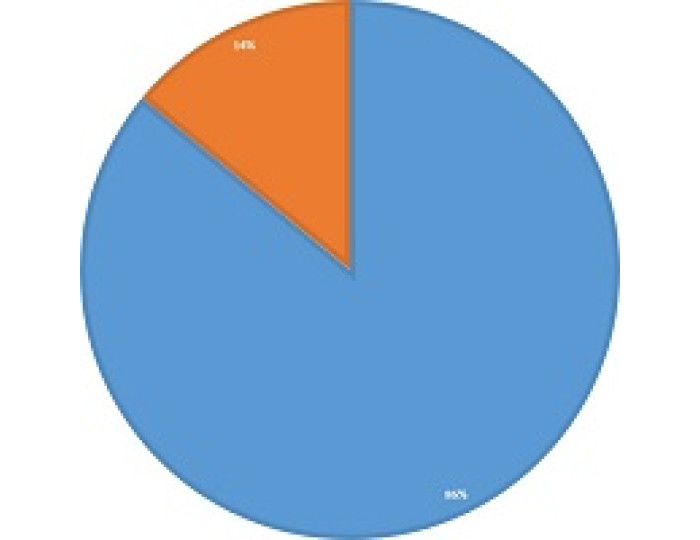
About 86% of Israeli consumer licensees prefer hemp flowers
Published data indicate that in Israel, about 86% of individual licensees use the therapeutic properties of the plant by consuming hemp leaves and inflorescences, and only about 14% use its various derivatives (extracts, extracts, tinctures). Just like in other economically developed countries, where about 50% of sales in pharmacy chains come from the therapeutically active “green mass” of the plant, patients / consumers understand that the cheapest and most effective way to use the range of therapeutically active elements inherent in the plant itself is the use of hemp flowers directly or the upper leaves of plants, which contain the maximum amount of therapeutically active elements, and not their derivatives, during the manufacture of which the cost of the obtained substances significantly increases, and the medicinal properties are significantly reduced. Those. the use of the leaves and inflorescences of the hemp plant as spices, juices, smoothies, leafy greens used in salads is much more economically feasible from the point of view of market presence than products in which their derivatives are used.
Over 53% of Israeli consumer licensees use the therapeutic properties of cannabis to treat / relieve chronic pain

Another key characteristic of Israel's individual licensees are the problems they solve with the therapeutic properties of the hemp plant:
- chronic pain - more than 53%;
- psychiatry (including post-traumatic stress disorder) - about 10%;
- oncology - about 9%.
Diseases that can be effectively treated or stopped with the use of hemp leaves and inflorescences, in addition to the above, also include - diseases of the gastrointestinal tract (colitis, gastritis, dysbiosis, Crohn's disease) - more than 2%; neurodegenerative (Parkinson's disease) - more than 1%; neurological (epilepsy) - about 1%; autoimmune (multiple sclerosis) - up to 1%, neurodevelopmental disorders (autism, Asperger's Syndrome) - up to 1%.
More than 80% of Israeli consumer licensees are entitled to use up to 50 grams of leaves and flowers per month
Considering the fact that in Israel, patients / consumers can only use the leaves and inflorescences of hemp with a high content of tetrahydrocannabinol (there are no therapeutic varieties of technical hemp in the country), it makes sense to pay attention to the data that on the territory of the "Promised Land" more than 80% consumers / patients have the right to use up to 50 grams of flowers per month, and the remaining 20% have the right to use 60 or more grams of hemp plant “green mass” for medical purposes.
Conclusion : having refracted the characteristics of the Israeli market of individual licensees to the needs of our country, we can say that in the case of regulating the legal possibility of growing therapeutic hemp by individuals in Ukraine and taking into account the huge range of health problems that are solved by consumption in very small quantities (up to 50 60 grams per month) of "green mass" of a plant, you can clearly find out who is the most ardent antagonist of making changes to the regulatory framework, according to which citizens of Ukraine on their backyard plots could absolutely legally grow therapeutic hemp, use plants in industrial purposes, for example, as a tasty and healthy nutraceutical food product. We are modestly hinting at the possible exponential growth of the modern cannabis sector in our country, which will be able to legally manufacture on an industrial scale products with enormous therapeutic properties based on the “green mass” of the plant, the varieties of which have already been included in the State Register of varieties suitable for distribution in Ukraine.