

How can US CBD market research be useful for national consumers?
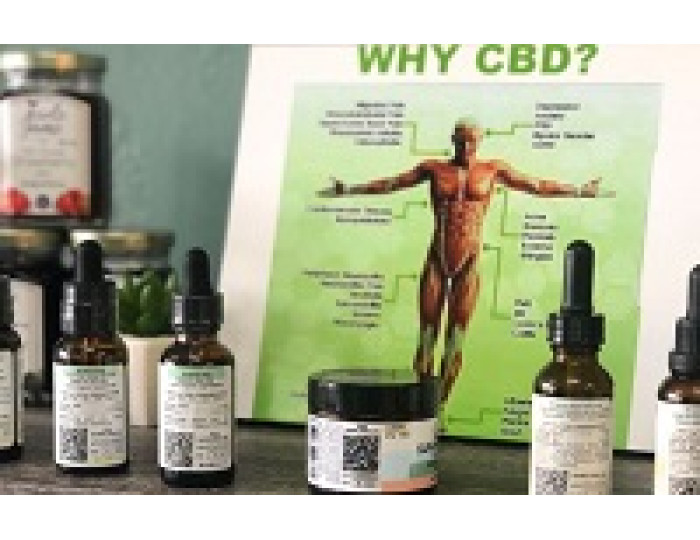
In the American market, the active use of marketing tools offers the consumer a beautiful story about the possibility of using the therapeutic properties of drug-free cannabinoids , offering synthetic cannabinoids as part of the product , or advertising “dummies” that do not have healing or healing properties .
On the pages of the profile of the electronic publication Ukrainian growers have more than once stated that the marketing departments of various companies often use advertising to promote manufactured CBD products , although they do not have " Beznarkoticheskih cannabinoids and designed this kind of publicity stunts only for" work "as a placebo ." A study in the US regular study of the market shows that the number of cannabidiol found in the CBD products can vary greatly depending on the place of purchase , the price category of the goods andmanufacturer . This material analyzes published results of a study conducted as part of the CBD Awareness Project.
The organizer of a “ practical study ” of CBD in the market of one of the US administrative-territorial units focused on the fact that the presence of CBD products in the overwhelming number of outlets in the state prompted researchers to study the characteristics of the products on the market . In particular, it was noted that “we were interested in testing the effectiveness of CBD products because currently the CBD market in the USA is saturated, but at the same time it is poorly regulated. In the market, we can observe a huge number of CBD products at gas stations, grocery or specialty stores . However, like any other product that advertises dosage cannabidiol, we wondered how much CBD is actually located in selling foodstuffs , cosmetics or products for domestic animals . Given the fact that the study did not raise the question of the presence of natural or synthetic cannabidiol in various commodity items , even the results are depressing. ”
Experiment progress
To conduct the experiments, the researchers purchased 15 CBD trademarks at various retail outlets throughout southern Florida. A variety of food products (including drinks) of various price categories were purchased at grocery stores , specialized CBD points of sale , and at gas stations. Then specialists "SC Labs" from California tested the purchased products on cannabidiol content and the results were compared with the marking shown on the product .
Products purchased at gas stations had the greatest difference between labeling and the results that laboratory tests showed . On average, only 40% of the products presented at least partially corresponded to what was indicated on the label of goods sold at gas stations. 60% of the products did not have detectable cannabinoid compounds .
The potential of commodity items purchased in specialized CBD stores also did not match the cannabidiol content advertised on the labels, and on average only 83% of the products corresponded to what was indicated on the package.
Food products purchased at grocery stores were invariably more “honest” than similar products purchased at gas stations or specialized CBD stores (there were exclusively single cases of label mismatch with the amount of cannabidiol that was detected in the laboratory ).
Researchers also drew attention to trends in the amount of cannabiol associated with the type of product and price category of the product . In particular, during the experiment it was possible to find out that three quarters of food products had less CBD than indicated on the package. Filling of CBD drinks was minimal: 75 did not contain CBD at all, and the remaining 25% showed less cannabidiol in laboratory tests than indicated on the label of the goods sold . According to one researcher , “CBD drinks are usually an unreliable source of cannabidiol. In addition to our study , there are a lot of other data that indicate that cannabidiol is practically not present in drinks.
Products with the lowest cost were the least reliable in terms of the use of cannabidiol in their composition. More than half of them did not contain drug-free cannabinoids at all, and the rest contained a much smaller amount than indicated on the labeling. Half of the mid-range products contained less CBD than advertised, a quarter had more cannabinoids than advertised, and in the remaining 25%, the number of CBD was approximately as indicated on the package (90 to 110% of the labeled amount of cannabidiol). Products of the highest price category 40% had less CBD than indicated on the package, another 40% had a larger number of CBD and 20% were as advertised on the package.
Commentary experts of the Association "Ukrainian industrial hemp"
Despite the fact that the sample size in the experiments was quite limited, the CBD Awareness Project study may shed some light on the differences that may exist between the CBD content of products and their stated effectiveness. Given the fact that the headings of the average and the cheapest price category of goods can not use plant cannabidiol due to its relatively high cost, we can say that a large part of the CBD market US uses inefficient / ineffective cannabinoid products . Those. the active use of marketing tools in the American market offers the consumer a beautiful story about the possibility of using the therapeutic properties of drug-free cannabinoids , either offering synthetic cannabinoids as part of the product , or advertising “dummies” that do not have healing or healing properties .
Now, let's try to interpolate the results of research in the USA obtained in the USA on the Ukrainian market and answer for ourselves the question of which CBD products are sold via the Internet, if this kind of activity is not regulated at all in our country .