

It is more efficient to grow cannabis seeds or clones - national experience
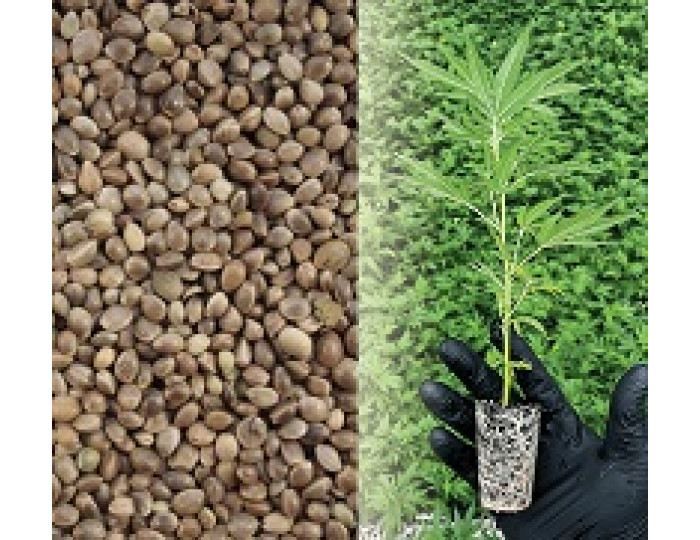
Considering the significant costs of acquiring clones (compared to seed), cultivation of plants without the possibility of mechanizing a significant number of production processes at the moment, as well as the lack of an effective regulatory framework regulating the legality of the sale or export of leaves and inflorescences abroad, the cultivation of hemp plants by clones in Ukraine at the moment it is much more risky and less profitable than the cultivation of industrial crops of technical hemp for therapeutic purposes.
In the era of cultivation of therapeutically active hemp, one of the key issues becomes urgent for agricultural producers - to grow technical hemp of a therapeutic orientation with clones or seeds of plants. In 2020, for the first time on the territory of Ukraine, a project was implemented for the cultivation of hemp, which has a therapeutic potential by cloning. How effective this type of activity is from the point of view of the realities of the market of our country, the editors of the specialized electronic edition of national cannabis growers learned from the specialists of the information and analytical platform Hemp Consulting.
Focusing on the fact that various methods of spreading seed, including plant clones or seeds, are quite widespread in economically developed countries, Hemp Consulting specialists systematized the positive and negative national experience of various methods of growing plant clones in comparison with the seed-grown cultivar of technical hemp of therapeutic orientation , which is already included in the register of plant varieties suitable for distribution on the territory of Ukraine.
Positive aspects of cultivating hemp with plant clones
- a significant number of plants reach maturity in the case of proper care and favorable climatic conditions during cultivation;
- simultaneous maturation of hemp raw materials in a field cultivated by clones of hemp plants.
Negative aspects of cultivating cannabis clones of plants
- the need to purchase special equipment for carrying out various types of agricultural work associated with sowing plants, caring for them or using a significant amount of labor resources for these purposes;
- lack of experience in working with clones of agricultural producers, which negatively affects the final product, as well as the profitability of sowing;
- cultivating a hemp plant using clones is much more costly than growing using seeds;
- the lack of an effective regulatory framework governing the legality of the sale of leaves and inflorescences of plants (the main purpose of growing by clones) or legal export of "green mass" abroad;
- considering the cost of growing cannabis clones, relatively small cultivation areas;
- inexpediency of growing to obtain grain, bast-fiber part of a plant or root - impossibility of the versatility of using a plant;
- additional logistics costs associated with the transportation of plants from the “parent” company to the agricultural producer;
- the need for planting in the ground practically from the moment the clones arrive at the agricultural producer;
- complete genetic homogeneity of clones means the same susceptibility to specific pests or disease vectors, compared to sowing seed, in which "little genetic variation is like an insurance policy in the field."
Positive aspects of cultivating therapeutic hemp using seed material
- a significant number of plants reach maturity in the case of proper care and favorable climatic conditions during plant cultivation;
- simultaneous maturation of hemp raw materials in a field cultivated with hemp seeds (not significantly different from clone sowing);
- the cost of cultivation is commensurate with the cost part for the cultivation of universal varieties of industrial hemp;
- the possibility of using traditional agricultural machinery at all stages of production processes, which implies the actual exclusion of manual labor;
- there is no need to obtain special knowledge regarding the peculiarities of cultivation / care of crops / harvesting of hemp plants;
- the area of cultivation is not limited;
- expediency of cultivation for obtaining grain, fibrous part of a plant or root;
- no additional logistics costs associated with the transportation of seed;
- flexibility in deciding on the sowing period;
- greater resistance to pests or disease vectors in comparison with crops using clones.
Negative sides of cultivating technical hemp with a therapeutic focus using seed material
- the lack of an effective regulatory framework governing the legality of the sale of leaves and inflorescences of plants (the main purpose of growing by clones) or the legal export of "green mass" abroad.
Conclusion : Given the prospects for expansion and diversification of the hemp industry in the coming years, it is likely that both clones and seeds will find their place among the producers of various types of hemp with significant therapeutic properties. Despite the seeming prospects of cultivation with the help of clones, given the significant costs of acquiring clones (compared to seed material), cultivation of plants without the possibility of mechanizing a significant number of production processes at the moment, as well as the lack of an effective regulatory framework regulating the legality of sales or exports leaves and inflorescences abroad, the cultivation of hemp plants by clones in Ukraine at the moment is much more risky and less profitable than the cultivation of industrial crops of technical hemp for therapeutic purposes.