

Why paper from hemp?
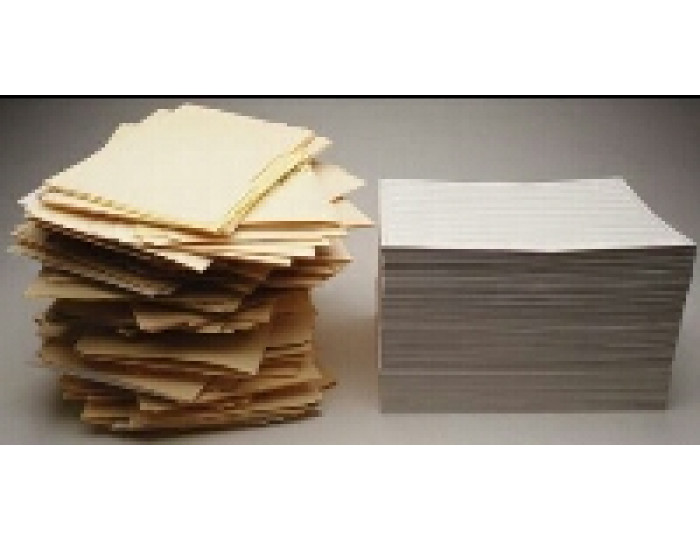
Currently, the system for the production of pulp from hemp is used in France, UK, Spain, where they are processed equally well straw annual crops, cotton and linen.
Paper and paperboard made from hemp, has high strength and wear resistance, and therefore used mainly for the printing of banknotes, prestigious and anniversary editions, art books, and so on. D. Cigarette and copier paper and made mostly from hemp fiber.
Until 1840 all the paper in the world are made from either paper or of rags. In the XIV century, when Europe came the first paper mills, raw material for them was basically hemp textiles. It is therefore not too sinned against the truth by those who claim that the Bible was Johannes Gutenberg "is printed on hemp paper." Paper those years its highest quality and prohibitive price. Later, with the introduction into use cotton textiles, the overall quality of the paper deteriorated somewhat, and the cost has decreased. However, the paper still remain an expensive commodity, and paper mills often idle due to lack of raw materials.
The revolution in the paper industry began in 1800 when the technology was first published paper production from plant raw materials, and continued until 1870, when this production was massive. The main role in this revolution played sawdust, they best fit into the mechanized production process. Wood paper had many flaws: she quickly turned yellow, gray and had a loose surface, easy to soak and is durable. However, it was very cheap, and it led to her winning the market, and these shortcomings were subsequently eliminated by chemical treatment. Today, the best variety of wood paper almost nothing inferior to hemp. However, wood and paper production, there are more significant deficiencies. Firstly, it is in no small measure contributes to the destruction of forests of the planet; secondly, its waste contains many hazardous chemicals that pollute the environment hothouse gases, acid rain, and so on. d.
In connection with the above, the question of the search for alternative sources of raw materials in the paper lately gets more and more acute, and the industrial hemp is one of the most promising candidates for this role. Yield cannabis on average 15 t / ha of fiber per year, which is comparable to Fruitful tree species. Care malonarkoticheskoy hemp requires almost no insecticides, fungicides and herbicides. Harvesting and transportation of cannabis is much less expensive than felling.
Initial processing of hemp for a long time has been the bottleneck of the process. Branch fires from fiber core could not be mechanized. It was quite a long process consisting of lobes, drying and subsequent manual softening. In 1938, the United States was invented machine for hemp decortication, specially adapted for paper production, but by the time the country has acted "tax marijuana" significantly raise the price of raw hemp and hemp has made unprofitable. As a result, "Hemp Revolution" in the paper industry did not materialize, although there were preconditions for this.
Preparation of hemp cellulose fibers also has bottlenecks. On the one hand, hemp contains little lignin that facilitates machining and further allows to reduce the consumption of bleaching agents and electricity. On the other hand, in modern papermaking lignin serves as a "fuel" for the oxidation reaction heat of which partially fills energy production cycle. Hemp feedstock does not replenish energy: with a low content of lignin are present in many silicates which prevent burnout natural lignin. Therefore, in step pulping contaminants must be removed by chemical means, which increases the cost of production and leads to environmental pollution. One solution to this problem is a French technology, designed for small productions. It uses conventional caustic chemicals, but significant (75%) fewer than in the wood and paper industry. Concurrently achieved significant energy savings, brighteners and water. At present, such a system is used in France, the UK and Spain, where they are well processed hemp, straw annual crops, cotton and linen.
The further process of the production of paper from hemp raw materials is almost no different from the traditional. It can be argued that the most acute problems of the production cycle resolved and hemp can be used in standard modern equipment, producing paper from wood.