

Using hemp fiber in ancient Egypt
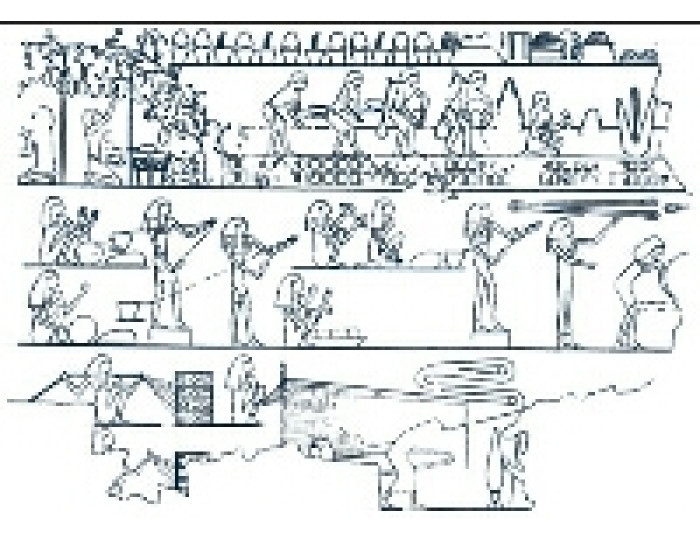
Word for hemp vygravirovanoe on the walls of Egyptian pyramids, the large number of graves in which there are a variety of household products from hemp fiber indicates the widespread use of cannabis in all aspects of life of ancient Egypt.
Word for hemp vygravirovanoe on the walls of Egyptian pyramids, the large number of graves in which there are a variety of household products from hemp fiber indicates the widespread use of cannabis in all aspects of life of ancient Egypt.
The Egyptians were among the first in the history of mankind "tamed" hemp. It hemp fiber, figuratively speaking, have become a major tool in the construction of the pyramids. Already 5,000 years ago, Egyptian craftsmen know how to get the fiber from the stems of plants. From the collected and processed hemp Wiley strong rope that was used in the sea and on land.
In the language of the ancient Egyptians, hemp is termed smsm-t (in Russian pronounce smysm't). Word composed of five intricate characters and meet the researchers in the inscriptions left on the pyramids and papyrus Ramses III, other graffiti, as well as ancient Egyptian scrolls in relation to the word line. Besides graffiti graves of ancient Egypt, the word smsm-t a significant amount of time is referred to medical prescriptions, which describes the process of making drugs from the seeds, leaves and inflorescences of cannabis.
Numerous evidence of the use of cannabis in the home were found in the tombs of the pharaohs. Letters preserved on slabs and walls, hemp also mention as an important part of everyday life. Factual evidence the widespread use of hemp fiber in the home has become a godsend discovered near the settlement of Amarna, the excavations of the ancient Egyptian city Ahetatona. During archaeological research it was found mat connected palm and hemp fiber.
During the time of Amenophis III (1422-1375 BC.) Egyptians already being traded hemp, ship's wood and flax, dried fish, butter and honey with the Greeks, in particular, to the island of Crete; half-rotted pieces of ropes, mats and matting of cannabis were found in the tomb, located near Amarna. The artifacts date back to the reign of Akhenaten (Akhenaten, 1352-1336 BC.). Various "hemp stuff" different degree of safety have been found in abundance in mogilnitsah Ramses II (September 2008, the excavations in the area of Ain Shams in the east of Cairo).
During the study of ancient Egyptian graves, tombs and pyramids found a huge number of different samples of hemp clothing, footwear and textiles.
Roman writer, author of "Natural History", Pliny the Elder mentions in his writings that in ancient Egypt were sometimes used hemp book. However, the Egyptians wrote on the fabric from time immemorial, for example, writing prayers in bandages, which swaddled mummy. And arriving in Egypt, foreign traders were his notes on the canvas (in the III century AD on the same material taught his blog emperor Lucius Domitius Aurelian).
The fact that the word for hemp is engraved on the walls of Egyptian pyramids, and the presence of a large number of graves in which there are a variety of household products from hemp fiber indicates the widespread use of cannabis in all aspects of life of ancient Egypt. Number of graves, in which fragments of hemp clothes, confirms the ancient Egyptians love it to this type of textile.