

Innovative technologies in bioenergy and technical hemp as their important component
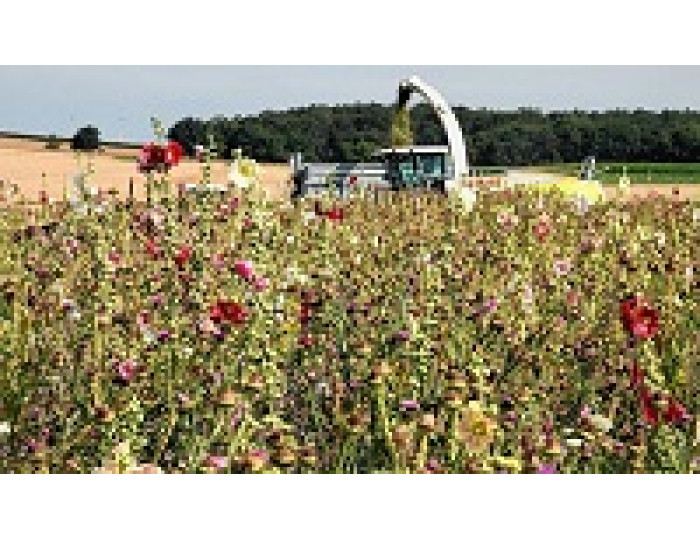
In the context of greening agricultural production and maintaining the sustainable development of nature and man, new technologies / methods for producing plant biomass are being developed, which will be further used for energy purposes. One of such solutions was proposed to grow a mixture of 28 plant species for 5 consecutive years without the use of any agricultural techniques. At the same time, hemp has become the most important component, because, thanks to its natural characteristics of growth and development, it contributes to the improvement of soil structure and suppression of weeds, and is also a source of a large amount of pollen collected by wild and domestic bees.
In search of an alternative to growing corn as a raw material for biogas production in Germany, they came up with a rather unusual technical solution. For bioenergy purposes, a very special seed mixture is sown - “Veitshöchheim hemp mix”, which includes mallow, thistle, sunflowers, fennel, etc., there are about 28 plant species that can form a high yield of green biomass at low fertilizer application rates. The developer of this innovative technology was the German State Institute of Horticulture and Agriculture (Landesanstalt für Wein- und Gartenbau, LWG), which only emphasizes the prospects and importance of this area of research.
Technical hemp makes up only 2% of the number of plants, but at the same time it is the most important component, because due to its natural features of growth and development it contributes to the improvement of soil structure and inhibition of weeds, freeing seedlings from them.
The proposed technology is completely environmentally safe and appropriate, since it does not involve the introduction of pesticides, tillage, which prevents its erosion, and, in addition, the resulting agroecosystem is a habitat for many species of animals found in the wild (insects, rabbits, hamsters and even deer), a source of varied pollen collected by bees.
A feature of such a mixture is that different types of plants, as its constituents, bloom and complete their life cycle (ontogenesis) in different years. For example, sunflower and industrial hemp bloom for one year, thistle for two years, and mallow and fennel bloom from the third year. Thus, without soil cultivation, seed sowing, application of pesticides and other care for the stalk, this agroecosystem is capable of forming biomass for at least five years. When used for the production of biogas, corn goes into the category of monoculture, depriving the soil of important nutrients and nitrogen, and the proposed technology ensures compliance with crop rotation norms and rules.
Harvesting takes place in the middle / end of July in the seed ripening phase, then plants grow back to autumn (until about human growth), which partially enter the flowering phase until mid-October. The latter is important for preserving bee populations, since insects can find enough pollen to support their livelihoods and reserves during the cold season. Of all the plants included in the "flower mix", hemp is the champion in terms of the amount of pollen formation that this group of insects with pleasure collects. Dr. Ina Heidinger of the Institute for Beekeeping at LWG notes that in Germany there are about 560 species of wild bees and most of them are very comfortable in such crops.
It should be noted that at the moment, from 40 to 50% of the corn used for methane production is replaced by the “Veitshöchheim hemp mix”. Farmers and industrialists are satisfied with the results of the innovative technology, and a campaign has been launched to introduce, from 2020, a system of state subsidized cultivation for agricultural producers of such a plant mixture.
Commentary of the Ukrainian Technical Hemp Association
The proposed technology for the production of biomass for energy purposes still requires improvement and additional research to confirm its effectiveness. There is no doubt only the fact of its implementation from the standpoint of greening agricultural and industrial production. In the climatic conditions of Ukraine, to confirm the appropriateness of using this method, it is also necessary to conduct appropriate tests, it is indisputable that hemp is a universal and at the same time often indispensable culture that finds application in various spheres of human existence.