

The use of thermal insulation and acoustic properties of agricultural materials in construction
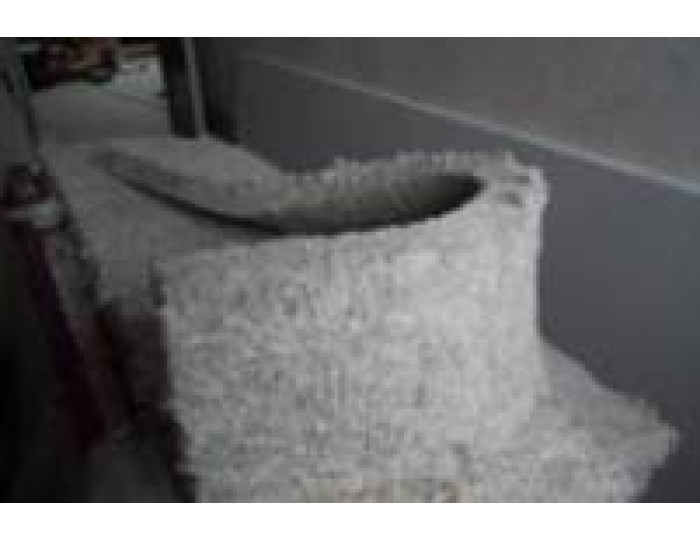
French scientists have come to the conclusion that instead of leaving hemp as compost on the fields or burned to produce electricity and heat more effectively it can be used as heat, sound insulation material in the construction process.
The results of studies designed to explore the use of biological materials in the construction presented in the city Darnetal (France) testify to the excellent prospects of application in this segment of the market not only the forest, but also agricultural products.
By studying the thermal and acoustic properties of flax and hemp straw French scientists have come to the conclusion that, instead of leaving it as compost on the fields, or to burn to produce electricity and heat, more efficient fire can be used as heat, sound insulation materials in the construction process. It trusts plant materials from flax and hemp can be a promising environmentally friendly alternative to products already present on the market, produced in the refinery. In addition to the security for the human body hemp insulation, these products greatly benefit the price, compared with different kinds of products made of polystyrene or polyurethane.
The independent expert Sylvain Angerand representing the non-governmental organization «Amis de la Terre France» warns to not get involved in the use of agricultural land for the cultivation of building materials, but primarily used for the production of building materials of vegetable land unsuitable for cultivation of major crops. He was invited as an expert in Green Building in the National School of Architecture of Upper Normandy (France), to present the results of joint research research laboratory of architectural Toulouse and NGO «Amis de la Terre France». The above studies were carried out for several years and has focused on the possibilities of arable land in the capital region for the cultivation of agricultural products, as well as vegetable raw materials for construction and reconstruction of buildings and structures.
The study's authors argue that the development of sustainable construction based on vegetable raw materials, it is necessary not to forget that the arable land of the capital region of France are primarily intended to ensure the food of its inhabitants. It is therefore necessary to find a balance between agricultural producers, who plan to cultivate agricultural plants as the basis of building materials, with selskhozproduktsii manufacturers to be used as a food residents of Paris and its environs. It is this balance can provide industrial crops industrial hemp, which provides an opportunity to a small area, not only to obtain products rich in vegetable protein (seeds, oil, flour, etc.), but also the building material (the Trust), which can be effectively used as a insulation, various foundations and solid surfacing materials.
During his report, Mr Angerand stressed the need to avoid the mistakes committed earlier in the biofuel industry, citing the facts disastrous competition between the producers of food crops and bioenergy areas of France.
Sylvain Angerand and his colleagues believe that on the basis of flax and hemp raw material of active development of the construction industry is necessary to eliminate a number of barriers - economic, technical, legal, institutional. The construction industry, which is based on the use of plant material with time itself structures themselves, in response to requests from consumers, however, the state must create the conditions in which architects, construction companies, investors, contractors would be interested to use environmentally friendly building materials made from hemp and flax grown it within their places of use.
Information taken from the site http://tku.org.ua