

Research into the use of hemp as a feed additive for farm animals
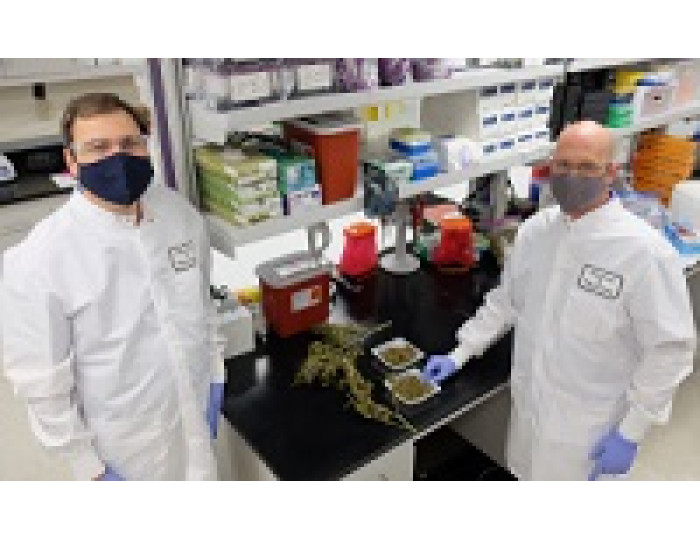
A California research team recently received a $ 200,000 competition grant from the US National Food and Agriculture Institute under an Agriculture and Food Research Initiative to determine cannabinoid concentrations in livestock products after feeding industrial hemp. The allocation of such a large grant indicates a sufficient priority of research for the industry, from the most efficient use of "garbage" of which, as a result, significant dividends can come.
According to many experts, the derivatives of industrial hemp processing can be used to make high quality feed for farm animals. Participants in the American hemp market understand that the maximum integrated use of all the constituent plants increases the profitability of the industry and "lays the foundation" for the widespread introduction of the plant into the country's economy. That is why, American scientists set out to determine the possibilities of using the hemp plant as a food for pets.
It is well known that at the moment the most in demand on the market are seeds and fibrous products obtained from industrial hemp. American scientists have been tasked to determine how safe and effective it is to use the derivatives of the cultivation and processing of hemp raw materials such as leaves and sorting products of seed material, as well as other parts of the plant. To what extent such by-products, which are now often waste products, can be suitable for inclusion in animal feed.
Basically, the waste after cleaning and sorting hemp raw materials contains cellulose, which ruminants themselves, especially cattle, digest without problems. The digestive system of animals, in contrast to humans, is more adapted for the use of plant mass, and the possibility of the most efficient use of the “waste” of the main production is ultimately an urgent issue for modern hemp breeding. However, it is clear that in-depth research and some scientific advice are required before allowing the widespread use of "hemp waste" as animal feed.
A California research team recently received a $ 200,000 competition grant from the US National Food and Rural Institute under an Agriculture and Food Research Initiative to determine cannabinoid concentrations in livestock products after feeding industrial hemp. The allocation of such a large grant indicates a sufficient priority of research for the industry, from the most effective use of "garbage" of which, as a result, significant dividends can come.
It should be noted that in the United States, the cultivation of cannabis and the use of its constituents for use, for example, in human food, is regulated by the current regulatory legal acts. At the same time, a situation has developed in which hemp products cannot be used for feeding livestock, since research in this area has not yet been carried out, and there is no evidence that, for example, the meat and milk of such animals will not contain components that can negatively affect on human health. In this regard, the main task of scientists will be to establish the concentration of cannabinoids in meat and milk after the introduction of cannabis into animal feed.
A special place in the study will be occupied by the question of the potential for intoxication with tetrahydrocannabinol (THC) or other poorly studied cannabinoids. Preliminary studies of the effects of TCG and cannabidiol on living organisms were associated with the observation of mice and pigs, but did not take into account the human consumption chain of livestock products.
Commentary of experts of the Association "Ukrainian technical hemp"
The most recent published studies on the topic are “Nutrient Concentrations, Digestibility and Cannabinoid Concentrations in Components of Industrial Hemp Plant”, which was published in the journal Applied Animal Science, and “Plasma Eleven Cannabinoid Concentrations in Cattle Following Oral Ingestion of Industrial Hemp (Cannabis sativa) ”- article published in Scientific Reports.
In our country, there is experience of using industrial hemp processing products as feed for domestic animals. During the second day of training for the students of the " Hemp University " within the framework of the round table " Experience in using the therapeutic elements of industrial hemp as raw materials for food, cosmetic preparations, biologically active or feed additives ", a presentation "The effectiveness of using the leaves and inflorescences of technical hemp of therapeutic orientation in the field of pet business ", in which the speaker will focus on certain nuances of using the components of the hemp plant that are not currently used for feeding domestic animals and poultry.