

By 2030, hemp production will dominate in the United States with the aim of obtaining seeds and fiber
The delay in regulating the possibilities of using the therapeutic properties of cannabis as nutraceuticals, as well as various kinds of additives, is the main obstacle preventing the exponential development of the modern cannabis market, which exploits the therapeutic potential of the plant in the most profitable country in the world. The sector of modern cannabis growing, exploiting the therapeutic potential of the plant for an extremely short time, will be significantly reduced, and in terms of market size, grain and fibrous part of the plant will come out on top, the area under which will occupy the lion's share of cultivated crops of industrial hemp in the United States.
In economically developed countries of the world, special analytical and consulting companies study trends in the global hemp market so that the output analytical information helps both agricultural producers and processors to plan the development of their businesses, create production chains based on their understanding of the market, as well as invest various kinds of resources in the most promising areas of development. That is why the forecasts published by the National Industrial Hemp Council (NIHC) of the USA are extremely interesting, the abstracts of which are provided for information to our dear readers and listeners.
Domestic market
According to estimates published in a report by the NIHC, the acreage of cannabis hemp licenses for plant cannabidiol (CBD) will fall to 2.78% of the total number of fields that the plant will grow in the United States over the next 10 years. At the same time, industrial hemp, grown for seed crops, will become the dominant product in the world's most developed country by 2024.

The report notes that despite a decrease in plant cultivation areas in 2020 in the United States compared to 2019, the number of licensed growers exceeded 21 thousand in 2020, compared to 2019 (16877 licensees). The 27% increase in the number of licensed growers in 2020 over 2019 is in addition to the 476% increase in the number of licensees between 2018 and 2019, reflecting the availability of plant growing opportunities for small and medium-sized agricultural producers, and creating conditions for further development. in the land of the hemp business.

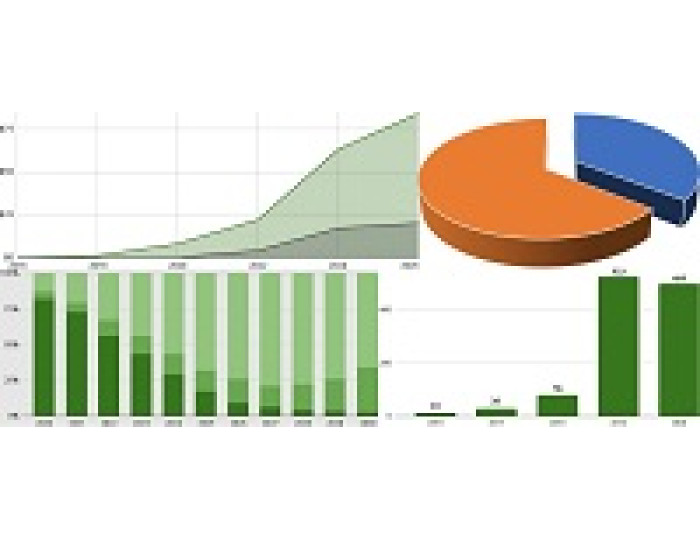
The document prepared by the NIHC experts indicates that despite the fact that in 2020 legal hemp was grown in the country in 82% of cases to obtain raw materials rich in cannabinoids of plant origin, this kind of licensed crop area by 2030 will decrease to a little less than 3% ... At the same time, the area under crops intended for obtaining marketable grain will increase from 13% in 2020 to almost 66% in 2030, and for the production of the fibrous part of the plant, not 5% of the sown area will be used, as it was in 2020, but more than 31 % - forecast for 2030.

Such indicators of the dynamics of development of various sectors of the hemp market are based on the active growth of the above-mentioned markets in the United States and, first of all, meeting the growing needs of American consumers. It is noted that in the next few years, the production areas of modern cannabis growing in the country with the most highly developed economy will expand primarily in order to meet domestic demand. Judging by the dynamics of sales, hemp will become one of the main crops in the United States, the volume of production of which in the country has increased several times over the next few years and will reach $ 10 billion by 2025.
In particular, it is argued that “Despite the challenges posed by the pandemic and regulatory uncertainty both in the US and abroad, the demand for fiber, grain and industrial hemp oil continues to skyrocket. With the right regulatory framework and market support in place, commercial cannabis planting will provide US agricultural growers with another sustainable and profitable crop that unlocks its full potential in the long term. ” It is noted that in 2019 alone, hemp allowed to create 150 thousand jobs and provided an opportunity to receive about $ 4 billion in additional income for farming communities in depressed agricultural regions of the country.
Export potential
Considering the export potential of the hemp plant and the goods produced from it, NIHC experts argue that in 2020 alone, the volume of supplies abroad of grain, oil meal, as well as products made on the basis of hemp seed derivatives increased several times - up to the $ 1 mark. 8 billion compared to 2019 ($ 310 million). Exports of industrial hemp-based products from the United States are projected to grow at more than $ 21 billion by 2026. Global hemp trends indicate that the trade in hemp, as well as in hemp-based products, currently hitting the $ 8.1 billion mark, will reach $ 65 billion by 2026.

This trend may intensify in the coming years, since the potential for primary and deep processing of hemp raw materials will significantly increase. In particular, the attention of NIHC specialists is focused on the fact that processing and production of final products from hemp raw materials will help increase the profitability of agricultural companies, stimulate the economy in depressed agricultural regions of the country, while providing additional market incentives for expanding production capacities aimed at cultivation and processing the most highly profitable agricultural crop.
Market problems
The NIHC argues that the delay in FDA recommendations for drug-free cannabinoid treatment specifically in the nutritional supplement and nutraceutical markets is a key obstacle to the exponential growth of the US cannabis industry segment associated with the use of the plant's therapeutic properties. In particular, the report states that “The delay in developing an appropriate regulatory framework has already led to uncertainty about how these products are regulated, as well as difficulties in setting international standards, even though the domestic market for these product groups flourishes. " According to the authors of the report, harmonization of international standards and simplification of certification of end products are critical areas for the further development of international cooperation in the field of modern cannabis production.
It is noted that there is "the development of local centers for the sale of raw materials and finished products, limiting international trade." In particular, an example is given where the trade in “raw hemp” and unprocessed plant fiber in Europe is twice the volume of international trade. In other words, intra-EU trade in raw hemp has grown sharply over the past few years, but US exporters have faced difficulties in the marketplace due to ambiguous import requirements and inconsistent compliance by EU member states - i.e. there is clear protectionism in the market. In addition, the regulatory and legal changes initiated recently in China are aimed at limiting the export opportunities of the United States as much as possible, primarily in the hemp fiber market.
Commentary of the specialists of the Association "Ukrainian technical hemp"
The National Industrial Hemp Council (NIHC) is the only nationwide hemp trade association in the United States that builds “grower-to-processor” supply chains for industrial hemp in the country, providing appropriate services to brands and retailers as well as end-users and consumers. Specializes in lobbying the interests of American cannabis growers at all levels, including improving the regulatory framework and promoting sustainable long-term growth and industry profitability
The document itself, prepared by NIHC analysts, is not only interesting but also extremely informative. In particular, I would like to draw your attention to the forecast, according to which the sector of modern cannabis growing, exploiting the therapeutic potential of the plant for an extremely short time, will significantly decrease and in terms of market volume, grain and fibrous part of the plant will take the first roles, the area of crops under which will occupy the lion's share. the share of cultivated crops of industrial hemp in the United States. I would like to focus on another statement of our American colleagues that the delay in regulating the possibilities of using the therapeutic properties of cannabis as nutraceuticals, as well as various kinds of additives, is the main obstacle preventing the exponential development of the modern cannabis market, which exploits the therapeutic potential of the plant in itself. highly profitable country in the world.