How Italians Defend the Modern Hemp Industry Against the Threat of Industry Destruction by Government Authorities
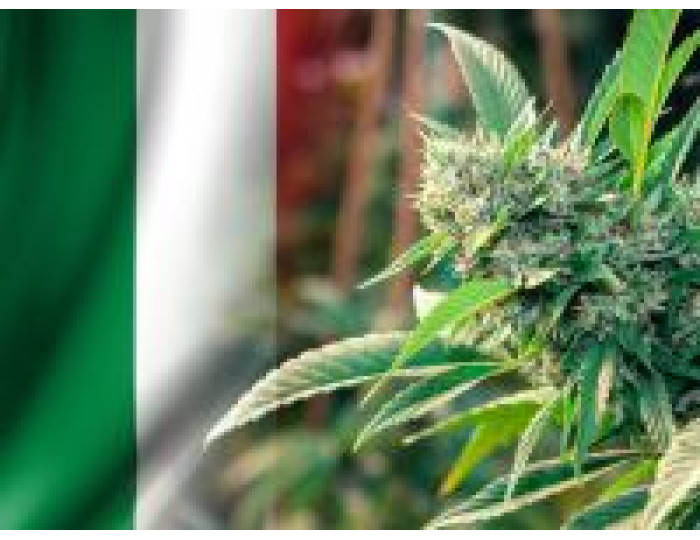
Late last month, the government proposed amendments to the safety bill that would relate to “cannabis inflorescences and products derived from them.” According to Italian hemp growers, the administration of Prime Minister Georgia Meloni has initiated another campaign aimed at cracking down on the hemp industry after numerous so far unsuccessful attempts to destroy modern hemp farming in Italy, undertaken since her election to power in 2022.
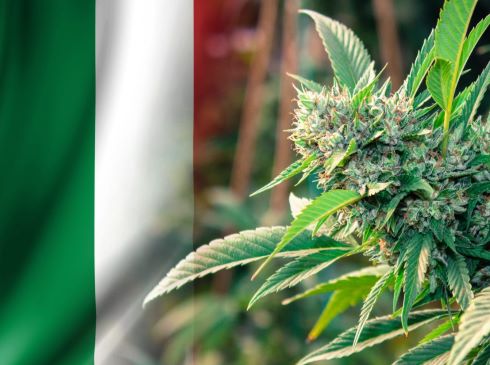
Representatives of the Italian hemp industry have called on
the European Commission (EC) to intervene after the country's government
decided to ban the cultivation, production and marketing of hemp.
A number of industrial groups and public organizations in
Italy working in the field of modern hemp farming have written to the EC with
an open letter in which they claim that the government’s proposed amendment to
the country’s security bill could “violate European Union law on free
competition and the movement of goods.”
Italian cannabis growers are calling on the EU to influence
the country's government structures, saying that such changes to the current
regulatory framework would destroy the entire cannabis industry and lead to the
closure of about 3,000 enterprises, as well as the loss of 15,000 jobs generated
by this sector of the economy. According to Italian hemp growers,
the administration of Prime Minister Georgia Meloni has initiated another
campaign aimed at cracking down on the hemp industry after numerous so far
unsuccessful attempts to destroy modern hemp farming in Italy, undertaken since
her election to power in 2022.
For example, one of the largest trade organizations in Europe "CIA- Agricoltori Italiani , which specializes in protecting the agricultural industry, said the bill threatens to close thousands of agricultural companies "in an ever-expanding sector with significant growth rates."
The essence of the claims of
Italian hemp growers to the administration of the Prime Minister of Italy
Late last month, the government proposed
amendments to the safety bill that would relate to “cannabis inflorescences and
products derived from them.” The amendment is currently in the Chamber
of Deputies, where it is being considered before being debated, voted on and
possibly sent to the Senate for a final vote.
According to Italian hemp growers, such changes to the
country's legislation will actually make all commercial activities related to
industrial hemp, even with a THC content below 0.3%, illegal in Italy. In
particular, Article 13-bis of the security bill covers a range of issues that
go far beyond modern cannabis production and prohibits the “importation,
processing, storage, transfer, distribution, trade, transportation, dispatch,
delivery and sale to the public for consumption, even in semi-finished form,
dried or crushed."
This will not only “bury” the thriving therapeutic hemp
industry, which has long been a goal of the Meloni government , but will also
effectively destroy the entire agricultural supply chain, leading to the
cessation of production of products derived from the leaves and inflorescences
of therapeutic cannabis, such as cosmetics, herbal medicine and food.
Additionally, the proposed changes could significantly
restrict the industry by banning the graphic symbol of the hemp plant, effectively
blocking advertising "dedicated to superior industrial and craft products
such as green building, textiles, cosmetics, etc."
Appeal to the European Commission
A number of non-governmental public organizations
specializing in protecting the rights of companies operating in the Italian
hemp sector wrote an open letter to the EC, expressing their concern about
“restrictions on the cultivation and trade of hemp inflorescences, as well as
their derivatives.” This document highlights that the adoption of this type of
legislation could violate EU law on free competition and the movement of goods,
a principle that allows goods legally produced and sold in one EU member state
to be freely sold in any other state of the European Union, even if Various national
regulations do not comply with this. In addition, the Italian government
violated EU regulations by failing to consult the Technical Regulatory
Information System, a mandatory step for regulations that could affect other
members of the European Union's single market.
The EU Directorate General for Agriculture and Rural
Development has announced that it will consider the complaint from Italian hemp
growers. That is, now the structure headed by him will conduct a detailed
assessment of whether the rules of the European Union were violated. If the EC
finds that Italy has violated EU law, it can issue a “letter of formal
notification” requiring the country's government to respond within a specified
time frame. If Italy's response is unsatisfactory, the commission can issue a
"reasoned opinion" and, if necessary, refer the case to the European
Court. The European Court will then determine whether there has been a
violation, and Italy will have to comply with that decision.
Commentary from specialists of the Association
“Ukrainian Industrial Hemp”
In November 2020, the European Court of Justice ruled that
cannabidiol (CBD) is not a drug and an EU member state cannot restrict the free
movement of CBD products and that cannabidiol can be obtained from hemp flowers.
In February 2023, an Italian court overturned an “absurdly
restrictive” decree that considered cannabis leaves and inflorescences to be
drugs, according to regulatory authorities. The Regional Administrative Court
of Lazio ruled that since the government cannot provide any evidence that
industrial hemp is dangerous, this type of regulation must be repealed.
In 2023, France decided to "recognize the right to use the whole hemp plant for industrial use" and grant "temporary licenses for the trade of CBD dietary supplements" amid ongoing delays in the Novel process Foods .