

Chinese scientists have obtained evidence of human use of hemp for more than 2.5 million years
Perhaps the use of leaves and inflorescences of hemp in the braziers found on the Pamir plateau indicates that the plant was used to obtain the smoke of a fumigating deceased (in order to disinfect the air at the burial site), perhaps for a recreational effect. Various hypotheses can be built on this topic, but the fact is that the hemp plant was used by the most ancient civilizations of our ancestors and the period of using the hemp plant in the interests of man lasts more than 2.5 million years.
If we consider hemp from the point of view of its existence on our planet, then as one of the representatives of the cannabis family (Cannabaceae), in the wild, a plant native to Central Asia exists in nature for millions of years. Naturally, man has been using hemp raw materials as a versatile food, heating agent, or source of fibers for making ropes or fabrics for thousands of years, but modern science requires evidence of how and when the plant was used by our ancestors. It is in this connection that the attention of the editors of the specialized electronic edition of national hemp growers was attracted by the information of our colleagues on ongoing research related to the study of excavations on the Pamir plateau.
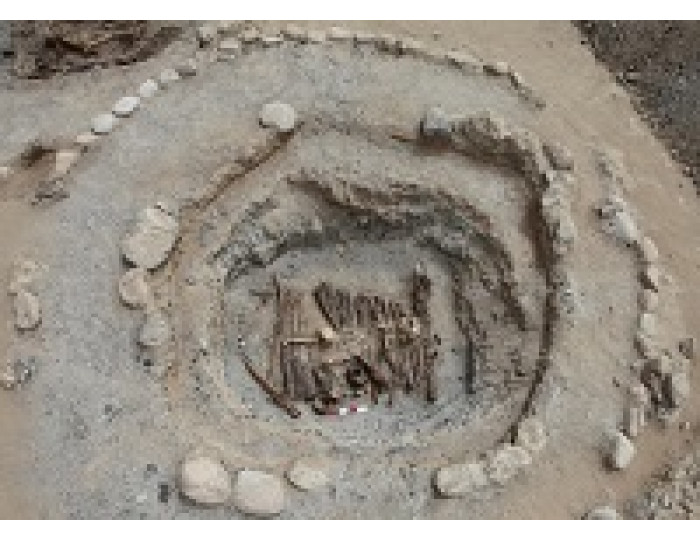
In 2013, an international research team led by Yiming Yang, professor of the Department of Archeology and Anthropology at the University of the Chinese Academy of Sciences in Beijing, began excavations at the Jirzankal cemetery in the Pamirs in Central China. At an altitude of more than 3,000 meters, researchers were excavating to study the ancient tombs of the indigenous peoples of the region. Details of their discovery were published in the specialized journal Science Advances in June 2019. The article told about the excavations of ten wooden braziers at the Pamir burial ground, the contents of which were yet to be studied. In the braziers there were accumulations of burnt remains and ashes, and it was in these small piles of ashes that an ancient secret lay sleeping, which indicates the use of the plant for rituals or fumigation of the dead.
Using the latest scientific methods of gas chromatography/mass spectrometry, Professor Yang and his colleagues studied the ancient ash. First, the chemical signature of the ash was analyzed, which revealed the presence of tetrahydrocannibinol (THC). Further testing showed that it was not only cannabis, but also a plant variety that significantly differed in the number of cannabinoids from any previously discovered wild cannabis plants growing in the region (this fact indicates either cultivation or trade in the plant in ancient times). In addition, the high THC content indicates that the plant was used primarily for the purpose of obtaining a therapeutic or recreational effect. Further research showed that the plant burned in the oldest braziers is at least 2500 years old.
Commentary of the specialists of the Association “Ukrainian Industrial Hemp”
The Greek historian Herodotus wrote that in 440 BC. nomadic Scythians, as part of their ritual after the burial of the deceased, used hemp smoke to cleanse themselves. Paraphrasing his story, it can be argued that the Scythians dug a hole, covered it with red-hot stones and built a small three-pole tent around it. The next step was throwing cannabis seeds (possibly leaves and flowers) onto hot rocks, which apparently raised clouds that rivaled a Greek bath. When the tent was filled with fragrant intoxicating smoke, the mourning Scythians crawled inside, breathed it and, according to Herodotus, "howled with joy in the bath."
Perhaps the use of leaves and inflorescences of hemp in the braziers found on the Pamir plateau indicates that the plant was used to obtain the smoke of a fumigating deceased (in order to disinfect the air at the burial site), perhaps for a recreational effect. Various hypotheses can be built on this topic, but the fact is that the hemp plant was used by the most ancient civilizations of our ancestors and the period of using the hemp plant in the interests of man lasts more than 2.5 million years.
< Previous article Next article >