

China in the global modern cannabis market
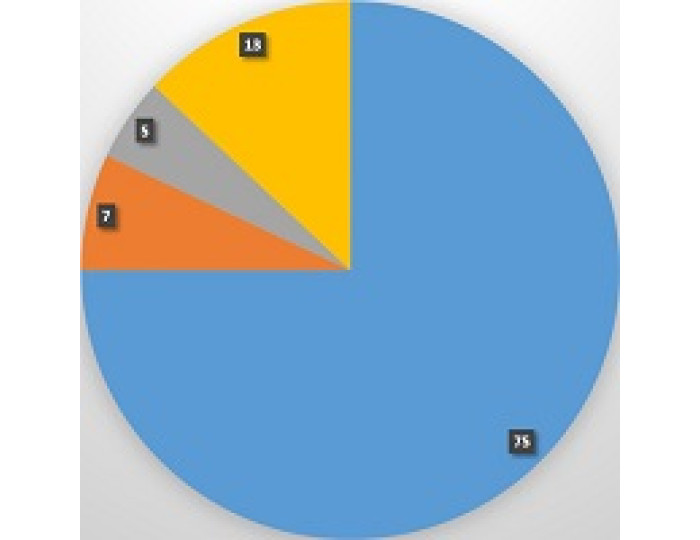
American experts estimate sales of hemp fiber alone in China at $ 1.2 billion in 2018.Despite the fact that the production of drug-free cannabinoids in China is less than in North America and Europe, it is assumed that the volume of sales of products containing in cannabidiol or CBD raw materials make up about 11% of the global market.
Analyzing the trends that prevail in the market for hemp raw materials, as well as products made from it, one cannot but take into account the impact on the global market of one of the industry leaders - China. Considering the "closed nature" of the country and the impossibility of obtaining timely systemic information about what is happening in the Middle Kingdom, the systematized data on the country's cannabis growing appearing in the media, especially since they are prepared by officials of the relevant US Department, are interesting for analysis and possible management decisions. That is why the article provides information prepared by specialists from the US Department of Agriculture for the government structures of the most highly developed country in the world.
The US Department of Agriculture issued a report in February 2020 stating that “China is now considered the leading cannabis grower in the world. There is an explosive growth in modern cannabis production in the country, as well as trends confirming the creation of conditions for the expansion of Chinese hemp products with high added value into the global market. The information contained in the report indicates that China produces more than half of the world's hemp products. Despite the fact that the government structures of the republic do not publish data on the production and sales of hemp raw materials and products made from it, American experts estimate the sales volume of hemp fiber alone in China at $ 1.2 billion in 2018. that the production of drug-free cannabinoids in China is less than in North America and Europe, it is assumed that the sales volume of products containing cannabidiol or CBD raw materials is about 11% of the global market.

China hemp market in 2018
According to data published in industry reports, about 66.7 thousand hectares of hemp (164,819 acres) were cultivated in China in 2019, with more than half of the above area dedicated to the production of hemp raw materials, later used in light industry or in the manufacture of shoes. Despite the fact that hemp crops are scattered throughout the country, the main industrial locations are the extreme northeast and southwest of China. Production capacity should be increased over the next few years as drug-free cannabinoid production has been legalized in the two main cannabis growing provinces (Yunnan and Heilongjiang), which are mostly dominated by Chinese cannabis growing. In another province of Jilin (a rapidly developing common Chinese location of modern cannabis farming), regulation of the possibility of growing and processing a hemp plant for further extraction of therapeutically active elements of the plant should take place in the near future.
The state structures of the People's Republic of China regulated the use of cannabinoid extracts obtained from the leaves and inflorescences of the plant for the needs of the cosmetic industry, but at the moment they have not allowed the use of cannabidiol for the use of the above drug-free cannabinoid for the production of food or pharmaceuticals. The bulk of the cannabinoids produced in China (both synthetic and plant-based) are exported to the United States.
The report prepared by the specialists of the US Department of Agriculture indicates that “despite the fact that China is one of the main world exporters of hemp raw materials and products made from it, the rules providing for the import of hemp products into the country are not clear enough, which significantly complicates the import of any products made from the hemp plant, since there is no clear mechanism for filing applications for obtaining permits, regulating the legality of import into its territory. " Those. China does not currently import significant volumes of hemp, but there is significant potential if regulatory barriers are removed that artificially discourage the import of high value-added hemp products into the country. In particular, the import of CBD products is prohibited, and fiber imports in 2018 were negligible (from South Korea, as well as Belgium for a total of $ 53,540) compared to its exports, as well as the sale of fiber products with high added value abroad.
Commentary of experts of the Association "Ukrainian technical hemp"
The global market for hemp products is still relatively small, but China, as the world's largest producer of fiber and grain, will continue to dominate it over the next few years. Despite the fact that Chinese cannabis growing is an extremely attractive business area for attracting foreign investment, the market is tightly controlled by government agencies, and the rules for working with industrial crops of technical hemp are quite complex. The experience of Australian, Canadian, and other foreign investors suggests that China is ready to attract hemp technologies and the latest developments to the country, however, it sets formidable administrative barriers that prevent hemp raw materials and products with high added value from abroad from entering the domestic market. We should learn from our Chinese colleagues the speed of reaction of government agencies to the provision of a regulatory framework for the created sectors of the hemp industry, due to the changing conditions of the hemp market, as well as upholding the interests of Chinese hemp growers in front of the already formed transnational hemp companies entering the market, trying to impose their interests in investment attractive countries. The interests of primarily Ukrainian cannabis growers, as well as potential consumers of our country in the use of hemp products with significant therapeutic potential, are the basis for the concept of amending the legal and regulatory framework of Ukraine presented during the training of students at Hemp University. Its essence and the procedure for changes to the existing bylaws and departmental regulations will be presented during the round table " Experience in using the therapeutic elements of industrial hemp as raw materials for food, cosmetics, biologically active or feed additives ", which will be held on October 14 at the base of the National University of Bioresources and Nature Management of Ukraine.