

Hemp oil for wood
As quickly and deeply it penetrates into the pores of all natural material surface on which it is applied, that in some cases there is no need to apply it once again. That is why hemp oil in the developed countries of the world is used for the treatment of surfaces that maximize long-term kontachit the human body - the internal surfaces of residential and commercial fund in Europe and North America.
To preserve the unique properties of wood, its appearance and at the same time to protect her from the "main enemy" - high humidity, used oil. Paint or varnish create a top impermeable film and the oil penetrates the natural capillaries, displacing them from moisture and air.
Classification
By type of oil is the main component: natural, mineral and combined.
According to the composition and the degree of processing, "pure" or modified mixture (with the addition of waxes, solvents, driers, and so on. N.).
Natural oil
This category includes products from vegetable raw materials. But not any vegetable oil suitable for wood protection. The most common could be called two varieties: Flax and hemp. Both types of oil are capable of absorbing oxygen, i.e. air dry.
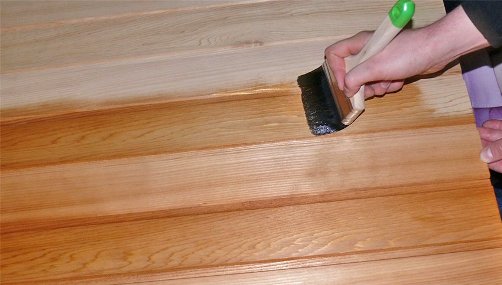
Linseed oil - the traditional for our country means of protecting wooden structures, furniture, household items and accessories. The main drawback - in its pure form, it creates a very thin and soft layer, which is washed out fairly quickly. In addition, it is a long time to dry. To accelerate its drying and improve the barrier properties, oil modified - driers are added, i.e. drying catalysts (e.g., manganese salt or cobalt), is dissolved wax or natural resin (varnish).
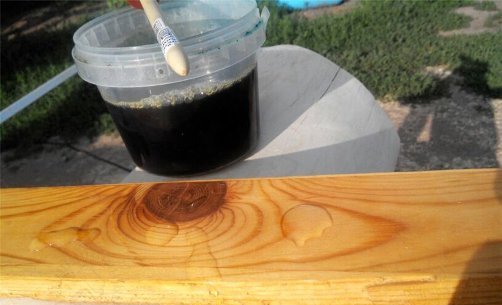
Hemp oil - since ancient times been used as the primary means of protection of wood. Much more effective than flaxseed oil. Typically used in pure form without adding any external components. Hemp oil for centuries called "dry", given the incomparably greater speed impregnation "dry" with other types of natural oils. Anti-bacterial, anti-microbial, anti-fungal properties of hemp oil on its core online Ukrainian growers were described more than once. Hemp oil as quickly and deeply penetrates all the pores of the natural material to the surface to which it is applied, that in some cases there is no need to apply it again. That is why hemp oil in the developed countries of the world is used for the treatment of surfaces that maximize long-term kontachit the human body - the internal surfaces of residential and commercial fund in Europe and North America.
Vegetable oils of other raw materials (sunflower, soybean, and so on. D.) Or do not absorb all the oxygen, or do so very slowly, so they are virtually dry and quickly washed away. In pure form, their use is possible for the internal parts of structures. But in processed form, with the addition of solvents and driers, these varieties can serve as raw material for natural varnish.
Mineral oil
Ideally, treatment of mineral oils is possible, if they are clean and are a threat to human health and the environment. For serial production of the approved "recipe" and there, but in the home often use technical grades of oils having a different purpose. Even worse, if a so-called working out.
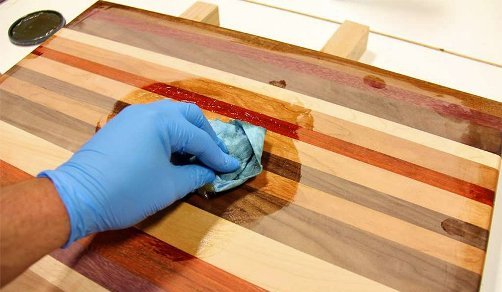
In principle, the mineral oil is not practically dry and not washed. Their use is only suitable for outdoor use that require reliable protection of the wood from rotting and decorative treatment is not required. The best-known examples - wooden sleepers and poles.
Combined mixture of mineral and natural oil is also used mainly for the protection of wooden parts and structures of non-residential premises, as well as for outdoor use.
Interior work
Hemp oil in the EU, impregnation and polishing based on it are used for decorative and protective treatment of wood protecting surfaces of premises that do not have paint or laminated: floor coverings (parquet, solid, engineered timber and so on. N.), Wall panel (wall paneling, block-house, an imitation of timber), suspended and suspended ceiling. It is also used for furniture, wooden accessories and dishes which are not coated with lacquer.
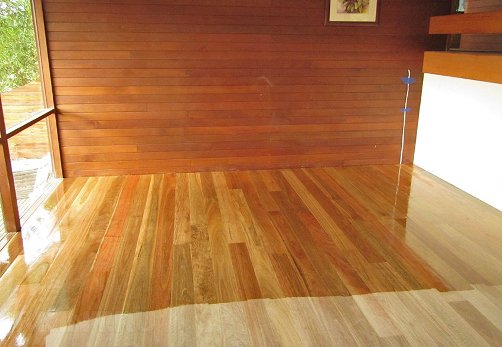
Another application - impregnation, primer and septic tanks, oil-based designs for interior residential premises.
Usually protective formulations based on oil added wax, natural resins, solvents and special additives. They improve the impregnating property, drying speed, improve the durability and wear resistance.
They may be discolored or contain pigments - emphasize the natural texture and color, or create new shades.
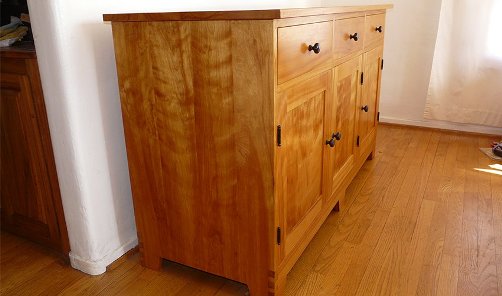
A separate category - are special formulations based on hemp oil for furniture and wooden surfaces baths.
Exterior work
Scope - a protective wooden structures with oil septic tanks, coats and hydrophobic compounds.
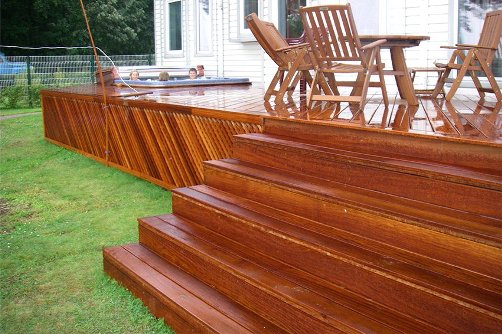
Much more rarely it is used for decorative and protective treatment of external surfaces.
Technology application
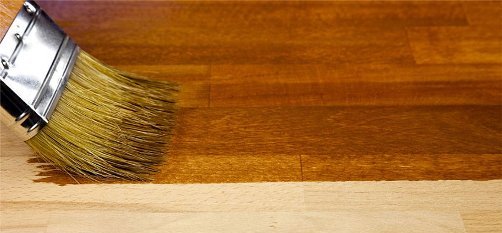
The most common in everyday method of applying oil - brush, roller or spray gun.
Typically this method is used for the treatment of already prefabricated parts. The method has only one drawback - the shallow penetration of oil into the wood structure. Therefore, oil and oil compositions applied in multiple layers, and protective treatment should be periodically repeated.
The factory processing oil can hold soaking, immersing the wood element in cold or cold-hot bath.
The most effective way - the impregnation pressure in special chambers. For example, it is treated as the board used for the ancient bridge and before the invention of creosote impregnated wooden sleepers and piles.