

Hemp fabric - description, properties and application
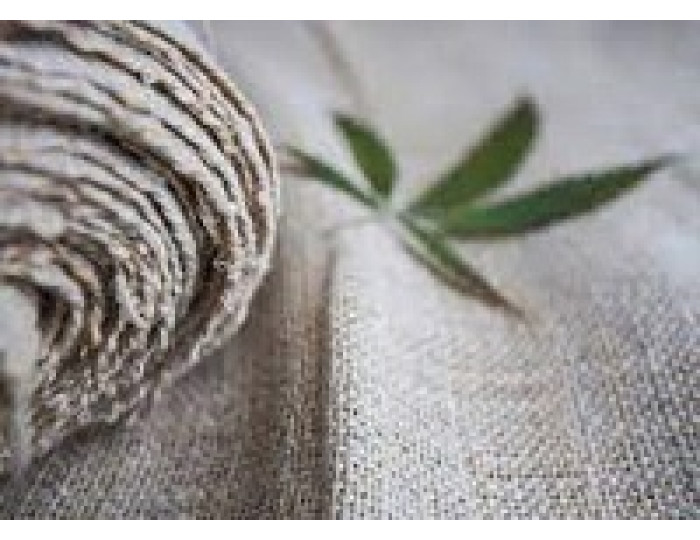
It has exclusive characteristics that have a beneficial effect on humans - it is antistatic, antiallergenic, has powerful antifungal, antimicrobial properties, and also normalizes the activity of the cardiovascular system.
Over the past several years, there has been a clear trend in the market of economically developed countries, according to which, after the decrease in the excitement associated with the use of the therapeutic properties of the leaves and inflorescences of the hemp plant, a huge interest and investment of significant financial resources is observed in the hemp fiber market. Considering the fact that during the next training course for the students of the " Hemp University " a round table will be helddevoted to the peculiarities of cultivation, processing, and also the use of the fibrous part of the plant, the editors of the profile electronic resource of national cannabis growers decided to demonstrate the expediency of a careful study of this issue in connection with the increasingly clear trends aimed at replacing synthetic fibers in the global textile and knitwear market with natural, as well as the priority of the use of hemp fiber in comparison with cotton, observed in China, India, USA, Canada, as well as a number of other economically developed countries.
It is difficult to overestimate the versatility of cannabis as a useful resource in various spheres of life. For thousands of years, the hemp plant has been used to make a fabric much like flax. However, it has a different range of physical, biological and therapeutic properties useful to humans.
Given the declining popularity of cotton products in developed countries, it makes sense to imagine how any other fabric can win the sympathy of the sophisticated modern consumer. There has been a clear interest in plant fibers in recent years, and the versatility of hemp has become its key advantage over other crops, including the use of the plant as a raw material for fabrics.
The history of hemp fabric
The origins of the use of hemp fibers are about 10,000 years old. Archaeologists have found in modern-day Iraq the remains of a fabric made from hemp that date back to 8000 BC. The secrets of the crafts specializing in the processing of hemp fiber were originally limited to the Mesopotamian region, however, around 1200 BC. the hemp plant found its way to Europe. Up to this point, hemp was grown on a large scale in China, which today has the longest tradition in the production and processing of hemp fiber. However, in the Middle Ages, the need for strong fibers became more and more obvious, including due to the dynamic development of the navy. In those days, hemp fiber was an excellent raw material for the production of ropes and sails. For example, King Henry VIII of England issued a decree ordering each farmer to plant a quarter of an acre of hemp. There is evidence that as early as the beginning of the 20th century in the British Isles, up to 80% of all clothing was made from hemp plant fibers.
Unfortunately, in the 20th century, for a number of reasons, hemp lost the competition to cotton, which at that time was much easier and cheaper to produce. An additional blow to cannabis cultivation at that time was the invention of synthetic fibers and the accompanying aggressive advertising campaign, and in the interwar period, industrial cannabis crops began to be officially eliminated as part of the fight against drug addiction. Thus, hemp fabric was forgotten for decades. Only modern interest, primarily in the prudent use of resources, has returned interest in establishing production, as well as processing the fibrous part of the plant.
Growing hemp for yarn
Hemp, like ramie, sisal, abaca, jute or flax, is a fibrous plant. Shoots up to 5 meters in height are among the fastest growing in the world and produce long, thin fibers, mainly cellulose. In some cases, up to 100 plants are planted per square meter, because the higher the density, the faster the plants “stretch” upward, producing longer fibers. Hemp plants reach full maturity 3-4 months after sowing, but they require a long period of sunlight to mature, ideally 14-16 hours a day. A significant part of the territory of Ukraine is ideal for growing hemp fibers, where during the “agricultural year” there is a mild temperate climate with an annual rainfall exceeding 500-700 mm.
The goal of plant improvement, which breeders face in the field of using the fibrous part of the plant, is to obtain longer fibers, increase their number, as well as improve certain characteristics of hemp fibers.
How is hemp fabric made
Hemp fiber has been harvested by hand since ancient times, but modern methods of harvesting involve mechanization. It is important to find the ideal stage of maturation - too early a crop yields a small amount of fiber, and a late harvest involves obtaining too hard hemp raw materials, which are mainly suitable for the production of technical fabrics.
Since the fiber is connected to the woody part of the plant with the help of plant glue, including pectins, effective isolation requires up to 3 weeks of exposure to the plant of natural and climatic factors or the use of special methods (lobe, steaming, etc.). One of the ways to accelerate the process of separating the fibrous part of the plant from the fire is to soak the plant in special water tanks, which contain special microorganisms, which significantly accelerate the above process by actively decomposing pectin.
The next stage in the processing of hemp fiber is the separation of the fibers suitable for yarn production directly from the woody part of the plant (a fire in our country is separated from the fibrous part of the plant at primary processing facilities).
After separating the hemp fiber from the woody part of the plant, a suitable machine combes the matted fibers, getting rid of the remnants of the fire and gathering them into smooth parallel strands. Long fibers are the most valuable for spinning, but shorter fibers are also used to produce, for example, technical or insulating materials or paper.
For the manufacture of yarn, longer fibers are used, which are used in the production of fabrics, both exclusively hemp and mixed with other fibers. It should be borne in mind that 30% of the collected fibrous part of hemp is usually fibers, and 70% is the woody part of the plant - the fire, which in Ukraine is used most effectively during construction work.
It should be borne in mind that at the moment China is the largest producer of hemp fiber, despite the fact that in the USA, Australia, France, Canada, as well as a number of other economically developed countries, the annual production of hemp fiber products has been steadily growing in recent years. According to experts of the textile fiber market, the volume of global consumption in the medium term may reach $ 10 billion, which is 1/5 of the value of exported cotton.
The benefits of hemp fabrics
Hemp fabric is renowned primarily for its strength - it is considered the strongest and most durable fabric made from any natural fiber. At the same time, it retains its original shape for many years without changing its characteristics, including without stretching. Hemp fabric softens over time, which is usually a desirable highlight for clothing. Hemp fabric has active UV protection properties, which makes it especially popular for summer clothing. It easily absorbs moisture and, although quite airy, can cope with more difficult climatic conditions. Besides clothing, hemp fibers are also used to make ropes, carpets, and other home and industrial textiles. Among other things, hemp tissue has exclusive characteristics that have a beneficial effect on humans - it is antistatic, antiallergenic, has powerful antifungal, antimicrobial properties, and also normalizes the activity of the cardiovascular system.
Disadvantages of hemp fiber
Hemp fabric has some disadvantages. Firstly, it wrinkles quite easily, and with frequent wearing, permanent grooves may appear in the product due to the breakage of individual fibers. Consequently, hemp fiber is most commonly used for loose-fitting clothing or in combination with fibers that support and add flexibility. In its natural form, hemp fabric has a light beige shade that can be dyed or bleached. Improperly dyed hemp fabrics tend to hold dye poorly and may stain other garments when washed. What's more, they should also be handled with care when washing - ideally hand wash in cold water and air dry.
Commentary of the specialists of the Association "Ukrainian technical hemp"
Considering the fact that the specialists of the profile association of national hemp growers over the past three years have actively participated in the creation of several production chains at once aimed at processing hemp fiber , as well as the fact that experiments are being actively carried out in the framework of the Hemp University to create textiles and knitwear made of therapeutic hemp fiber with significant medicinal properties, during the next training of the students of the " Hemp University " it is planned to hold a specialized round table designed to discuss the situation on the hemp fiber market in our country, as well as determine the steps necessary for the development of this segment of modern hemp growing Ukraine. In addition, during the presentation " Possibilities of using the medicinal properties of technical hemp with a therapeutic orientation ", representatives of the profile association of national cannabis growers will separately focus on national developments related to the manufacture and sale of products from hemp fiber with healing and healing properties .