

A brief analysis of the market for medical hemp in the UK
The medical cannabis market in England has hardly moved off the ground since its “launch” in November 2018 . Despite the fact that the country has a two-tier system of access to medications made on the basis of the therapeutic properties of hemp , most patients in the country continue to use non-drug methods of treatment involving the use of therapeutic properties of hemp .
Analyzing the already functioning medical cannabis markets of the economically developed EU countries, it can be concluded that the high cost and not always sufficient effectiveness of medical products made on the basis of the therapeutic properties of hemp leads to the fact that if their cost is not covered by insurance (how this happens in Germany ), the market develops rapidly over a not very long time (up to two years) and then it gradually stagnates (as we described in the examples of Holland or Denmark ) with a tendency to curtail it. With a two-year statistical data relating to sales of medical cannabis in the UK , we try to make a conclusion about how critical for patients Albion are medicines made on the basis of the therapeutic properties of cannabis .
In the United Kingdom only Epidiolex , Nabilone and Sative x considered licensed drugs , made on the basis of the therapeutic properties of the hemp . In particular, the instructions of the National Institute for Health and Care Excellence (National Institute for Health and Care Excellence) for the treatment of certain conditions recommended compensation for the use of the above three drugs at the expense of resources of the NHS (National Health Service, NHS) in England . The rest of the cannabis-based drugs are unlicensed, so they are often called “ special ” and are not covered by insurance (are at a disadvantage compared to licensed drugs ).
" Unlicensed " drugs of hemp raw materials - drugs that have not been successful clinical trials (not able to prove their safety, quality and efficacy) necessary to obtain a license to sell from the Office of the drugs and medical products (Medicines and Healthcare products Regulatory agency, MHRA) or the European agency for medicines ( European medicines agency, EMA).
Unlicensed drugs based on the therapeutic properties of hemp can be prescribed only to meet the "special needs" of an individual patient in cases where there are no suitable licensed alternatives. Those. " Special " drugs on the basis of cannabis are appointed only in cases where there are exceptional patient clinical needs in a particular pharmaceutical formulation and the disease can not be cured / facilitated traditional medicine or licensed drugs , made on the basis of the therapeutic properties of medical cannabis .

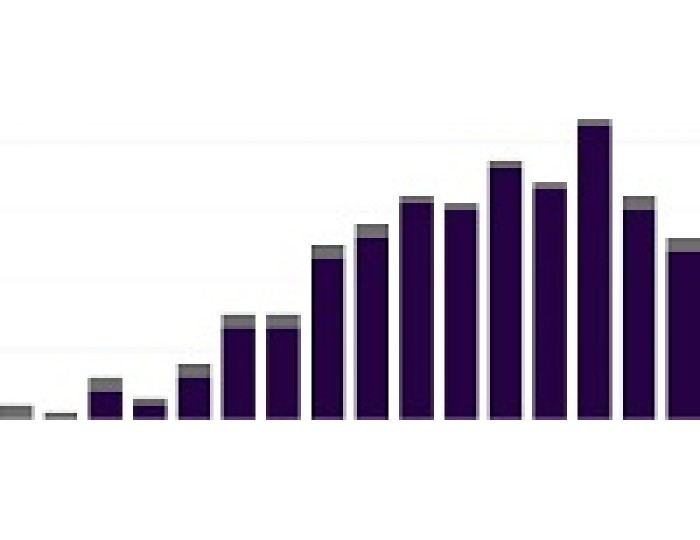
Unlicensed cannabis recipes in England
This chart indicates that the National Health Service of England from November 2018 to February 2020 reimbursed patients only a few dozen cases for the use of licensed pharmacological hemp preparations . Since “ licensed ” prescriptions used in hospitals are not included in the tabulated data table, the total number of prescriptions reimbursed by the NHS may be slightly higher.
It should be noted that in the case of private medical care , prescriptions for which patients pay out of pocket for using licensed pharmacological preparations in England for the entire period of their existence were prescribed only 313 times.
Only those recipes that have been “written out and submitted to the NHS Business Services Administration” are included in the final chart, which means that the final data includes recipes issued but not redeemed. Cases of this kind are possible when patients realize that they cannot afford to pay the cost of the prescription only after they receive it in their hands.
The foregoing allows us to draw extremely simple conclusions :
- the medical cannabis market in England has hardly moved off the ground since its “launch” in November 2018 ;
- in spite of the fact that the country has a two-tier system of access to medications made on the basis of the therapeutic properties of hemp , most patients in the country continue to use non-drug methods of treatment involving the use of therapeutic properties of hemp .
Commentary experts of the Association " Ukrainian industrial hemp "
Specialists of the Hemp Consulting information-analytical platform “ Analyzing the potential of the medical cannabis market on the European continent ” concluded that without external incentives (partial or full reimbursement of the cost at the expense of the state or insurance companies), the number of patients using the therapeutic properties of hemp as part of medical preparations does not exceed 0.3% of the population, and this is only about 10% of all consumers . Having alternative possibilities of using the therapeutic properties of hemp (as in Uruguay , for example ), the population prefers to grow a plant on its own , use food products , cosmetics , biologically active or feed additives that have similar therapeutic properties for incomparably less money . Consumers do not want to pay for patents for medicines, the advantages of which are that they exploit the natural properties of hemp plants . The diagram published in this material once again confirms the thesis that even for patients from the UK it is expensive to pay for medications made on the basis of the therapeutic properties of hemp .